

Articles | Volume 33, issue 1
https://doi.org/10.5194/sd-33-33-2024
© Author(s) 2024. This work is distributed under
the Creative Commons Attribution 4.0 License.
the Creative Commons Attribution 4.0 License.
https://doi.org/10.5194/sd-33-33-2024
© Author(s) 2024. This work is distributed under
the Creative Commons Attribution 4.0 License.
the Creative Commons Attribution 4.0 License.
Workshop report
| 
02 Apr 2024
Workshop report |
| 02 Apr 2024
| 02 Apr 2024
NorthGreen: unlocking records from sea to land in Northeast Greenland
Department of Near-surface Land and Marine Geology, Geological Survey of Denmark and Greenland, Aarhus University City 81, 1872, 8000 Aarhus, Denmark
Paul C. Knutz
Department of Near-surface Land and Marine Geology, Geological Survey of Denmark and Greenland, Aarhus University City 81, 1872, 8000 Aarhus, Denmark
John R. Hopper
Department of Geophysics and Sedimentary Basins, Geological Survey of Denmark and Greenland, Øster Volgade 10, 1350 Copenhagen, Denmark
Marit-Solveig Seidenkrantz
Department of Geoscience, Aarhus University, Høegh-Guldbergs Gade 2, 672–213, 8000 Aarhus, Denmark
Matt O'Regan
Department of Geological Sciences, Stockholm University, Svante Arrheniusväg 8C, R223, 10691 Stockholm, Sweden
Stephen Jones
School of Geography, Earth and Environmental Sciences, University of Birmingham, Edgbaston, Birmingham, B15 2TT, UK
Related authors
No articles found.
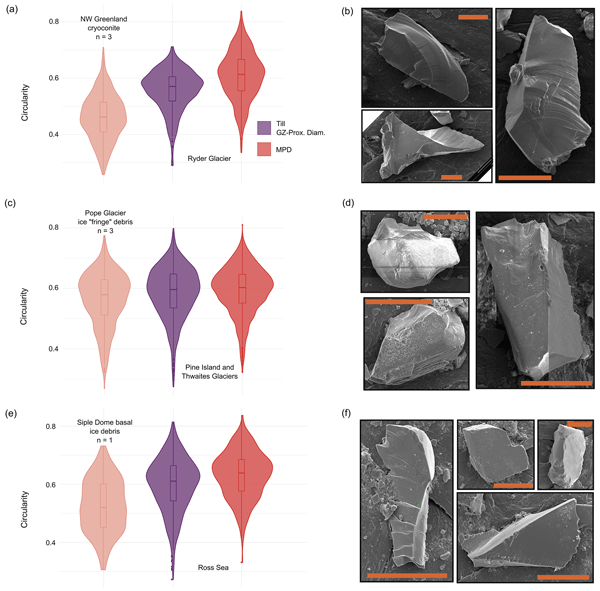
Allison P. Lepp, Lauren E. Miller, John B. Anderson, Matt O'Regan, Monica C. M. Winsborrow, James A. Smith, Claus-Dieter Hillenbrand, Julia S. Wellner, Lindsay O. Prothro, and Evgeny A. Podolskiy
The Cryosphere, 18, 2297–2319, https://doi.org/10.5194/tc-18-2297-2024, https://doi.org/10.5194/tc-18-2297-2024, 2024
Short summary
Short summary
Shape and surface texture of silt-sized grains are measured to connect marine sediment records with subglacial water flow. We find that grain shape alteration is greatest in glaciers where high-energy drainage events and abundant melting of surface ice are inferred and that the surfaces of silt-sized sediments preserve evidence of glacial transport. Our results suggest grain shape and texture may reveal whether glaciers previously experienced temperate conditions with more abundant meltwater.
Joanna Davies, Kirsten Fahl, Matthias Moros, Alice Carter-Champion, Henrieka Detlef, Ruediger Stein, Christof Pearce, and Marit-Solveig Seidenkrantz
EGUsphere, https://doi.org/10.5194/egusphere-2023-2363, https://doi.org/10.5194/egusphere-2023-2363, 2023
Short summary
Short summary
Here we evaluate the use of biomarkers for reconstructing sea-ice cover over the last 120-years from three sediment cores located in a transect across the Northeast Greenland continental shelf. We find that key changes, specifically the decline in sea-ice cover identified in observational records between 1970 and 1984, align with our biomarker reconstructions. This outcome supports the use of biomarkers for longer reconstructions of sea-ice cover in this region.
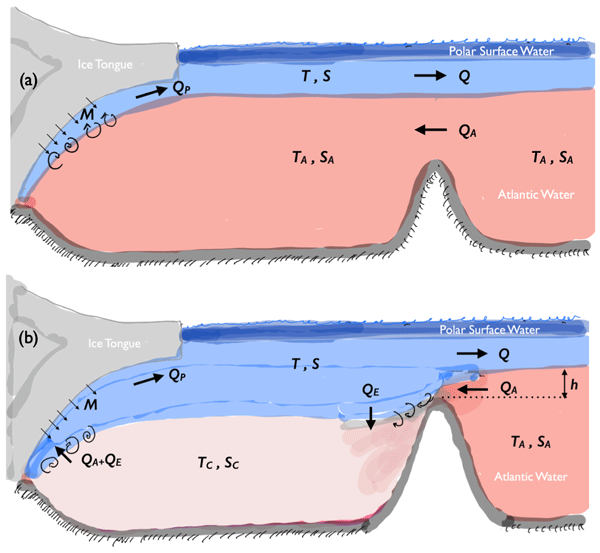
Johan Nilsson, Eef van Dongen, Martin Jakobsson, Matt O'Regan, and Christian Stranne
The Cryosphere, 17, 2455–2476, https://doi.org/10.5194/tc-17-2455-2023, https://doi.org/10.5194/tc-17-2455-2023, 2023
Short summary
Short summary
We investigate how topographical sills suppress basal glacier melt in Greenlandic fjords. The basal melt drives an exchange flow over the sill, but there is an upper flow limit set by the Atlantic Water features outside the fjord. If this limit is reached, the flow enters a new regime where the melt is suppressed and its sensitivity to the Atlantic Water temperature is reduced.
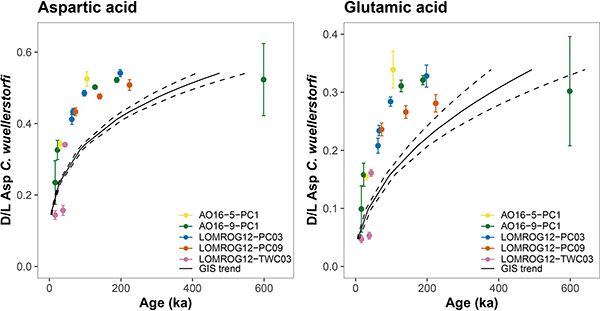
Gabriel West, Darrell S. Kaufman, Martin Jakobsson, and Matt O'Regan
Geochronology, 5, 285–299, https://doi.org/10.5194/gchron-5-285-2023, https://doi.org/10.5194/gchron-5-285-2023, 2023
Short summary
Short summary
We report aspartic and glutamic acid racemization analyses on Neogloboquadrina pachyderma and Cibicidoides wuellerstorfi from the Arctic Ocean (AO). The rates of racemization in the species are compared. Calibrating the rate of racemization in C. wuellerstorfi for the past 400 ka allows the estimation of sample ages from the central AO. Estimated ages are older than existing age assignments (as previously observed for N. pachyderma), confirming that differences are not due to taxonomic effects.
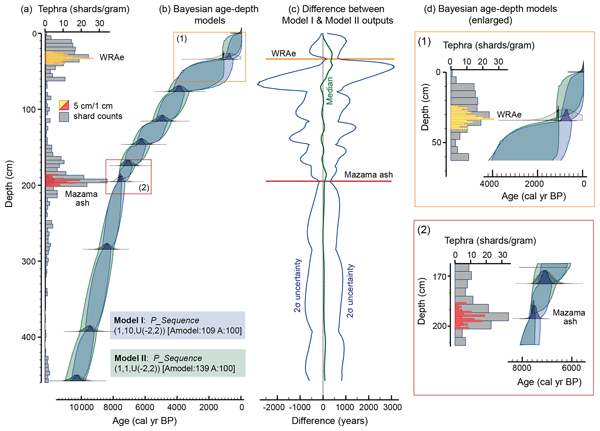
Alistair J. Monteath, Matthew S. M. Bolton, Jordan Harvey, Marit-Solveig Seidenkrantz, Christof Pearce, and Britta Jensen
Geochronology, 5, 229–240, https://doi.org/10.5194/gchron-5-229-2023, https://doi.org/10.5194/gchron-5-229-2023, 2023
Short summary
Short summary
Accurately dating ocean cores is challenging because the radiocarbon age of water masses varies substantially. We identify ash fragments from eruptions more than 4000 km from their source and use these time markers to develop a new age–depth model for an ocean core in Placentia Bay, North Atlantic. Our results show that the radiocarbon age of waters masses in the bay varied considerably during the last 10 000 years and highlight the potential of using ultra-distal ash deposits in this region.
Jesse R. Farmer, Katherine J. Keller, Robert K. Poirier, Gary S. Dwyer, Morgan F. Schaller, Helen K. Coxall, Matt O'Regan, and Thomas M. Cronin
Clim. Past, 19, 555–578, https://doi.org/10.5194/cp-19-555-2023, https://doi.org/10.5194/cp-19-555-2023, 2023
Short summary
Short summary
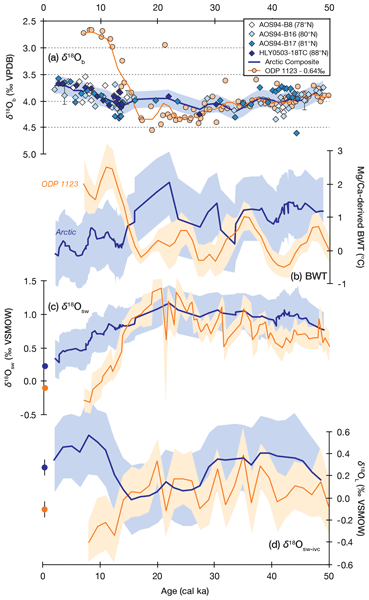
Oxygen isotopes are used to date marine sediments via similar large-scale ocean patterns over glacial cycles. However, the Arctic Ocean exhibits a different isotope pattern, creating uncertainty in the timing of past Arctic climate change. We find that the Arctic Ocean experienced large local oxygen isotope changes over glacial cycles. We attribute this to a breakdown of stratification during ice ages that allowed for a unique low isotope value to characterize the ice age Arctic Ocean.

Raisa Alatarvas, Matt O'Regan, and Kari Strand
Clim. Past, 18, 1867–1881, https://doi.org/10.5194/cp-18-1867-2022, https://doi.org/10.5194/cp-18-1867-2022, 2022
Short summary
Short summary
This research contributes to efforts solving research questions related to the history of ice sheet decay in the Northern Hemisphere. The East Siberian continental margin sediments provide ideal material for identifying the mineralogical signature of ice sheet derived material. Heavy mineral analysis from marine glacial sediments from the De Long Trough and Lomonosov Ridge was used in interpreting the activity of the East Siberian Ice Sheet in the Arctic region.

Mimmi Oksman, Anna Bang Kvorning, Signe Hillerup Larsen, Kristian Kjellerup Kjeldsen, Kenneth David Mankoff, William Colgan, Thorbjørn Joest Andersen, Niels Nørgaard-Pedersen, Marit-Solveig Seidenkrantz, Naja Mikkelsen, and Sofia Ribeiro
The Cryosphere, 16, 2471–2491, https://doi.org/10.5194/tc-16-2471-2022, https://doi.org/10.5194/tc-16-2471-2022, 2022
Short summary
Short summary
One of the questions facing the cryosphere community today is how increasing runoff from the Greenland Ice Sheet impacts marine ecosystems. To address this, long-term data are essential. Here, we present multi-site records of fjord productivity for SW Greenland back to the 19th century. We show a link between historical freshwater runoff and productivity, which is strongest in the inner fjord – influenced by marine-terminating glaciers – where productivity has increased since the late 1990s.
William Colgan, Agnes Wansing, Kenneth Mankoff, Mareen Lösing, John Hopper, Keith Louden, Jörg Ebbing, Flemming G. Christiansen, Thomas Ingeman-Nielsen, Lillemor Claesson Liljedahl, Joseph A. MacGregor, Árni Hjartarson, Stefan Bernstein, Nanna B. Karlsson, Sven Fuchs, Juha Hartikainen, Johan Liakka, Robert S. Fausto, Dorthe Dahl-Jensen, Anders Bjørk, Jens-Ove Naslund, Finn Mørk, Yasmina Martos, Niels Balling, Thomas Funck, Kristian K. Kjeldsen, Dorthe Petersen, Ulrik Gregersen, Gregers Dam, Tove Nielsen, Shfaqat A. Khan, and Anja Løkkegaard
Earth Syst. Sci. Data, 14, 2209–2238, https://doi.org/10.5194/essd-14-2209-2022, https://doi.org/10.5194/essd-14-2209-2022, 2022
Short summary
Short summary
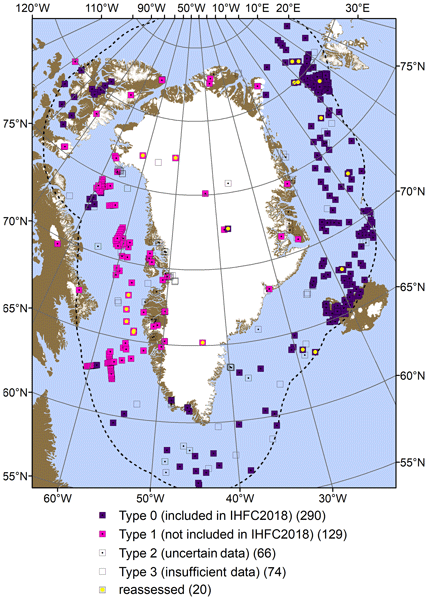
We assemble all available geothermal heat flow measurements collected in and around Greenland into a new database. We use this database of point measurements, in combination with other geophysical datasets, to model geothermal heat flow in and around Greenland. Our geothermal heat flow model is generally cooler than previous models of Greenland, especially in southern Greenland. It does not suggest any high geothermal heat flows resulting from Icelandic plume activity over 50 million years ago.
Teodora Pados-Dibattista, Christof Pearce, Henrieka Detlef, Jørgen Bendtsen, and Marit-Solveig Seidenkrantz
Clim. Past, 18, 103–127, https://doi.org/10.5194/cp-18-103-2022, https://doi.org/10.5194/cp-18-103-2022, 2022
Short summary
Short summary
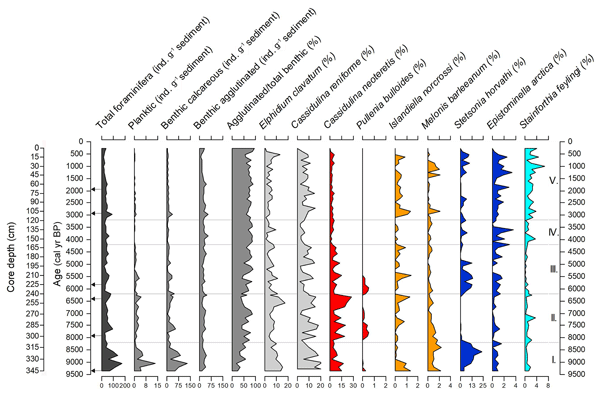
We carried out foraminiferal, stable isotope, and sedimentological analyses of a marine sediment core retrieved from the Northeast Greenland shelf. This region is highly sensitive to climate variability because it is swept by the East Greenland Current, which is the main pathway for sea ice and cold waters that exit the Arctic Ocean. The palaeoceanographic reconstruction reveals significant variations in the water masses and in the strength of the East Greenland Current over the last 9400 years.
Henrieka Detlef, Brendan Reilly, Anne Jennings, Mads Mørk Jensen, Matt O'Regan, Marianne Glasius, Jesper Olsen, Martin Jakobsson, and Christof Pearce
The Cryosphere, 15, 4357–4380, https://doi.org/10.5194/tc-15-4357-2021, https://doi.org/10.5194/tc-15-4357-2021, 2021
Short summary
Short summary
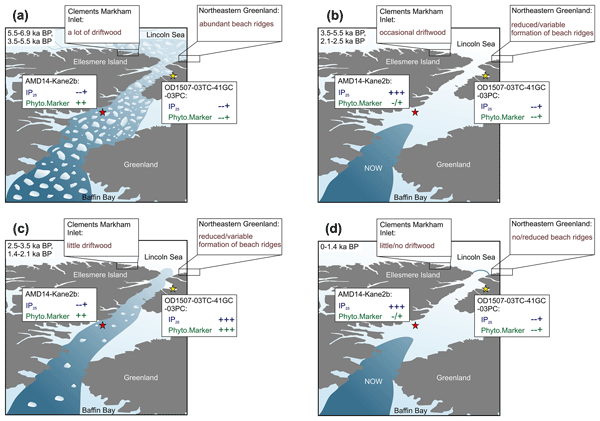
Here we examine the Nares Strait sea ice dynamics over the last 7000 years and their implications for the late Holocene readvance of the floating part of Petermann Glacier. We propose that the historically observed sea ice dynamics are a relatively recent feature, while most of the mid-Holocene was marked by variable sea ice conditions in Nares Strait. Nonetheless, major advances of the Petermann ice tongue were preceded by a shift towards harsher sea ice conditions in Nares Strait.
Matt O'Regan, Thomas M. Cronin, Brendan Reilly, Aage Kristian Olsen Alstrup, Laura Gemery, Anna Golub, Larry A. Mayer, Mathieu Morlighem, Matthias Moros, Ole L. Munk, Johan Nilsson, Christof Pearce, Henrieka Detlef, Christian Stranne, Flor Vermassen, Gabriel West, and Martin Jakobsson
The Cryosphere, 15, 4073–4097, https://doi.org/10.5194/tc-15-4073-2021, https://doi.org/10.5194/tc-15-4073-2021, 2021
Short summary
Short summary
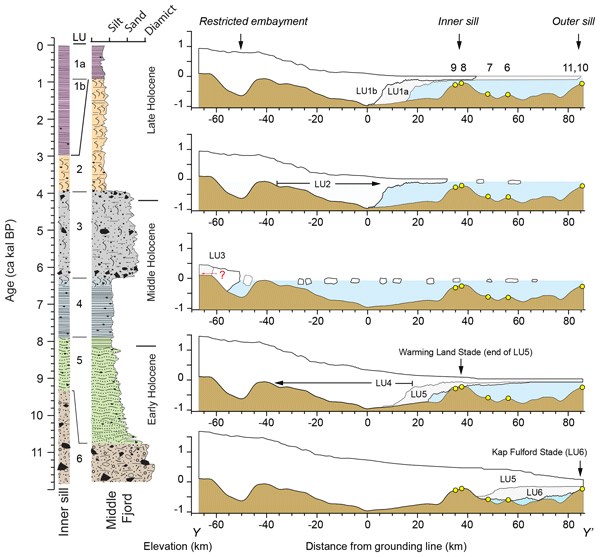
Ryder Glacier is a marine-terminating glacier in north Greenland discharging ice into the Lincoln Sea. Here we use marine sediment cores to reconstruct its retreat and advance behavior through the Holocene. We show that while Sherard Osborn Fjord has a physiography conducive to glacier and ice tongue stability, Ryder still retreated more than 40 km inland from its current position by the Middle Holocene. This highlights the sensitivity of north Greenland's marine glaciers to climate change.
Alix G. Cage, Anna J. Pieńkowski, Anne Jennings, Karen Luise Knudsen, and Marit-Solveig Seidenkrantz
J. Micropalaeontol., 40, 37–60, https://doi.org/10.5194/jm-40-37-2021, https://doi.org/10.5194/jm-40-37-2021, 2021
Short summary
Short summary
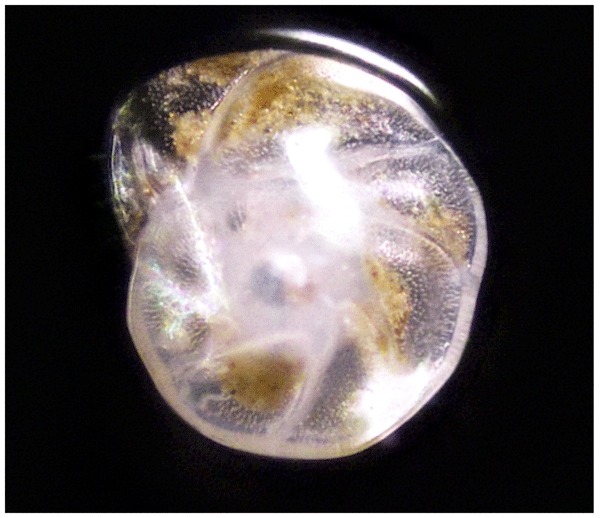
Morphologically similar benthic foraminifera taxa are difficult to separate, resulting in incorrect identifications, complications understanding species-specific ecological preferences, and flawed reconstructions of past environments. Here we provide descriptions and illustrated guidelines on how to separate some key Arctic–North Atlantic species to circumvent taxonomic confusion, improve understanding of ecological affinities, and work towards more accurate palaeoenvironmental reconstructions.

David R. Cox, Paul C. Knutz, D. Calvin Campbell, John R. Hopper, Andrew M. W. Newton, Mads Huuse, and Karsten Gohl
Sci. Dril., 28, 1–27, https://doi.org/10.5194/sd-28-1-2020, https://doi.org/10.5194/sd-28-1-2020, 2020
Short summary
Short summary
A workflow is presented that uses 3D subsurface image (seismic) data to identify and avoid potential geological hazards, in order to increase safety and minimize the risk associated with selecting offshore scientific drilling locations. The workflow has been implemented for a scientific drilling expedition proposal within a challenging region offshore north-western Greenland and resulted in an improved understanding of subsurface hazards and a reduction of risk across all selected drill sites.
Andrew M. W. Newton, Mads Huuse, Paul C. Knutz, and David R. Cox
The Cryosphere, 14, 2303–2312, https://doi.org/10.5194/tc-14-2303-2020, https://doi.org/10.5194/tc-14-2303-2020, 2020
Short summary
Short summary
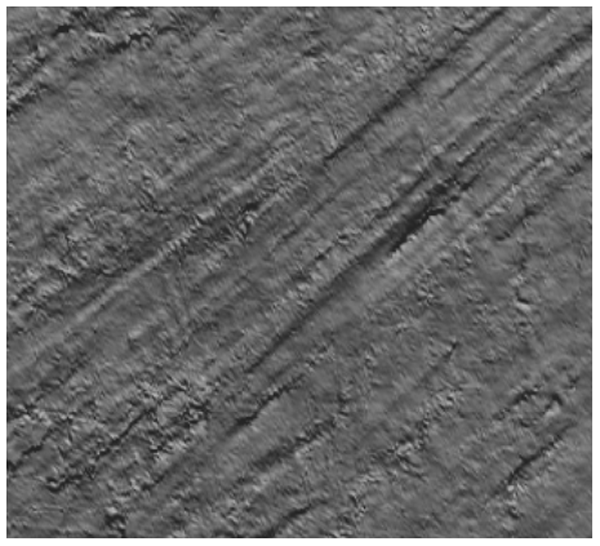
Seismic reflection data offshore northwest Greenland reveal buried landforms that have been interpreted as mega-scale glacial lineations (MSGLs). These have been formed by ancient ice streams that advanced hundreds of kilometres across the continental shelf. The stratigraphy and available chronology show that the MSGLs are confined to separate stratigraphic units and were most likely formed during several glacial maxima after the onset of the Middle Pleistocene Transition at ~ 1.3 Ma.
Katrine Elnegaard Hansen, Jacques Giraudeau, Lukas Wacker, Christof Pearce, and Marit-Solveig Seidenkrantz
Clim. Past, 16, 1075–1095, https://doi.org/10.5194/cp-16-1075-2020, https://doi.org/10.5194/cp-16-1075-2020, 2020
Short summary
Short summary
In this study, we present RainNet, a deep convolutional neural network for radar-based precipitation nowcasting, which was trained to predict continuous precipitation intensities at a lead time of 5 min. RainNet significantly outperformed the benchmark models at all lead times up to 60 min. Yet an undesirable property of RainNet predictions is the level of spatial smoothing. Obviously, RainNet learned an optimal level of smoothing to produce a nowcast at 5 min lead time.
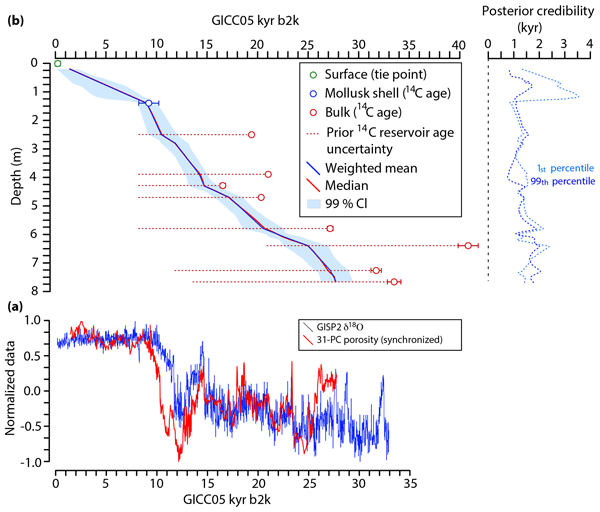
Francesco Muschitiello, Matt O'Regan, Jannik Martens, Gabriel West, Örjan Gustafsson, and Martin Jakobsson
Geochronology, 2, 81–91, https://doi.org/10.5194/gchron-2-81-2020, https://doi.org/10.5194/gchron-2-81-2020, 2020
Short summary
Short summary
In this study we present a new marine chronology of the last ~30 000 years for a sediment core retrieved from the central Arctic Ocean. Our new chronology reveals substantially faster sedimentation rates during the end of the last glacial cycle, the Last Glacial Maximum, and deglaciation than previously reported, thus implying a substantial re-interpretation of paleoceanographic reconstructions from this sector of the Arctic Ocean.
Zhongshi Zhang, Qing Yan, Ran Zhang, Florence Colleoni, Gilles Ramstein, Gaowen Dai, Martin Jakobsson, Matt O'Regan, Stefan Liess, Denis-Didier Rousseau, Naiqing Wu, Elizabeth J. Farmer, Camille Contoux, Chuncheng Guo, Ning Tan, and Zhengtang Guo
Clim. Past Discuss., https://doi.org/10.5194/cp-2020-38, https://doi.org/10.5194/cp-2020-38, 2020
Manuscript not accepted for further review
Short summary
Short summary
Whether an ice sheet once grew over Northeast Siberia-Beringia has been debated for decades. By comparing climate modelling with paleoclimate and glacial records from around the North Pacific, this study shows that the Laurentide-Eurasia-only ice sheet configuration fails in explaining these records, while a scenario involving the ice sheet over Northeast Siberia-Beringia succeeds. It highlights the complexity in glacial climates and urges new investigations across Northeast Siberia-Beringia.
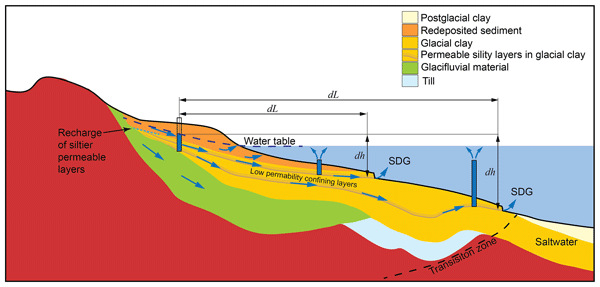
Martin Jakobsson, Matt O'Regan, Carl-Magnus Mörth, Christian Stranne, Elizabeth Weidner, Jim Hansson, Richard Gyllencreutz, Christoph Humborg, Tina Elfwing, Alf Norkko, Joanna Norkko, Björn Nilsson, and Arne Sjöström
Earth Surf. Dynam., 8, 1–15, https://doi.org/10.5194/esurf-8-1-2020, https://doi.org/10.5194/esurf-8-1-2020, 2020
Short summary
Short summary
We studied coastal sea floor terraces in parts of the Baltic Sea using various types of sonar data, sediment cores, and video. Terraces (~1 m high, > 100 m long) are widespread in depths < 15 m and are formed in glacial clay. Our study supports an origin from groundwater flow through silty layers, undermining overlying layers when discharged at the sea floor. Submarine groundwater discharge like this may be a significant source of freshwater to the Baltic Sea that needs to be studied further.
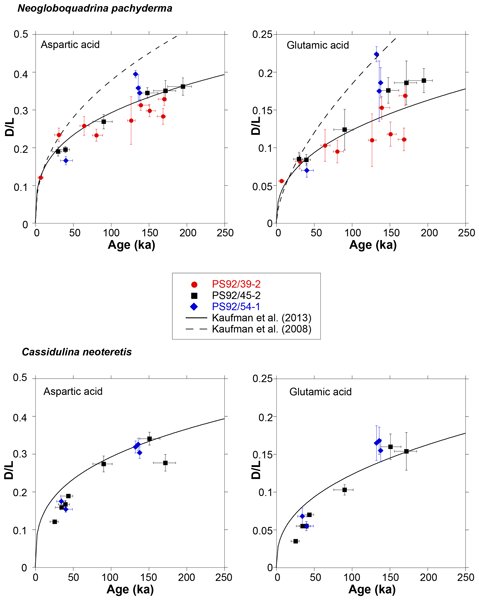
Gabriel West, Darrell S. Kaufman, Francesco Muschitiello, Matthias Forwick, Jens Matthiessen, Jutta Wollenburg, and Matt O'Regan
Geochronology, 1, 53–67, https://doi.org/10.5194/gchron-1-53-2019, https://doi.org/10.5194/gchron-1-53-2019, 2019
Short summary
Short summary
We report amino acid racemization analyses of foraminifera from well-dated sediment cores from the Yermak Plateau, Arctic Ocean. Sample ages are compared with model predictions, revealing that the rates of racemization generally conform to a global compilation of racemization rates at deep-sea sites. These results highlight the need for further studies to test and explain the origin of the purportedly high rate of racemization indicated by previous analyses of central Arctic sediments.
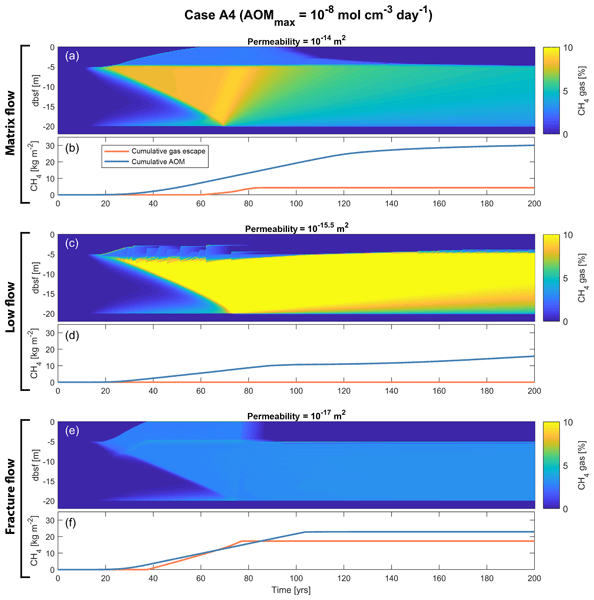
Christian Stranne, Matt O'Regan, Martin Jakobsson, Volker Brüchert, and Marcelo Ketzer
Solid Earth, 10, 1541–1554, https://doi.org/10.5194/se-10-1541-2019, https://doi.org/10.5194/se-10-1541-2019, 2019
Martin Jakobsson, Christian Stranne, Matt O'Regan, Sarah L. Greenwood, Bo Gustafsson, Christoph Humborg, and Elizabeth Weidner
Ocean Sci., 15, 905–924, https://doi.org/10.5194/os-15-905-2019, https://doi.org/10.5194/os-15-905-2019, 2019
Short summary
Short summary
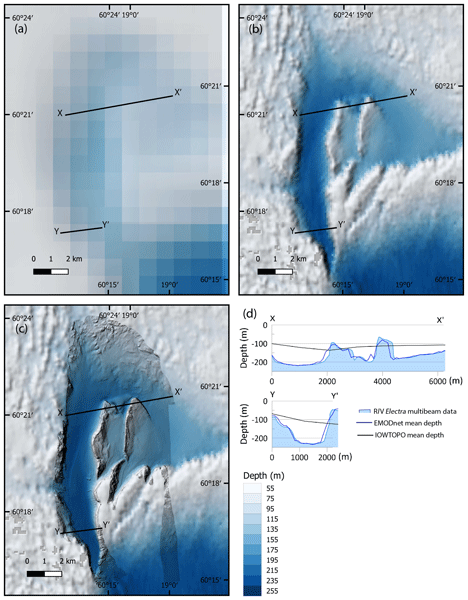
The bottom topography of the Baltic Sea is analysed using the digital depth model from the European Marine Observation and Data Network (EMODnet) published in 2018. Analyses include depth distribution vs. area and seafloor depth variation on a kilometre scale. The limits for the Baltic Sea and analysed sub-basins are from HELCOM. EMODnet is compared with the previously most widely used depth model and the area of deep water exchange between the Bothnian Sea and the Northern Baltic Proper.
Flor Vermassen, Nanna Andreasen, David J. Wangner, Nicolas Thibault, Marit-Solveig Seidenkrantz, Rebecca Jackson, Sabine Schmidt, Kurt H. Kjær, and Camilla S. Andresen
Clim. Past, 15, 1171–1186, https://doi.org/10.5194/cp-15-1171-2019, https://doi.org/10.5194/cp-15-1171-2019, 2019
Short summary
Short summary
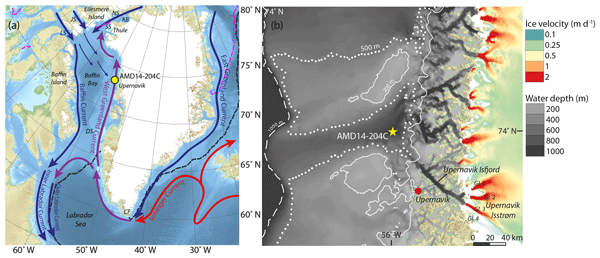
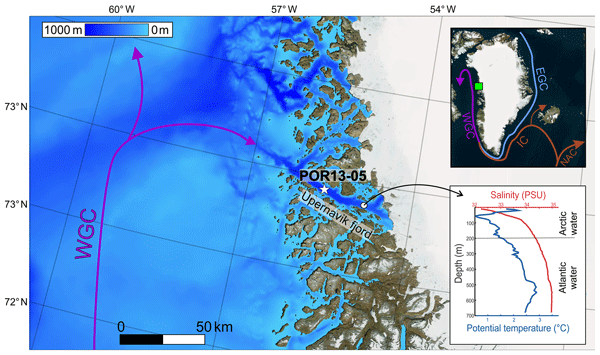
By studying microfossils from sediments in Upernavik Fjord we investigate the role of ocean warming on the retreat of Upernavik Isstrøm during the past ~90 years. The reconstruction of Atlantic-derived waters shows a pattern similar to that of the Atlantic Multidecadal Oscillation, corroborating previous studies. The response of Upernavik Isstrøm to ocean forcing has been variable in the past, but the current retreat may be temporarily tempered by cooling bottom waters in the coming decade.
Andrea Fischel, Marit-Solveig Seidenkrantz, and Bent Vad Odgaard
J. Micropalaeontol., 37, 499–518, https://doi.org/10.5194/jm-37-499-2018, https://doi.org/10.5194/jm-37-499-2018, 2018
Short summary
Short summary
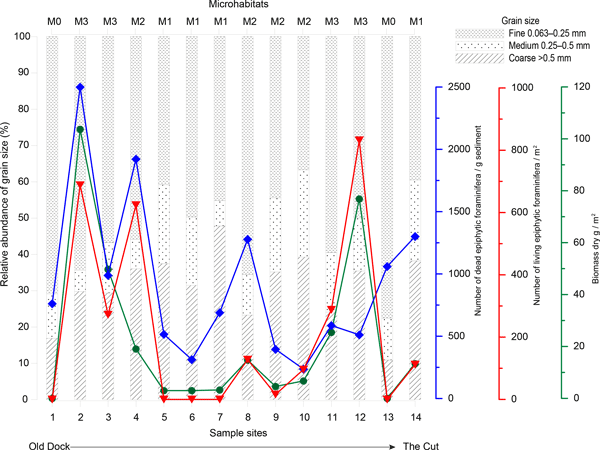
Benthic foraminifera often colonize marine underwater vegetation in tropical regions. We studied these so-called epiphytic foraminifera in a shallow bay in the Bahamas. Here the foraminifera differed between types of vegetation, but sedimentological processes seem to be the main controller of the dead foraminifera in the sediment. This indicates that in carbonate platform regions, epiphytic foraminifera should only be used cautiously as direct indicators of past in situ marine vegetation.
Zhongshi Zhang, Qing Yan, Elizabeth J. Farmer, Camille Li, Gilles Ramstein, Terence Hughes, Martin Jakobsson, Matt O'Regan, Ran Zhang, Ning Tan, Camille Contoux, Christophe Dumas, and Chuncheng Guo
Clim. Past Discuss., https://doi.org/10.5194/cp-2018-79, https://doi.org/10.5194/cp-2018-79, 2018
Revised manuscript not accepted
Short summary
Short summary
Our study challenges the widely accepted idea that the Laurentide-Eurasian ice sheets gradually extended across North America and Northwest Eurasia, and suggests the growth of the NH ice sheets is much more complicated. We find climate feedbacks regulate the distribution of the NH ice sheets, producing swings between two distinct ice sheet configurations: the Laurentide-Eurasian and a circum-Arctic configuration, where large ice sheets existed over Northeast Siberia and the Canadian Rockies.
Ulrich Kotthoff, Jeroen Groeneveld, Jeanine L. Ash, Anne-Sophie Fanget, Nadine Quintana Krupinski, Odile Peyron, Anna Stepanova, Jonathan Warnock, Niels A. G. M. Van Helmond, Benjamin H. Passey, Ole Rønø Clausen, Ole Bennike, Elinor Andrén, Wojciech Granoszewski, Thomas Andrén, Helena L. Filipsson, Marit-Solveig Seidenkrantz, Caroline P. Slomp, and Thorsten Bauersachs
Biogeosciences, 14, 5607–5632, https://doi.org/10.5194/bg-14-5607-2017, https://doi.org/10.5194/bg-14-5607-2017, 2017
Short summary
Short summary
We present reconstructions of paleotemperature, paleosalinity, and paleoecology from the Little Belt (Site M0059) over the past ~ 8000 years and evaluate the applicability of numerous proxies. Conditions were lacustrine until ~ 7400 cal yr BP. A transition to brackish–marine conditions then occurred within ~ 200 years. Salinity proxies rarely allowed quantitative estimates but revealed congruent results, while quantitative temperature reconstructions differed depending on the proxies used.
Martin Bartels, Jürgen Titschack, Kirsten Fahl, Rüdiger Stein, Marit-Solveig Seidenkrantz, Claude Hillaire-Marcel, and Dierk Hebbeln
Clim. Past, 13, 1717–1749, https://doi.org/10.5194/cp-13-1717-2017, https://doi.org/10.5194/cp-13-1717-2017, 2017
Short summary
Short summary
Multi-proxy analyses (i.a., benthic foraminiferal assemblages and sedimentary properties) of a marine record from Woodfjorden at the northern Svalbard margin (Norwegian Arctic) illustrate a significant contribution of relatively warm Atlantic water to the destabilization of tidewater glaciers, especially during the deglaciation and early Holocene (until ~ 7800 years ago), whereas its influence on glacier activity has been fading during the last 2 millennia, enabling glacier readvances.
Laura Gemery, Thomas M. Cronin, Robert K. Poirier, Christof Pearce, Natalia Barrientos, Matt O'Regan, Carina Johansson, Andrey Koshurnikov, and Martin Jakobsson
Clim. Past, 13, 1473–1489, https://doi.org/10.5194/cp-13-1473-2017, https://doi.org/10.5194/cp-13-1473-2017, 2017
Short summary
Short summary
Continuous, highly abundant and well-preserved fossil ostracodes were studied from radiocarbon-dated sediment cores collected on the Lomonosov Ridge (Arctic Ocean) that indicate varying oceanographic conditions during the last ~50 kyr. Ostracode assemblages from cores taken during the SWERUS-C3 2014 Expedition, Leg 2, reflect paleoenvironmental changes during glacial, deglacial, and interglacial transitions, including changes in sea-ice cover and Atlantic Water inflow into the Eurasian Basin.
Matt O'Regan, Jan Backman, Natalia Barrientos, Thomas M. Cronin, Laura Gemery, Nina Kirchner, Larry A. Mayer, Johan Nilsson, Riko Noormets, Christof Pearce, Igor Semiletov, Christian Stranne, and Martin Jakobsson
Clim. Past, 13, 1269–1284, https://doi.org/10.5194/cp-13-1269-2017, https://doi.org/10.5194/cp-13-1269-2017, 2017
Short summary
Short summary
Past glacial activity on the East Siberian continental margin is poorly known, partly due to the lack of geomorphological evidence. Here we present geophysical mapping and sediment coring data from the East Siberian shelf and slope revealing the presence of a glacially excavated cross-shelf trough reaching to the continental shelf edge north of the De Long Islands. The data provide direct evidence for extensive glacial activity on the Siberian shelf that predates the Last Glacial Maximum.
Thomas M. Cronin, Matt O'Regan, Christof Pearce, Laura Gemery, Michael Toomey, Igor Semiletov, and Martin Jakobsson
Clim. Past, 13, 1097–1110, https://doi.org/10.5194/cp-13-1097-2017, https://doi.org/10.5194/cp-13-1097-2017, 2017
Short summary
Short summary
Global sea level rise during the last deglacial flooded the Siberian continental shelf in the Arctic Ocean. Sediment cores, radiocarbon dating, and microfossils show that the regional sea level in the Arctic rose rapidly from about 12 500 to 10 700 years ago. Regional sea level history on the Siberian shelf differs from the global deglacial sea level rise perhaps due to regional vertical adjustment resulting from the growth and decay of ice sheets.
Martin Jakobsson, Christof Pearce, Thomas M. Cronin, Jan Backman, Leif G. Anderson, Natalia Barrientos, Göran Björk, Helen Coxall, Agatha de Boer, Larry A. Mayer, Carl-Magnus Mörth, Johan Nilsson, Jayne E. Rattray, Christian Stranne, Igor Semiletov, and Matt O'Regan
Clim. Past, 13, 991–1005, https://doi.org/10.5194/cp-13-991-2017, https://doi.org/10.5194/cp-13-991-2017, 2017
Short summary
Short summary
The Arctic and Pacific oceans are connected by the presently ~53 m deep Bering Strait. During the last glacial period when the sea level was lower than today, the Bering Strait was exposed. Humans and animals could then migrate between Asia and North America across the formed land bridge. From analyses of sediment cores and geophysical mapping data from Herald Canyon north of the Bering Strait, we show that the land bridge was flooded about 11 000 years ago.
Clint M. Miller, Gerald R. Dickens, Martin Jakobsson, Carina Johansson, Andrey Koshurnikov, Matt O'Regan, Francesco Muschitiello, Christian Stranne, and Carl-Magnus Mörth
Biogeosciences, 14, 2929–2953, https://doi.org/10.5194/bg-14-2929-2017, https://doi.org/10.5194/bg-14-2929-2017, 2017
Short summary
Short summary
Continental slopes north of the East Siberian Sea are assumed to hold large amounts of methane. We present pore water chemistry from the 2014 SWERUS-C3 expedition. These are among the first results generated from this vast climatically sensitive region, and they imply that abundant methane, including gas hydrates, do not characterize the East Siberian Sea slope or rise. This contradicts previous modeling and discussions, which due to the lack of data are almost entirely based assumption.
Leif G. Anderson, Göran Björk, Ola Holby, Sara Jutterström, Carl Magnus Mörth, Matt O'Regan, Christof Pearce, Igor Semiletov, Christian Stranne, Tim Stöven, Toste Tanhua, Adam Ulfsbo, and Martin Jakobsson
Ocean Sci., 13, 349–363, https://doi.org/10.5194/os-13-349-2017, https://doi.org/10.5194/os-13-349-2017, 2017
Short summary
Short summary
We use data collected in 2014 to show that the outflow of nutrient-rich water occurs much further to the west than has been reported in the past. We suggest that this is due to much less summer sea-ice coverage in the northwestern East Siberian Sea than in the past decades. Further, our data support a more complicated flow pattern in the region where the Mendeleev Ridge reaches the shelf compared to the general cyclonic circulation within the individual basins as suggested historically.
Christof Pearce, Aron Varhelyi, Stefan Wastegård, Francesco Muschitiello, Natalia Barrientos, Matt O'Regan, Thomas M. Cronin, Laura Gemery, Igor Semiletov, Jan Backman, and Martin Jakobsson
Clim. Past, 13, 303–316, https://doi.org/10.5194/cp-13-303-2017, https://doi.org/10.5194/cp-13-303-2017, 2017
Short summary
Short summary
The eruption of the Alaskan Aniakchak volcano of 3.6 thousand years ago was one of the largest Holocene eruptions worldwide. The resulting ash is found in several Alaskan sites and as far as Newfoundland and Greenland. In this study, we found ash from the Aniakchak eruption in a marine sediment core from the western Chukchi Sea in the Arctic Ocean. Combined with radiocarbon dates on mollusks, the volcanic age marker is used to calculate the marine radiocarbon reservoir age at that time.
Daniel J. Lunt, Matthew Huber, Eleni Anagnostou, Michiel L. J. Baatsen, Rodrigo Caballero, Rob DeConto, Henk A. Dijkstra, Yannick Donnadieu, David Evans, Ran Feng, Gavin L. Foster, Ed Gasson, Anna S. von der Heydt, Chris J. Hollis, Gordon N. Inglis, Stephen M. Jones, Jeff Kiehl, Sandy Kirtland Turner, Robert L. Korty, Reinhardt Kozdon, Srinath Krishnan, Jean-Baptiste Ladant, Petra Langebroek, Caroline H. Lear, Allegra N. LeGrande, Kate Littler, Paul Markwick, Bette Otto-Bliesner, Paul Pearson, Christopher J. Poulsen, Ulrich Salzmann, Christine Shields, Kathryn Snell, Michael Stärz, James Super, Clay Tabor, Jessica E. Tierney, Gregory J. L. Tourte, Aradhna Tripati, Garland R. Upchurch, Bridget S. Wade, Scott L. Wing, Arne M. E. Winguth, Nicky M. Wright, James C. Zachos, and Richard E. Zeebe
Geosci. Model Dev., 10, 889–901, https://doi.org/10.5194/gmd-10-889-2017, https://doi.org/10.5194/gmd-10-889-2017, 2017
Short summary
Short summary
In this paper we describe the experimental design for a set of simulations which will be carried out by a range of climate models, all investigating the climate of the Eocene, about 50 million years ago. The intercomparison of model results is called 'DeepMIP', and we anticipate that we will contribute to the next IPCC report through an analysis of these simulations and the geological data to which we will compare them.
Cited articles
Abdelmalak, M. M., Gac, S., Faleide, J. I., Shephard, G. E., Tsikalas, F., Polteau, S., Zastrozhnov, D., and Torsvik, T. H.: Quantification and Restoration of the Pre-Drift Extension Across the NE Atlantic Conjugate Margins During the Mid-Permian-Early Cenozoic Multi-Rifting Phases, Tectonics, 42, e2022TC007386, https://doi.org/10.1029/2022tc007386, 2023.
Andrews, J. T., McCave, I. N., and Syvitski, J.: A ∼ 240 ka record of Ice Sheet and Ocean interactions on the Snorri Drift, SW of Iceland, Global Planet. Change, 201, 103498, https://doi.org/10.1016/j.gloplacha.2021.103498, 2021.
Arndt, J. E., Jokat, W., Dorschel, B., Myklebust, R., Dowdeswell, J. A., and Evans, J.: A new bathymetry of the Northeast Greenland continental shelf: Constraints on glacial and other processes, Geochem. Geophy. Geosy., 16, 3733–3753, https://doi.org/10.1002/2015GC005931, 2015.
Bailey, I., Hole, G. M., Foster, G. L., Wilson, P. A., Storey, C. D., Trueman, C. N., and Raymo, M. E.: An alternative suggestion for the Pliocene onset of major northern hemisphere glaciation based on the geochemical provenance of North Atlantic Ocean ice-rafted debris, Quaternary Sci. Rev., 75, 181–194, https://doi.org/10.1016/j.quascirev.2013.06.004, 2013.
Bennike, O., Abrahamsen, N., Bak, M., Israelson, C., Konradi, P., Matthiessen, J., and Witkowski, A.: A multi-proxy study of Pliocene sediments from Île de France, North-East Greenland, Palaeogeogr. Palaeocl., 186, 1–23, https://doi.org/10.1016/S0031-0182(02)00439-X, 2002.
Bennike, O. L. E., Knudsen, K. L., Abrahamsen, N., BÖCher, J., Cremer, H., and Wagner, B.: Early Pleistocene sediments on Store Koldewey, northeast Greenland, Boreas, 39, 603–619, https://doi.org/10.1111/j.1502-3885.2010.00147.x, 2010.
Berger, D. and Jokat, W.: A seismic study along the East Greenland margin from 72° N to 77° N, Geophys. J. Int., 174, 733–748, https://doi.org/10.1111/j.1365-246X.2008.03794.x, 2008.
Berger, D. and Jokat, W.: Sediment deposition in the northern basins of the North Atlantic and characteristic variations in shelf sedimentation along the East Greenland Margin, Mar. Petrol. Geol., 26, 1321–1337, https://doi.org/10.1016/j.marpetgeo.2009.04.005, 2009.
Bierman, P. R., Shakun, J. D., Corbett, L. B., Zimmerman, S. R., and Rood, D. H.: A persistent and dynamic East Greenland ice sheet over the past 7.5 million years, Nature, 540, 256–260, https://doi.org/10.1038/nature20147, 2016.
Böning, C. W., Behrens, E., Biastoch, A., Getzlaff, K., and Bamber, J. L.: Emerging impact of Greenland meltwater on deepwater formation in the North Atlantic Ocean, Nat. Geosci., 9, 523–527, https://doi.org/10.1038/ngeo2740, 2016.
Brozena, J. M., Childers, V. A., Lawver, L. A., Gahagan, L. M., Forsberg, R., Faleide, J. I., and Eldholm, O.: New aerogeophysical study of the Eurasia Basin and Lomonosov Ridge: Implications for basin development, Geology, 31, 825–828, https://doi.org/10.1130/G19528.1, 2003.
Budéus, G. and Schneider, W.: On the hydrography of the Northeast Water Polynya, J. Geophys. Res., 100, 4287–4299, https://doi.org/10.1029/94JC02024, 1995.
Caesar, L., McCarthy, G. D., Thornalley, D. J. R., Cahill, N., and Rahmstorf, S.: Current Atlantic Meridional Overturning Circulation weakest in last millennium, Nat. Geosci., 14, 118–120, https://doi.org/10.1038/s41561-021-00699-z, 2021.
Christ, A. J., Rittenour, T. M., Bierman, P. R., Keisling, B. A., Knutz, P. C., Thomsen, T. B., Keulen, N., Fosdick, J. C., Hemming, S. R., Tison, J.-L., Blard, P.-H., Steffensen, J. P., Caffee, M. W., Corbett, L. B., Dahl-Jensen, D., Dethier, D. P., Hidy, A. J., Perdrial, N., Peteet, D. M., Steig, E. J., and Thomas, E. K.: Deglaciation of northwestern Greenland during Marine Isotope Stage 11, Science, 381, 330–335, https://doi.org/10.1126/science.ade4248, 2023.
Christiansen, F. G.: Greenland petroleum exploration history: Rise and fall, learnings, and future perspectives, Resour. Policy, 74, 102425, https://doi.org/10.1016/j.resourpol.2021.102425, 2021.
Clotten, C., Stein, R., Fahl, K., Schreck, M., Risebrobakken, B., and De Schepper, S.: On the causes of Arctic sea ice in the warm Early Pliocene, Sci. Rep., 9, 989, https://doi.org/10.1038/s41598-018-37047-y, 2019.
Damm, E. A.: The Expedition PS115/1 of the Research Vessel POLARSTERN to the Greenland Sea and Wandel Sea in 2018, Alfred Wegener Institute for Polar and Marine Research, Bremerhaven, https://doi.org/10.2312/BzPM_0727_2019, 2019.
Darby, D. A.: Ephemeral formation of perennial sea ice in the Arctic Ocean during the middle Eocene, Nat. Geosci., 7, 210–213, https://doi.org/10.1038/ngeo2068, 2014.
Davies, S., Stow, D., and Nicholson, U.: Late glacial to Holocene sedimentary facies of the Eirik Drift, southern Greenland margin: Spatial and temporal variability and paleoceanographic implications, Mar. Geol., 440, 106568, https://doi.org/10.1016/j.margeo.2021.106568, 2021.
De Schepper, S., Schreck, M., Beck, K. M., Matthiessen, J., Fahl, K., and Mangerud, G.: Early Pliocene onset of modern Nordic Seas circulation related to ocean gateway changes, Nat. Commun., 6, 8659, https://doi.org/10.1038/ncomms9659, 2015.
Døssing, A., Japsen, P., Watts, A. B., Nielsen, T., Jokat, W., Thybo, H., and Dahl-Jensen, T.: Miocene uplift of the NE Greenland margin linked to plate tectonics: Seismic evidence from the Greenland Fracture Zone, NE Atlantic, Tectonics, 35, 257–282, https://doi.org/10.1002/2015TC004079, 2016.
Dutton, A., Carlson, A. E., Long, A. J., Milne, G. A., Clark, P. U., DeConto, R., Horton, B. P., Rahmstorf, S., and Raymo, M. E.: Sea-level rise due to polar ice-sheet mass loss during past warm periods, Science, 349, aaa4019, https://doi.org/10.1126/science.aaa4019, 2015.
Ehlers, B.-M. and Jokat, W.: Paleo-bathymetry of the northern North Atlantic and consequences for the opening of the Fram Strait, Mar. Geophys. Res., 34, 25–43, https://doi.org/10.1007/s11001-013-9165-9, 2013.
Engen, Ø., Faleide, J. I., and Dyreng, T. K.: Opening of the Fram Strait gateway: A review of plate tectonic constraints, Tectonophysics, 450, 51–69, https://doi.org/10.1016/j.tecto.2008.01.002, 2008.
Escutia, C., DeConto, R., Dunbar, R., De Santis, L., Shevenell, A., and Nash, T.: Keeping an Eye on Antarctic Ice Sheet Stability, Oceanography, 32, 32–46, https://doi.org/10.5670/oceanog.2019.117, 2019.
Fahnestock, M., Abdalati, W., Joughin, I., Brozena, J., and Gogineni, P.: High Geothermal Heat Flow, Basal Melt, and the Origin of Rapid Ice Flow in Central Greenland, Science, 294, 2338–2342, https://doi.org/10.1126/science.1065370, 2001.
Fyhn, M. B. W. and Hopper, J. R.: NE Greenland Composite Tectono-Sedimentary Element, northern Greenland Sea and Fram Strait, Geological Society, London, Memoirs, 57, M57-2017-2012, https://doi.org/10.1144/M57-2017-12, 2024.
Gaina, C., Nasuti, A., Kimbell, G. S., and Blischke, A.: Break-up and seafloor spreading domains in the NE Atlantic, in: The NE Atlantic Region: A Reappraisal of Crustal Structure, Tectonostratigraphy and Magmatic Evolution, edited by: Pinvidic, G., Hopper, J. R., Stoker, M. S., Gaina, C., Doornenbal, J. C., Funck, T., and Árting, U. E., Geological Society of London, 393–417, https://doi.org/10.1144/sp447.12, 2017.
Gion, A. M., Williams, S. E., and Müller, R. D.: A reconstruction of the Eurekan Orogeny incorporating deformation constraints, Tectonics, 36, 304–320, https://doi.org/10.1002/2015tc004094, 2017.
Golledge, N. R., Keller, E. D., Gomez, N., Naughten, K. A., Bernales, J., Trusel, L. D., and Edwards, T. L.: Global environmental consequences of twenty-first-century ice-sheet melt, Nature, 566, 65–72, https://doi.org/10.1038/s41586-019-0889-9, 2019.
GreenDrill: https://greendrill-cosmo.ldeo.columbia.edu/, last access: June 2023.
Hamann, N. E., Whittaker, R. C., and Stemmerik, L.: Geological development of the Northeast Greenland shelf, in: Petroleum Geology: North-West Europe and Global Perspectives – Proceedings of the 6th Petroleum Geology Conference, edited by: Doré, A. G. and Vining, B. A., Petroleum Geology Conferences Ltd., Geological Society, London, 887–902, 2005.
Hansen, B., Østerhus, S., Quadfasel, D., and Turrell, B.: Already the Day After Tomorrow?, Science, 305, 953–954, https://doi.org/10.1126/science.1100085, 2004.
Hardarson, B. S., Fitton, J. G., Ellam, R. M., and Pringle, M. S.: Rift relocation – A geochemical and geochronological investigation of a palaeo-rift in northwest Iceland, Earth Planet. Sc. Lett., 153, 181–196, https://doi.org/10.1016/S0012-821X(97)00145-3, 1997.
Heirman, K., Nielsen, T., and Kuijpers, A.: Impact of Tectonic, Glacial and Contour Current Processes on the Late Cenozoic Sedimentary Development of the Southeast Greenland Margin, Geosciences, 9, 157, https://doi.org/10.3390/geosciences9040157, 2019.
Hofer, S., Lang, C., Amory, C., Kittel, C., Delhasse, A., Tedstone, A., and Fettweis, X.: Greater Greenland ice sheet contribution to global sea level rise in CMIP6, Nat. Commun., 11, 6289, https://doi.org/10.1038/s41467-020-20011-8, 2020.
IPCC: Summary for Policymakers, in: IPCC Special Report on the Ocean and Cryosphere in a Changing Climate, edited by: Pörtner, H. O., Roberts, D. C., Masson-Delmotte, V., Zhai, P., Tignor, M., Poloczanska, E., Mintenbeck, K., Alegría, A., Nicolai, M., Okem, A., Petzold, J., Rama, B., and Weyer, N. M., in press, 2019.
Jakobsson, M., Backman, J., Rudels, B., Nycander, J., Frank, M., Mayer, L., Jokat, W., Sangiorgi, F., O'Regan, M., Brinkhuis, H., King, J., and Moran, K.: The early Miocene onset of a ventilated circulation regime in the Arctic Ocean, Nature, 447, 986–990, https://doi.org/10.1038/nature05924, 2007.
Jakobsson, M., Mayer, L., Coakley, B., Dowdeswell, J. A., Forbes, S., Fridman, B., Hodnesdal, H., Noormets, R., Pedersen, R., Rebesco, M., Schenke, H. W., Zarayskaya, Y., Accettella, D., Armstrong, A., Anderson, R. M., Bienhoff, P., Camerlenghi, A., Church, I., Edwards, M., Gardner, J. V., Hall, J. K., Hell, B., Hestvik, O., Kristoffersen, Y., Marcussen, C., Mohammad, R., Mosher, D., Nghiem, S. V., Pedrosa, M. T., Travaglini, P. G., and Weatherall, P.: The International Bathymetric Chart of the Arctic Ocean (IBCAO) Version 3.0, Geophys. Res. Lett., 39, L12609, https://doi.org/10.1029/2012GL052219, 2012.
Jansen, E., Raymo, M. E., and Blum, P.: Proceedings, initial reports, Ocean Drilling Program, Leg 162, North Atlantic-Arctic gateways II, ODP, Texas A and M University, College Station, ISSN 0884-5883, 1996.
Jokat, W., Lehmann, P., Damaske, D., and Bradley Nelson, J.: Magnetic signature of North-East Greenland, the Morris Jesup Rise, the Yermak Plateau, the central Fram Strait: Constraints for the rift/drift history between Greenland and Svalbard since the Eocene, Tectonophysics, 12, 98–109, https://doi.org/10.1016/j.tecto.2015.12.002, 2015.
Jones, S. M., Hopper, J. R., Pérez, L. F., Hall, J. R., Uenzelmann-Neben, G., and Fyhn, M.: Potential for scientific drilling of sediment drifts adjacent to Denmark Strait oceanic gateway, Geological Society of London Special Publication, in review, 2024.
Knutz, P. C., Jennings, A., Childress, L. B., and Scientists, T. E.: Expedition 400 Preliminary Report: NW Greenland Glaciated Margin, International Ocean Discovery Program Preliminary Report, International Ocean Discovery Program, https://doi.org/10.14379/iodp.pr.400.2024, 2024.
Koppers, A. and Coggon, R.: Exploring Earth by scientific ocean drilling, 2050 Science Framework, 124, 2020.
Kristoffersen, Y., Tholfsen, A., Hall, J. K., and Stein, R.: Scientists spend Arctic winter adrift on sea ice, Eos, 97, 1/10, https://doi.org/10.1029/2016EO060711, 2016.
Kristoffersen, Y., Hall, J. K., and Nilsen, E. H.: Morris Jesup Spur and Rise north of Greenland – exploring present seabed features, the history of sediment deposition, volcanism and tectonic deformation at a Late Cretaceous/early Cenozoic triple junction in the Arctic Ocean, Norw. J. Geol., 101, 202104, https://doi.org/10.17850/njg101-1-4, 2021.
Larsen, H. C., Saunders, A. D., Clift, P. D., Ali, J., Begét, J., Cambray, H., Demant, A., Fitton, G., Fram, M. S., Fukuma, K., Gieskes, J., Holmes, M. A., Hunt, J., Lacasse, C., Larsen, L. M., Lykke-Anderson, H., Meltser, A., Morrison, M. L., Nemoto, N., Okay, N., Saito, S., Sinton, C., Spezzaferri, S., Stax, R., Vallier, T. L., Vandamme, D., Wei, W., and Werner, R.: Seven million years of glaciation in Greenland, Science, 264, 952–955, 1994.
Larsen, N. K., Levy, L. B., Carlson, A. E., Buizert, C., Olsen, J., Strunk, A., Bjørk, A. A., and Skov, D. S.: Instability of the Northeast Greenland Ice Stream over the last 45,000 years, Nat. Commun., 9, 1872–1872, https://doi.org/10.1038/s41467-018-04312-7, 2018.
Lucchi, R. G., St. John, K., and Ronge, T. A.: Expedition 403 Scientific Prospectus: Eastern Fram Strait Paleo-Archive (FRAME), International Ocean Discovery Program Scientific Prospectus, IODP, https://doi.org/10.14379/iodp.sp.403.2023, 2023.
Maslin, M. A., Li, X. S., Loutre, M. F., and Berger, A.: The contribution of orbital forcing to the progressive intensification of Northern Hemisphere Glaciation, Quaternary Sci. Rev., 17, 411–426, https://doi.org/10.1016/S0277-3791(97)00047-4, 1998.
Morlighem, M., Williams, C. N., Rignot, E., An, L., Arndt, J. E., Bamber, J. L., Catania, G., Chauché, N., Dowdeswell, J. A., Dorschel, B., Fenty, I., Hogan, K., Howat, I., Hubbard, A., Jakobsson, M., Jordan, T. M., Kjeldsen, K. K., Millan, R., Mayer, L., Mouginot, J., Noël, B. P. Y., O'Cofaigh, C., Palmer, S., Rysgaard, S., Seroussi, H., Siegert, M. J., Slabon, P., Straneo, F., van den Broeke, M. R., Weinrebe, W., Wood, M., and Zinglersen, K. B.: BedMachine v3: Complete Bed Topography and Ocean Bathymetry Mapping of Greenland From Multibeam Echo Sounding Combined With Mass Conservation, Geophys. Res. Lett., 44, 11051–11061, https://doi.org/10.1002/2017gl074954, 2017.
Newton, R., Pfirman, S., Tremblay, L. B., and DeRepentigny, P.: Defining the “Ice Shed” of the Arctic Ocean's Last Ice Area and Its Future Evolution, Earths Future, 9, e2021EF001988, https://doi.org/10.1029/2021ef001988, 2021.
Notz, D. and SIMIP Community: Arctic Sea Ice in CMIP6, Geophys. Res. Lett., 47, e2019GL086749, https://doi.org/10.1029/2019gl086749, 2020.
Parnell-Turner, R., White, N. J., McCave, I. N., Henstock, T. J., Murton, B., and Jones, S. M.: Architecture of North Atlantic contourite drifts modified by transient circulation of the Icelandic mantle plume, Geochem. Geophy. Geosy., 16, 3414–3435, https://doi.org/10.1002/2015GC005947, 2015.
Pérez, L. F., Nielsen, T., Knutz, P. C., Kuijpers, A., and Damm, V.: Large-scale evolution of the central-east Greenland margin: New insights to the North Atlantic glaciation history, Global Planet. Change, 163, 141–157, https://doi.org/10.1016/j.gloplacha.2017.12.010, 2018.
Poirier, A. and Hillaire-Marcel, C.: Improved Os-isotope stratigraphy of the Arctic Ocean, Geophys. Res. Lett., 38, L14607, https://doi.org/10.1029/2011gl047953, 2011.
Poore, H. R., Samworth, R., White, N. J., Jones, S. M., and McCave, I. N.: Neogene overflow of Northern Component Water at the Greenland-Scotland Ridge, Geochem. Geophy. Geosy., 7, Q06010, https://doi.org/10.1029/2005gc001085, 2006.
Rahmstorf, S.: Ocean circulation and climate during the past 120,000 years, Nature, 419, 207–214, https://doi.org/10.1038/nature01090, 2002.
Rignot, E., Velicogna, I., van den Broeke, M. R., Monaghan, A., and Lenaerts, J. T. M.: Acceleration of the contribution of the Greenland and Antarctic ice sheets to sea level rise, Geophys. Res. Lett., 38, L05503, https://doi.org/10.1029/2011gl046583, 2011.
Rudels, B.: Arctic Ocean Circulation, in: Encyclopedia of Ocean Sciences, Elsevier Ltd, 211–225, https://doi.org/10.1016/B978-012374473-9.00601-9, 2009.
Schaefer, J. M., Finkel, R. C., Balco, G., Alley, R. B., Caffee, M. W., Briner, J. P., Young, N. E., Gow, A. J., and Schwartz, R.: Greenland was nearly ice-free for extended periods during the Pleistocene, Nature, 540, 252–255, https://doi.org/10.1038/nature20146, 2016.
Schaffer, J., Kanzow, T., von Appen, W.-J., von Albedyll, L., Arndt, J. E., and Roberts, D. H.: Bathymetry constrains ocean heat supply to Greenland's largest glacier tongue, Nat. Geosci., 13, 227–231, https://doi.org/10.1038/s41561-019-0529-x, 2020.
Smith, A. G. and Pickering, K. T.: Oceanic gateways as a critical factor to initiate icehouse Earth, J. Geol. Soc., 160, 337–340, https://doi.org/10.1144/0016-764902-115, 2003.
Solheim, A., Faleide, J. I., Andersen, E. S., Elverhøi, A., Forsberg, C. F., Vanneste, K., Uenzelmann-Neben, G., and Channell, J. E. T.: Late cenozoic seismic stratigraphy and glacial geological development of the East Greenland and Svalbard-Barents sea continental margins, Quaternary Sci. Rev., 17, 155–184, https://doi.org/10.1016/S0277-3791(97)00068-1, 1998.
St. John, K. E. K. and Krissek, L. A.: The late Miocene to Pleistocene ice-rafting history of Southeast Greenland, Boreas, 31, 28–35, https://doi.org/10.1111/j.1502-3885.2002.tb01053.x, 2002.
Stoker, M. S., Stewart, M. A., Shannon, P. M., Bjerager, M., Nielsen, T., Blischke, A., Hjelstuen, B. O., Gaina, C., McDermott, K., and Ólavsdóttir, J.: An overview of the Upper Palaeozoic–Mesozoic stratigraphy of the NE Atlantic region, Geol. Soc. Spec. Publ., 447, 11–68, https://doi.org/10.1144/sp447.2, 2016.
Straneo, F., Sutherland, D. A., Holland, D., Gladish, C., Hamilton, G. S., Johnson, H. L., Rignot, E., Xu, Y., and Koppes, M.: Characteristics of ocean waters reaching Greenland's glaciers, Ann. Glaciol., 53, 202–210, https://doi.org/10.3189/2012AoG60A059, 2017.
Straume, E. O., Gaina, C., Medvedev, S., and Nisancioglu, K. H.: Global Cenozoic Paleobathymetry with a focus on the Northern Hemisphere Oceanic Gateways, Gondwana Res., 86, 126–143, https://doi.org/10.1016/j.gr.2020.05.011, 2020.
Talwani, M. and Eldholm, O.: Evolution of the Norwegian-Greenland Sea, Geol. Soc. Am. Bull., 88, 969–999, https://doi.org/10.1130/0016-7606(1977)88<969:EOTNS>2.0.CO;2, 1977.
Thiede, J., Myhre, A. M., Firth, J. V., Johnson, G. L., and Ruddiman, W. F.: Procedings ODP Scientific Results Ocean Drilling Program, College Station, 1996.
Thiede, J., Jessen, C., Knutz, P., Kuijpers, A., Mikkelsen, N., Nørgaard-Pedersen, N., and Spielhagen, R. F.: Millions of years of Greenland ice sheet history recorded in Ocean sediments, Polarforschung, 80, 141–159, http://hdl.handle.net/10013/epic.38391.d001 (last access: June 2023), 2010.
Tripati, A. K., Eagle, R. A., Morton, A., Dowdeswell, J. A., Atkinson, K. L., Bahé, Y., Dawber, C. F., Khadun, E., Shaw, R. M. H., Shorttle, O., and Thanabalasundaram, L.: Evidence for glaciation in the Northern Hemisphere back to 44 Ma from ice-rafted debris in the Greenland Sea, Earth Planet. Sc. Lett., 265, 112–122, https://doi.org/10.1016/j.epsl.2007.09.045, 2008.
Tsikalas, F., Faleide, J. I., Eldholm, O., and Antonio Blaich, O.: The NE Atlantic conjugate margins, in Regional Geology and Tectonics: Phanerozoic Passive Margins, Cratonic Basins and Global Tectonic Maps, Elsevier, 140–201, https://doi.org/10.1016/b978-0-444-56357-6.00004-4, 2012.
Våge, K., Pickart, R. S., Spall, M. A., Moore, G. W. K., Valdimarsson, H., Torres, D. J., Erofeeva, S. Y., and Nilsen, J. E. Ø.: Revised circulation scheme north of the Denmark Strait, Deep-Sea Res. Pt. I, 79, 20–39, https://doi.org/10.1016/j.dsr.2013.05.007, 2013.
van den Broeke, M. R., Enderlin, E. M., Howat, I. M., Kuipers Munneke, P., Noël, B. P. Y., van de Berg, W. J., van Meijgaard, E., and Wouters, B.: On the recent contribution of the Greenland ice sheet to sea level change, The Cryosphere, 10, 1933–1946, https://doi.org/10.5194/tc-10-1933-2016, 2016.
White, R. S., Bown, J. W., and Smallwood, J. R.: The temperature of the Iceland plume and origin of outward-propagating V-shaped ridges, J. Geol. Soc., 152, 1039–1045, https://doi.org/10.1144/gsl.jgs.1995.152.01.26, 1995.
Wolf, T. C. W. and Thiede, J.: History of terrigenous sedimentation during the past 10 m.y. in the North Atlantic (ODP Legs 104 and 105 and DSDP Leg 81), Mar. Geol., 101, 83–102, https://doi.org/10.1016/0025-3227(91)90064-B, 1991.
Wright, J. D. and Miller, K. G.: Control of North Atlantic Deep Water circulation by the Greenland-Scotland Ridge, Paleocoanography, 11, 157–170, 1996.
Zwally, H. J., Giovinetto, M. B., Beckley, M. A., and Saba, J. L.: Antarctic and Greenland Drainage Systems, GSFC Cryospheric Sciences Laboratory, https://earth.gsfc.nasa.gov/cryo/data/polar-altimetry/antarctic-and-greenland-drainage-systems (last access: June 2023), 2012.
Short summary
The Greenland ice sheet is highly sensitive to global warming and a major contributor to sea level rise. In Northeast Greenland, ice–ocean–tectonic interactions are readily observable today, but geological records that illuminate long-term trends are lacking. NorthGreen aims to promote scientific drilling proposals to resolve key scientific questions on past changes in the Northeast Greenland margin that further affected the broader Earth system.
The Greenland ice sheet is highly sensitive to global warming and a major contributor to sea...


