

Articles | Volume 35, issue 1
https://doi.org/10.5194/sd-35-127-2026
© Author(s) 2026. This work is distributed under
the Creative Commons Attribution 4.0 License.
the Creative Commons Attribution 4.0 License.
https://doi.org/10.5194/sd-35-127-2026
© Author(s) 2026. This work is distributed under
the Creative Commons Attribution 4.0 License.
the Creative Commons Attribution 4.0 License.
Science report
| 
26 Jun 2026
Science report |
| 26 Jun 2026
| 26 Jun 2026
Initial results from a Trans-Amazon Drilling Project core from the Acre Basin of Brazil

Department of Earth and Atmospheric Sciences and School of Biological Sciences, University of Nebraska-Lincoln, Lincoln, NE, USA
André O. Sawakuchi
Institute of Geosciences, Universidade de São Paulo, São Paulo, Brazil
Anders Noren
Continental Scientific Drilling (CSD) Facility, University of Minnesota, Minneapolis, MN, USA
Paul A. Baker
Division of Earth and Climate Sciences, Duke University, Durham, NC, USA
Cleverson Silva
Department of Geology, Universidade Federal Fluminense, Niteroi, Brazil
Carlos Jaramillo
Center for Tropical Paleoecology and Archeology, Smithsonian Tropical Research Institute, Panama City, Panama
Renato Paes de Almeida
Institute of Geosciences, Universidade de São Paulo, São Paulo, Brazil
Liliane Janikian
Department of Ocean Sciences, Federal University of São Paulo, São Paulo, Brazil
Isaac Salém Bezerra
Institute of Geosciences, Universidade de São Paulo, São Paulo, Brazil
Marcos Barbosa
Acqua Terra, São Paulo, Brazil
Dailson Bertassoli
Institute of Geosciences, Universidade de São Paulo, São Paulo, Brazil
Rain Blankenship
Department of Earth Sciences, University of Southern California, Los Angeles, CA, USA
Cristiano M. Chiessi
School of Arts, Sciences, and Humanities, Universidade de São Paulo, São Paulo, Brazil
Sarah J. Feakins
Department of Earth Sciences, University of Southern California, Los Angeles, CA, USA
Maria da Glória Garcia
Institute of Geosciences, Universidade de São Paulo, São Paulo, Brazil
Cécile Gautheron
Institute of Earth Sciences, Université Grenoble Alpes, Université Savoie Mont Blanc, CNRS, IRD, IFSTTAR, Grenoble, France
Brian Grivna
Continental Scientific Drilling (CSD) Facility, University of Minnesota, Minneapolis, MN, USA
Gelvam Hartmann
Institute of Geosciences, Universidade Estadual de Campinas, Campinas, Brazil
Cindy Kunkel
GFZ Helmholtz Centre for Geosciences, Potsdam, Germany
André Marconato
Institute of Geosciences, Universidade de São Paulo, São Paulo, Brazil
Angela Martinez
Institute of Geosciences, Universidade de São Paulo, São Paulo, Brazil
Sebastian G. Marulanda
Institute of Geosciences, Universidade de São Paulo, São Paulo, Brazil
Carlos Eduardo M. Mazoca
Institute of Geosciences, Universidade de São Paulo, São Paulo, Brazil
Francisco R. Negri
Laboratory of Paleontology, Universidade Federal do Acre, Cruzeiro do Sul, Brazil
Mauricio Parra
Institute of Geosciences, Universidade de São Paulo, São Paulo, Brazil
Werner E. Piller
Institute for Earth Sciences, Universität Graz, Graz, Austria
Fabiano N. Pupim
Institute of Geosciences, Universidade de São Paulo, São Paulo, Brazil
Victor Salgado
Department of Geology, Universidade Federal Fluminense, Niteroi, Brazil
Rachel T. So
Department of Earth Sciences, University of Southern California, Los Angeles, CA, USA
Priscila Emerich Souza
Institute of Geosciences, Universidade de São Paulo, São Paulo, Brazil
Elena Stiles
Department of Biology and Burke Museum, University of Washington, Seattle, WA, USA
Caroline A. E. Strömberg
Department of Biology and Burke Museum, University of Washington, Seattle, WA, USA
Siu Mui Tsai
Center for Nuclear Energy in Agriculture, Universidade de São Paulo, São Paulo, Brazil
Ingo Wahnfried
Geosciences Department, Universidade Federal do Amazonas, Manaus, Brazil
Josh West
Department of Earth Sciences, University of Southern California, Los Angeles, CA, USA
Marc-Élie Adaimé
Department of Plant Biology, University of Illinois – Urbana-Champaign, Urbana, IL, USA
Jhon Afonso
Institute of Geosciences, Universidade Estadual de Campinas, Campinas, Brazil
Thomas Kenji Akabane
Institute of Geosciences, Universidade de São Paulo, São Paulo, Brazil
Camila Eliza Althaus
Institute of Geosciences, Universidade de São Paulo, São Paulo, Brazil
Carlos D'Apolito
Faculty of Biological and Environmental Sciences, Universidade Federal da Grande Dourados, Dourados, Brazil
Kleiton R. Araújo
Institute of Geosciences, Universidade de São Paulo, São Paulo, Brazil
Roney da Silva de Azevedo Júnior
Geosciences Department, Universidade Federal do Amazonas, Manaus, Brazil
Jessica Barcellos
Department of Geology, Universidade Federal Fluminense, Niteroi, Brazil
Tacio Bicudo
Institute of Geosciences, Universidade de São Paulo, São Paulo, Brazil
Giovanni Bogota
Faculty of Environment and Natural Resources, Universidad Distrital Francisco José de Caldas, Bogotá, Colombia
Bodo Bookhagen
Institute of Geosciences, Universität Potsdam, Potsdam, Germany
Caio Breda
Institute of Geosciences, Universidade de São Paulo, São Paulo, Brazil
Alderlene Pimentel de Brito
Geosciences Department, Universidade Federal do Amazonas, Manaus, Brazil
Francy Carvajal
Ensenada Center for Scientific Research and Higher Education, Ensenada, Mexico
Daniel Antunes Coppi
Institute of Geosciences, Universidade Estadual de Campinas, Campinas, Brazil
Carolina Barbosa Leite da Cruz
Institute of Geosciences, Universidade de São Paulo, São Paulo, Brazil
Felipe Torres Figueiredo
Department of Geology, Federal University of Sergipe, São Cristóvão, Brazil
Kate Freeman
Department of Geosciences, Pennsylvania State University, University Park, PA, USA
Pedro Victor Oliveira Gomes
Institute of Geosciences, Universidade de São Paulo, São Paulo, Brazil
Martin Gross
Department of Geology and Paleontology, Universalmuseum Joanneum, Graz, Austria
Emma Hartke
Department of Geosciences, Pennsylvania State University, University Park, PA, USA
Katja Heeschen
GFZ Helmholtz Centre for Geosciences, Potsdam, Germany
William Mozart Henrichs
Institute of Geosciences, Universidade de São Paulo, São Paulo, Brazil
Leonardo Henrique
Institute of Geosciences, Universidade de São Paulo, São Paulo, Brazil
Carina Hoorn
Institute for Biodiversity and Ecosystem Dynamics, Universiteit van Amsterdam, Amsterdam, the Netherlands
Brian K. Horton
Department of Earth and Planetary Sciences, University of Texas at Austin, Austin, TX, USA
Andrés Díaz-Jamamillo
Center for Tropical Paleoecology and Archeology, Smithsonian Tropical Research Institute, Panama City, Panama
Said Kamrani-Mehni
GFZ Helmholtz Centre for Geosciences, Potsdam, Germany
Fatima Leite
Center for Tropical Paleoecology and Archeology, Smithsonian Tropical Research Institute, Panama City, Panama
Lin Li
Department of Earth, Environmental, and Geographic Sciences, University of North Carolina – Charlotte, Charlotte, NC, USA
Rodrigo Ferreira de Lucena
Institute of Geosciences, Universidade de São Paulo, São Paulo, Brazil
Alastair Milne
Edinburgh Geological Society, Edinburgh, Scotland, UK
Thomás Miranda
Institute of Geosciences, Universidade de São Paulo, São Paulo, Brazil
Marcelo Mota
Institute of Geosciences, Universidade de São Paulo, São Paulo, Brazil
Diana Ochoa
Department of Geology, Universidad de Salamanca, Salamanca, Spain
Vinicius de Lima Passos
Institute of Geosciences, Universidade de São Paulo, São Paulo, Brazil
Rafaela Maciel Lopes de Paula
Institute of Geosciences, Universidade de São Paulo, São Paulo, Brazil
Elisa Piispa
Institute of Earth Sciences, University of Iceland, Reykjavik, Iceland
Angelo Plata Torres
Center for Tropical Paleoecology and Archeology, Smithsonian Tropical Research Institute, Panama City, Panama
Department of Geological Sciences, Universidad de Caldas, Manizales, Colombia
Surangi W. Punyasena
Department of Plant Biology, University of Illinois – Urbana-Champaign, Urbana, IL, USA
Adriano Domingos dos Reis
Institute of Geosciences, University of Brasilia, Brasilia, Brazil
Catherine Rigsby
Department of Geological Sciences, East Carolina University, Greenville, NC, USA
Andrés F. Salazar Rios
Institute for Earth Sciences, Universität Graz, Graz, Austria
Fernanda Costa Gonçalves Rodrigues
Institute of Geosciences, Universidade de São Paulo, São Paulo, Brazil
Raquel M. M. Romão
Institute of Geosciences, Universidade de São Paulo, São Paulo, Brazil
Ingrid C. Romero
Center for Tropical Paleoecology and Archeology, Smithsonian Tropical Research Institute, Panama City, Panama
Smithsonian National Museum of Natural History, Washington, D.C., USA
Henrique O. Sawakuchi
Department of Thematic Studies, Linköping University, Linköping, Sweden
Doug Schnurrenberger
Continental Scientific Drilling (CSD) Facility, University of Minnesota, Minneapolis, MN, USA
Kristina Brady Shannon
Continental Scientific Drilling (CSD) Facility, University of Minnesota, Minneapolis, MN, USA
Silane A. F. da Silva-Caminha
Center for Tropical Paleoecology and Archeology, Smithsonian Tropical Research Institute, Panama City, Panama
Faculty of Geosciences, Universidade Federal de Mato Grosso, Cuiabá, Brazil
Clauses Sousa
Institute of Geosciences, Universidade de São Paulo, São Paulo, Brazil
Larissa Natsumi Tamura
Institute of Geosciences, Universidade de São Paulo, São Paulo, Brazil
Thomas Wiersberg
GFZ Helmholtz Centre for Geosciences, Potsdam, Germany
Helanlin Xiang
Institute for Biodiversity and Ecosystem Dynamics, Universiteit van Amsterdam, Amsterdam, the Netherlands
Belén Zamudio
Institute for Earth Sciences, Universität Graz, Graz, Austria
Related authors
No articles found.
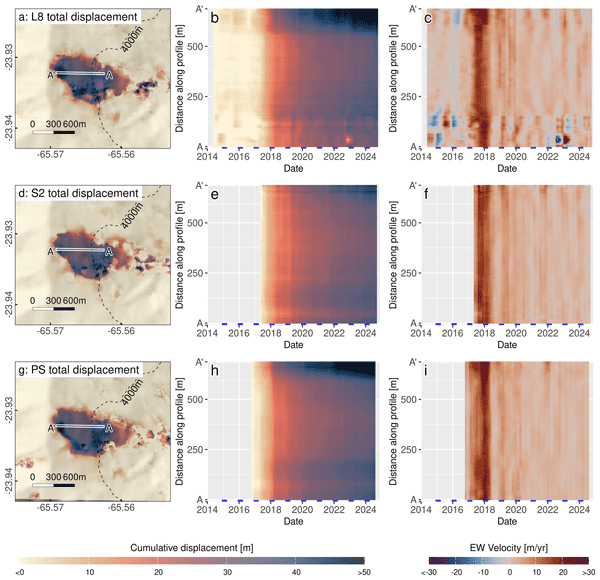
Ariane Mueting, Laurane Charrier, and Bodo Bookhagen
Earth Surf. Dynam., 14, 781–800, https://doi.org/10.5194/esurf-14-781-2026, https://doi.org/10.5194/esurf-14-781-2026, 2026
Short summary
Short summary
Slow-moving landslides respond to seasonal climate variations, but displacement time series from optical satellite imagery often contain illumination and shadow related biases that obscure true signals. This study assesses methods to mitigate these errors and reveals kinematic changes and controlling factors of a large slow-moving landslide in the Argentinean Andes.
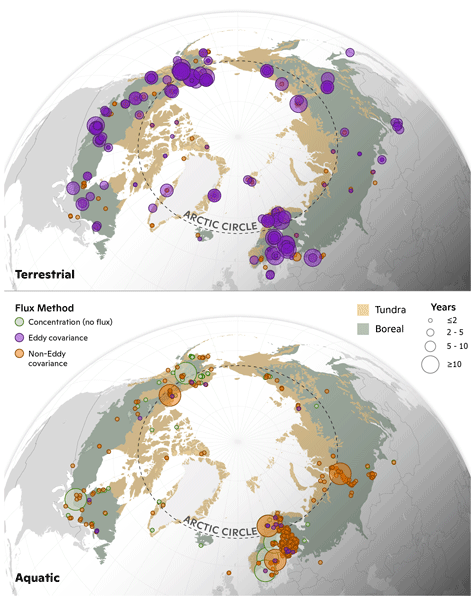
Anna-Maria Virkkala, Isabel Wargowsky, Judith Vogt, McKenzie A. Kuhn, Simran Madaan, Tiffany Windholz, Kyle A. Arndt, Gerard Rocher-Ros, Mathias Göckede, David Olefeldt, Edward A. G. Schuur, David Bastviken, Richard O'Keefe, Brendan M. Rogers, Jennifer D. Watts, Kelcy Kent, Kristoffer Aalstad, Kelly Aho, Joonatan Ala-Könni, Haley Alcock, Inge Althuizen, Christopher D. Arp, Jun Asanuma, Mika Aurela, Sivakiruthika Balathandayuthabani, Katrin Attermeyer, Alan Barr, Maialen Barret, Ochirbat Batkhishig, Christina Biasi, Mats P. Björkman, Andrew Black, Elena Blanc-Betes, Pascal Bodmer, Julia Boike, Abdullah Bolek, Frédéric Bouchard, Ingeborg Bussmann, Lea Cabrol, Eleonora Canfora, Sean Carey, Karel Castro-Morales, Namyi Chae, Andreas Christen, Torben R. Christensen, Casper T. Christiansen, Housen Chu, Graham Clark, Francois Clayer, Patrick Crill, Christopher Cunada, Scott J. Davidson, Joshua F. Dean, Sigrid Dengel, Matteo Detto, Catherine Dieleman, Florent Domine, Egor Dyukarev, Colin Edgar, Bo Elberling, Craig A. Emmerton, Eugenie Euskirchen, Grant Falvo, Thomas Friborg, Michelle Garneau, Mariasilvia Giamberini, Mikhail V. Glagolev, Miquel A. Gonzalez-Meler, Gustaf Granath, Jón Guðmundsson, Konsta Happonen, Yoshinobu Harazono, Lorna Harris, Josh Hashemi, Nicholas Hasson, Janna Heerah, Liam Heffernan, Manuel Helbig, Warren Helgason, Michal Heliasz, Greg Henry, Geert Hensgens, Tetsuya Hiyama, Beth Holmes, Macall Hock, David Holl, Jutta Holst, Thomas Holst, Gabriel Hould-Gosselin, Elyn Humphreys, Jacqueline Hung, Jussi Huotari, Hiroki Ikawa, Danil V. Ilyasov, Mamoru Ishikawa, Go Iwahana, Hiroki Iwata, Marcin Antoni Jackowicz-Korczynski, Joachim Jansen, Järvi Järveoja, Vincent E. J. Jassey, Rasmus Jensen, Katharina Jentzsch, Robert G. Jespersen, Carl-Fredrik Johannesson, Cheristy P. Jones, Anders Jonsson, Ji Young Jung, Sari Juutinen, Evan Kane, Jan Karlsson, Sergey Karsanaev, Kuno Kasak, Julia Kelly, Kasha Kempton, Marcus Klaus, George W. Kling, Natascha Kljun, Jacqueline Knutson, Hideki Kobayashi, John Kochendorfer, Kukka-Maaria Kohonen, Pasi Kolari, Mika Korkiakoski, Aino Korrensalo, Pirkko Kortelainen, Egle Koster, Kajar Koster, Ayumi Kotani, Praveena Krishnan, Juliya Kurbatova, Lars Kutzbach, Min Jung Kwon, Ethan D. Kyzivat, Jessica Lagroix, Theodore Langhorst, Elena Lapshina, Tuula Larmola, Klaus S. Larsen, Isabelle Laurion, Justin Ledman, Hanna Lee, A. Joshua Leffler, Lance Lesack, Anders Lindroth, David Lipson, Annalea Lohila, Efrén López-Blanco, Vincent L. St. Louis, Erik Lundin, Miska Luoto, Takashi Machimura, Marta Magnani, Avni Malhotra, Marja Maljanen, Ivan Mammarella, Elisa Männistö, Luca Belelli Marchesini, Phil Marsh, Pertti J. Martikainen, Maija E. Marushchak, Mikhail Mastepanov, Alex Mavrovic, Trofim Maximov, Christina Minions, Daniel F. Nadeau, Marco Montemayor, Tomoaki Morishita, Patrick Murphy, Erin Nicholls, Mats B. Nilsson, Anastasia Niyazova, Jenni Nordén, Koffi Dodji Noumonvi, Hannu Nykänen, Walter Oechel, Anne Ojala, Tomohiro Okadera, Sujan Pal, Alexey V. Panov, Tim Papakyriakou, Dario Papale, Sang-Jong Park, Frans-Jan W. Parmentier, Gilberto Pastorello, Mike Peacock, Matthias Peichl, Roman Petrov, Kyra St. Pierre, Norbert Pirk, Jessica Plein, Vilmantas Preskienis, Anatoly Prokushkin, Jukka Pumpanen, Hilary A. Rains, Niklas Rakos, Aleksi Räsänen, Helena Rautakoski, Riikka Rinnan, Janne Rinne, Adrian Rocha, Nigel Roulet, Alexandre Roy, Anna Rutgersson, Aleksandr F. Sabrekov, Torsten Sachs, Erik Sahlée, Alejandro Salazar, Henrique Oliveira Sawakuchi, Christopher Schulze, Roger Seco, Armando Sepulveda-Jauregui, Svetlana Serikova, Abbey Serrone, Hanna M. Silvennoinen, Sofie Sjogersten, June Skeeter, Jo Snöälv, Sebastian Sobek, Oliver Sonnentag, Emily H. Stanley, Maria Strack, Lena Strom, Patrick Sullivan, Ryan Sullivan, Anna Sytiuk, Torbern Tagesson, Pierre Taillardat, Julie Talbot, Suzanne E. Tank, Mario Tenuta, Irina Terenteva, Frederic Thalasso, Antoine Thiboult, Halldor Thorgeirsson, Fenix Garcia Tigreros, Margaret Torn, Amy Townsend-Small, Claire Treat, Alain Tremblay, Carlo Trotta, Eeva-Stiina Tuittila, Merritt Turetsky, Masahito Ueyama, Muhammad Umair, Aki Vähä, Lona van Delden, Maarten van Hardenbroek, Andrej Varlagin, Ruth K. Varner, Tarmo Virtanen, Elena Veretennikova, Timo Vesala, Carolina Voigt, Jorien E. Vonk, Robert Wagner, Katey Walter Anthony, Qinxue Wang, Masataka Watanabe, Hailey Webb, Jeffrey M. Welker, Andreas Westergaard-Nielsen, Sebastian Westermann, Jeffrey R. White, Christian Wille, Scott N. Williamson, Scott Zolkos, Donatella Zona, and Susan M. Natali
Earth Syst. Sci. Data, 18, 6357–6409, https://doi.org/10.5194/essd-18-6357-2026, https://doi.org/10.5194/essd-18-6357-2026, 2026
Short summary
Short summary
This dataset includes monthly measurements of carbon dioxide and methane exchange between land, water, and the atmosphere from over 1000 sites in Arctic and boreal regions. It combines measurements from a variety of ecosystems, including wetlands, forests, tundra, lakes, and rivers, gathered by over 260 researchers from 1984–2024. This dataset can be used to improve and reduce uncertainty in carbon budgets in order to strengthen our understanding of climate feedbacks in a warming world.
Magnus Gålfalk, Henrique Sawakuchi, Guillem Domènech-Gil, Åsa Kasimir, and David Bastviken
EGUsphere, https://doi.org/10.5194/egusphere-2026-3826, https://doi.org/10.5194/egusphere-2026-3826, 2026
Short summary
Short summary
In this study we present a novel method for drone-based measurements of greenhouses gases. The drone is equipped with an onboard weather station and lightweight gas analyzers that allow simultaneous measurements of several greenhouse gases. Key innovations include improved measurement accuracy through in-flight calibration using a gas bag on the drone, and controlled release of a tracer gas on the ground to better track air movement and separate emission sources.
Natalie J. Burls, Nicky M. Wright, R. Paul Acosta, Catherine D. Bradshaw, Edward Gasson, Lennert B. Stap, Gilles Ramstein, Anna Ruth W. Halberstadt, Agatha M. De Boer, Funda Akgün, David J. Cantrill, Manuel Casas-Gallego, Nela Doláková, Boglarka Erdei, Alex Farnsworth, Sarah Feakins, Ran Feng, Tamara Fletcher, Frédéric Fluteau, J. A. Mattias Green, Anna S. von der Heydt, Matthew Huber, David K. Hutchinson, Dimiter Ivanov, Mine Sezgül Kayseri-Özer, Gregor Knorr, Marianna Kováčová, Caroline H. Lear, Allegra N. LeGrande, Shufeng Li, Xiaoqing Liu, Daniel J. Lunt, Katrin Meissner, Yunfa Miao, Trusha J. Naik, Javier B. Navarro, Joseph B. Novak, Diana Ochoa, Guy J.G. Paxman, Matthew J. Pound, James W. B. Rae, Tammo Reichgelt, Martin Renoult, Francesca Sangiorgi, Anta-Clarisse Sarr, Diane Segalla, Pierre Sepulchre, Amelia Shevenell, Sebastian Steinig, Eivind Straume, Caroline A. E. Strömberg, Clay Tabor, Torsten Utescher, Julia E. Weiffenbach, Elżbieta Worobiec, Yurui Zhang, Feng Zhu, Jiang Zhu, Alexandra Auderset, Florence Colleoni, Aisling Dolan, Rachel Havranek, Ann Holbourn, Nicholas Herold, Daeun Lee, James W. Marschalek, Bryce Mitsunaga, Sevi Modestou, Lina Perez-Angel, Mae Saslaw, Sinda Sosdian, Elena Stiles, Yong Sun, Ning Tan, Zhongshi Zhang, and Yan Zhao
EGUsphere, https://doi.org/10.5194/egusphere-2026-3595, https://doi.org/10.5194/egusphere-2026-3595, 2026
This preprint is open for discussion and under review for Geoscientific Model Development (GMD).
Short summary
Short summary
Simulating warm paleoclimates increases our understanding of the mechanisms that drive climatic change and tipping points. The Miocene Epoch, specifically the Miocene Climatic Optimum, has been identified as a particularly valuable past warm climate to simulate, meriting the design of a coordinated Miocene Model Intercomparison Project. Here we synthesize the latest available literature and present the experimental design for coordinated Miocene simulations and sensitivity studies.
Xabier Puentes-Jorge, Arianna V. Del Gaudio, Werner E. Piller, David De Vleeschouwer, Tamara Hechemer, and Gerald Auer
EGUsphere, https://doi.org/10.5194/egusphere-2026-3191, https://doi.org/10.5194/egusphere-2026-3191, 2026
Preprint archived
Short summary
Short summary
Our study looks on how the surface waters of the Indian Ocean changed over the period between 16.1 – 7.3 million years ago. For this purpose, we identified the variations in the smallest portion of the plankton community made of calcite (nannoplankton) and compared it with different environmental data. Our results revealed that the surface Indian Ocean evolved from a warm-low nutrient environment to a cold-high nutrient one during this period.
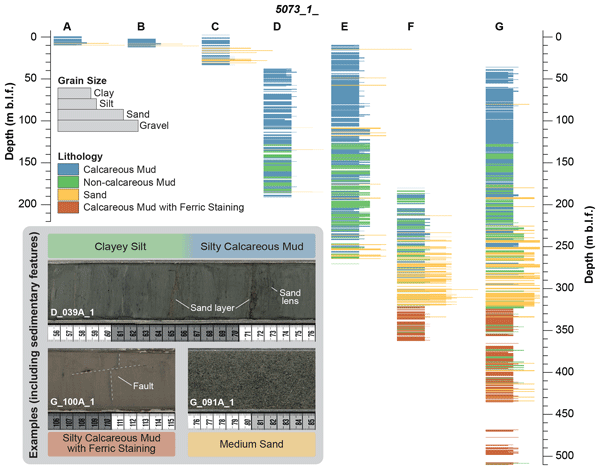
Marie-Luise Adolph, Junbo Wang, Liping Zhu, Leon J. Clarke, Andrew C. G. Henderson, Hendrik Vogel, Gerhard Daut, Peter Frenzel, Jianting Ju, Qiangqiang Kou, Dierk Michaelis, Olga Schmitz, Anja Schwarz, Volkhard Spiess, Arne Ulfers, Cidan Zhaxi, Daniel Ariztegui, Natasha Barbolini, Thorsten Bauersachs, Erwin Braun, Giulia Ceriotti, Brian Grivna, Marlene Hoehle, Rolf Kipfer, Wilhelmine Klamt, Cindy Kunkel, Aliisa Laakkonen, Minghui Li, Qingfeng Ma, Paul Moser Röggla, Kaja Müller, Anders Noren, Ryan O'Grady, Santiago Otero, Maïlys Picard, Anna Pint, Camille Thomas, Jerome Van der Woerd, Mathias Vinnepand, Claudia Wrozyna, Christian Zeeden, Xinghuan Zhu, and Torsten Haberzettl
Sci. Dril., 35, 99–117, https://doi.org/10.5194/sd-35-99-2026, https://doi.org/10.5194/sd-35-99-2026, 2026
Short summary
Short summary
We drilled deep into sediments beneath a large lake on the Tibetan Plateau, Nam Co, to learn how climate and environments have changed over multiple ice age cycles. The recovered sediments show repeated shifts between major changes in lake conditions, water chemistry, and ecosystems. These findings help clarify how wind systems responded to natural climate cycles and improve understanding of how high mountain regions may react to future climate change and environmental stress.
Jonas Kordt, Saptarshi Dey, Bodo Bookhagen, Georg Rugel, Johannes Lachner, Carlos Vivo-Vilches, Naveen Chauhan, and Rasmus Thiede
EGUsphere, https://doi.org/10.5194/egusphere-2026-2382, https://doi.org/10.5194/egusphere-2026-2382, 2026
Short summary
Short summary
Himalayan rivers respond to climatic forcing across multiple timescales. We investigate fluvial terraces along the Ravi and Suil rivers in the western Higher Himalaya using field work and various dating methods. Results show that past sediment accumulation and incision cycles can be linked to climatic oscillations. All terrace surfaces were affected by reworking, ~2–10 times more recent than deposition, and we propose that mass wasting and glacial lake outburst floods shaped these surfaces.
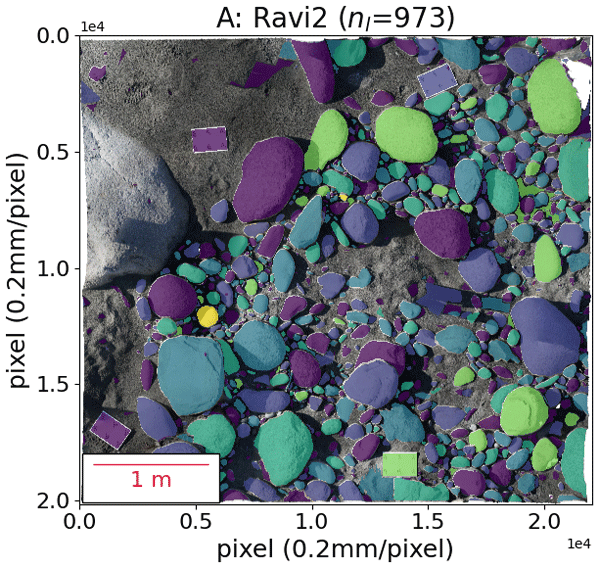
Vito Chan, Aljoscha Rheinwalt, and Bodo Bookhagen
Earth Surf. Dynam., 14, 391–416, https://doi.org/10.5194/esurf-14-391-2026, https://doi.org/10.5194/esurf-14-391-2026, 2026
Short summary
Short summary
OrthoSAM is a new method that uses Segment Anything Model (SAM) to automatically identify and outline individual pebbles in high-resolution aerial images. OrthoSAM divides large photos into smaller sections that SAM can process effectively, and it improves the way to tell SAM where to look for objects. It uses a multi-resolution approach to handle different sizes, and it can be used to determine the distribution. Tests with computer-generated images and field data show that it is very precise.
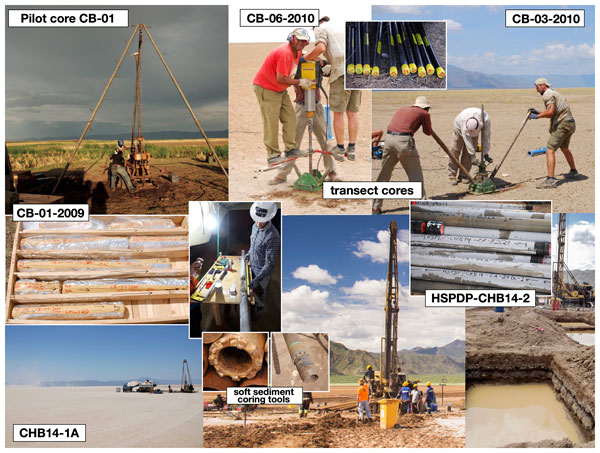
Verena Foerster, Asfawossen Asrat, Christopher Bronk Ramsey, Erik T. Brown, Alan Deino, Asfaw Erbello, Markus L. Fischer, Daniel Gebregiorgis, Annett Junginger, Stefanie Kaboth-Bahr, Christine S. Lane, Stephan Opitz, Anders Noren, Helen M. Roberts, Ralph Tiedemann, Céline-Marie Vidal, Finn Viehberg, Ralf Vogelsang, Charlotte Zachow, Bahru Zinaye, Andrew S. Cohen, Henry F. Lamb, Frank Schaebitz, and Martin H. Trauth
Sci. Dril., 35, 61–81, https://doi.org/10.5194/sd-35-61-2026, https://doi.org/10.5194/sd-35-61-2026, 2026
Short summary
Short summary
To explore links between human evolution and environmental change, the Chew Bahir basin in southern Ethiopia, a sedimentary climate archive, was investigated through a series of scientific drilling expeditions. We share key lessons from planning, site selection, drilling strategy and core processing, with a focus on the awards and challenges in collecting and merging twin sediment cores into a near-continuous record to provide practical lessons for future projects.
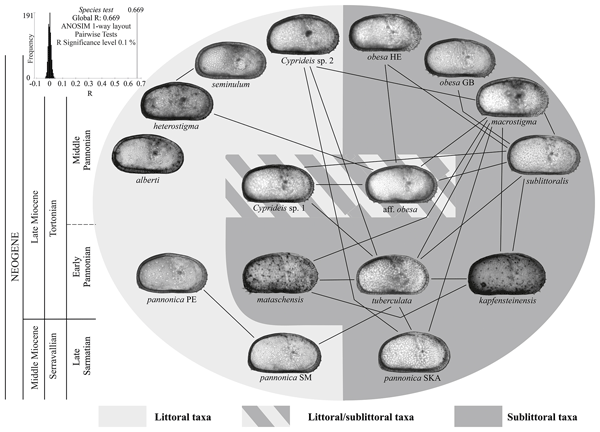
Radovan Pipík, Martin Gross, and Dušan Starek
J. Micropalaeontol., 45, 33–50, https://doi.org/10.5194/jm-45-33-2026, https://doi.org/10.5194/jm-45-33-2026, 2026
Short summary
Short summary
The story of Cyprideis pannonica offers a fascinating insight into how environmental change shapes biodiversity. Over 2 million years, this tiny ostracod adapted to habitats that transformed from a sea into a lake. Originally varied in shape and size, Cyprideis diversified into many species during periods of ecological complexity. These findings demonstrate that even small organisms can reveal big evolutionary patterns – linking habitat changes, speciation, and adaptation within a dynamic landscape.

Raúl Trejos-Tamayo, Darwin Garzón, Diana Ochoa, Angelo Plata-Torres, Fabrizio Frontalini, Felipe Vallejo-Hincapié, Fátima Abrantes, Vitor Magalhães, Viviana Arias-Villegas, Carlos Jaramillo, Jaime Escobar, Jason H. Curtis, José-Abel Flores, Constanza Osorio-Tabares, Mónica Duque-Castaño, Erika Bedoya, and Andrés Pardo-Trujillo
J. Micropalaeontol., 45, 1–25, https://doi.org/10.5194/jm-45-1-2026, https://doi.org/10.5194/jm-45-1-2026, 2026
Short summary
Short summary
Our study investigates how tropical marine ecosystems responded to climate change during the Eocene–Oligocene transition (~34 Ma). Based on microfossil and geochemical data from a Caribbean drill core, we identify enhanced terrigenous input, increased surface productivity, changes in carbonate preservation, and reduced deep-water oxygenation. Likely driven by global cooling and sea-level fall, these shifts offer new insights into low-latitude paleoenvironmental change.
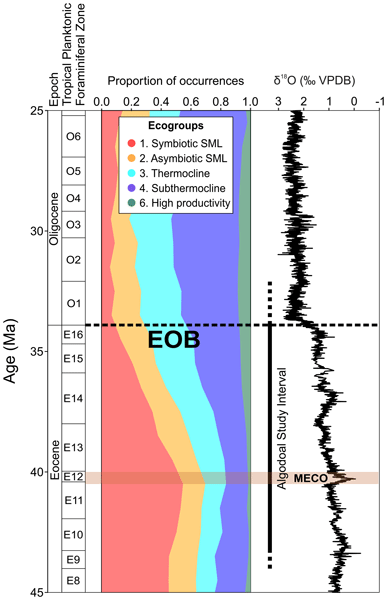
Adam Woodhouse, Bridget S. Wade, Tom Dunkley Jones, Carina Hoorn, and Kirsty M. Edgar
J. Micropalaeontol., 44, 601–632, https://doi.org/10.5194/jm-44-601-2025, https://doi.org/10.5194/jm-44-601-2025, 2025
Short summary
Short summary
Between 44–34 million years ago, Earth's climate substantially cooled, leading to permanent Antarctic glaciation and major ocean changes. This caused high extinction rates amongst marine organisms, including the planktonic foraminifera. New data from the western Atlantic Ocean highlight how these organisms responded, where surface species declined and deeper species increased in abundance, reflecting shifts in vertical ocean structure during this key climate transition.
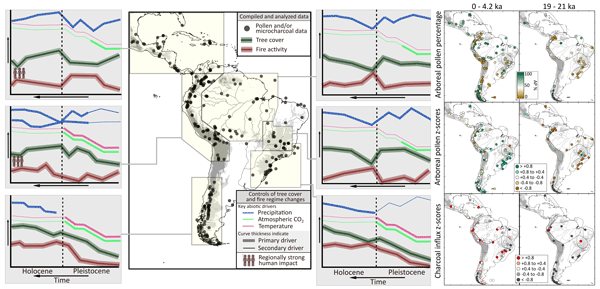
Thomas Kenji Akabane, Cristiano Mazur Chiessi, Paulo Eduardo De Oliveira, Jennifer Watling, Ana Carolina Carnaval, Vincent Hanquiez, Dailson José Bertassoli Jr., Thaís Aparecida Silva, Marília H. Shimizu, and Anne-Laure Daniau
Earth Syst. Dynam., 16, 1887–1921, https://doi.org/10.5194/esd-16-1887-2025, https://doi.org/10.5194/esd-16-1887-2025, 2025
Short summary
Short summary
Vegetation and fire regimes have changed over the last 21 000 years. Here, we compile pollen and charcoal records from the Neotropics to assess tree cover and fire activity trajectories and identify their main controls. We found that landscapes were shaped by an interplay of temperature, atmospheric CO2, precipitation, vegetation-fire feedback, and human impacts. These drivers varied in importance across regions and time periods, leading to distinct responses under different boundary conditions.
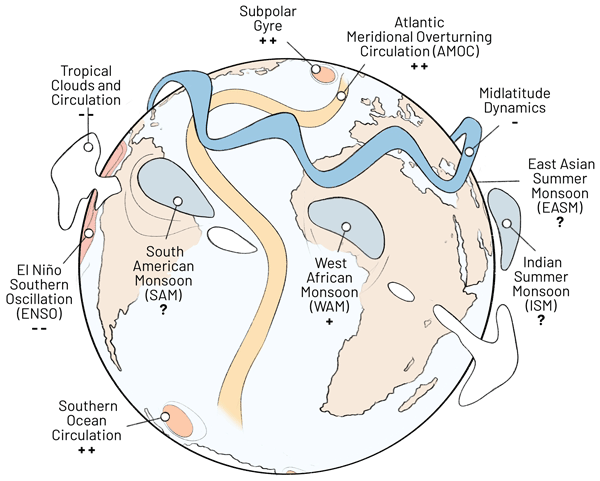
Sina Loriani, Yevgeny Aksenov, David I. Armstrong McKay, Govindasamy Bala, Andreas Born, Cristiano Mazur Chiessi, Henk A. Dijkstra, Jonathan F. Donges, Sybren Drijfhout, Matthew H. England, Alexey V. Fedorov, Laura C. Jackson, Kai Kornhuber, Gabriele Messori, Francesco S. R. Pausata, Stefanie Rynders, Jean-Baptiste Sallée, Bablu Sinha, Steven C. Sherwood, Didier Swingedouw, and Thejna Tharammal
Earth Syst. Dynam., 16, 1611–1653, https://doi.org/10.5194/esd-16-1611-2025, https://doi.org/10.5194/esd-16-1611-2025, 2025
Short summary
Short summary
In this work, we draw on palaeo-records, observations, and modelling studies to review tipping points in the ocean overturning circulations, monsoon systems, and global atmospheric circulations. We find indications for tipping in the ocean overturning circulations and the West African monsoon, with potentially severe impacts on the Earth system and humans. Tipping in the other considered systems is regarded as conceivable but is currently not sufficiently supported by evidence.
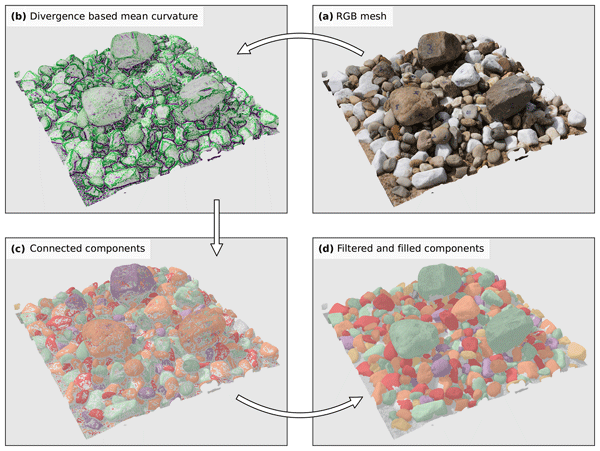
Aljoscha Rheinwalt, Benjamin Purinton, and Bodo Bookhagen
Earth Surf. Dynam., 13, 923–940, https://doi.org/10.5194/esurf-13-923-2025, https://doi.org/10.5194/esurf-13-923-2025, 2025
Short summary
Short summary
Our study presents a computer-based method to detect and measure pebbles in 3D models reconstructed from camera photos. We tested it in a controlled setup and achieved 98 % accuracy in detecting pebbles. Unlike traditional 2D methods, our approach provides full 3D size and orientation data. This improves sediment analysis and riverbed studies by offering more precise measurements. Our work highlights the potential of 3D modeling for studying natural surfaces.
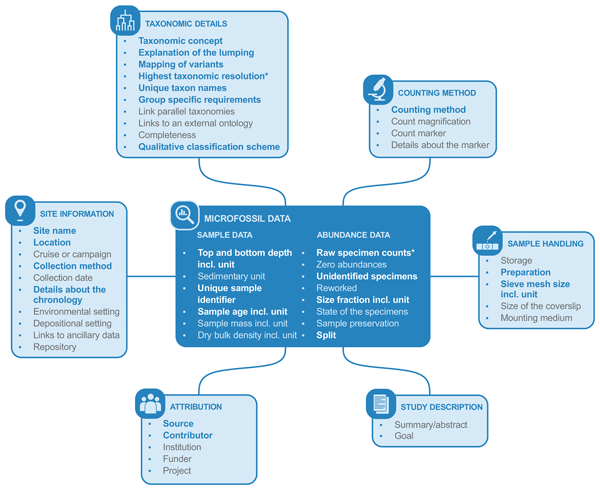
Lukas Jonkers, Tonke Strack, Montserrat Alonso-Garcia, Simon D'haenens, Robert Huber, Michal Kucera, Iván Hernández-Almeida, Chloe L. C. Jones, Brett Metcalfe, Rajeev Saraswat, Lóránd Silye, Sanjay K. Verma, Muhamad Naim Abd Malek, Gerald Auer, Cátia F. Barbosa, Maria A. Barcena, Karl-Heinz Baumann, Flavia Boscolo-Galazzo, Joeven Austine S. Calvelo, Lucilla Capotondi, Martina Caratelli, Jorge Cardich, Humberto Carvajal-Chitty, Markéta Chroustová, Helen K. Coxall, Renata M. de Mello, Anne de Vernal, Paula Diz, Kirsty M. Edgar, Helena L. Filipsson, Ángela Fraguas, Heather L. Furlong, Giacomo Galli, Natalia L. García Chapori, Robyn Granger, Jeroen Groeneveld, Adil Imam, Rebecca Jackson, David Lazarus, Julie Meilland, Marína Molčan Matejová, Raphael Morard, Caterina Morigi, Sven N. Nielsen, Diana Ochoa, Maria Rose Petrizzo, Andrés S. Rigual-Hernández, Marina C. Rillo, Matthew L. Staitis, Gamze Tanık, Raúl Tapia, Nishant Vats, Bridget S. Wade, and Anna E. Weinmann
J. Micropalaeontol., 44, 145–168, https://doi.org/10.5194/jm-44-145-2025, https://doi.org/10.5194/jm-44-145-2025, 2025
Short summary
Short summary
Our study provides guidelines improving the reuse of marine microfossil assemblage data, which are valuable for understanding past ecosystems and environmental change. Based on a survey of 113 researchers, we identified key data attributes required for effective reuse. Analysis of a selection of datasets available online reveals a gap between the attributes scientists consider essential and the data currently available, highlighting the need for clearer data documentation and sharing practices.
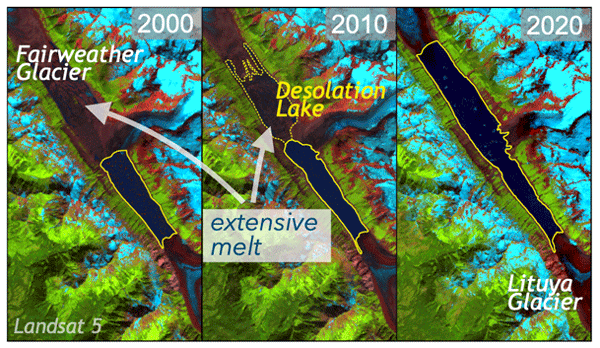
Natalie Lützow, Bretwood Higman, Martin Truffer, Bodo Bookhagen, Friedrich Knuth, Oliver Korup, Katie E. Hughes, Marten Geertsema, John J. Clague, and Georg Veh
The Cryosphere, 19, 1085–1102, https://doi.org/10.5194/tc-19-1085-2025, https://doi.org/10.5194/tc-19-1085-2025, 2025
Short summary
Short summary
As the atmosphere warms, thinning glacier dams impound smaller lakes at their margins. Yet, some lakes deviate from this trend and have instead grown over time, increasing the risk of glacier floods to downstream populations and infrastructure. In this article, we examine the mechanisms behind the growth of an ice-dammed lake in Alaska. We find that the growth in size and outburst volumes is more controlled by glacier front downwaste than by overall mass loss over the entire glacier surface.
Biagio Giaccio, Bernd Wagner, Giovanni Zanchetta, Adele Bertini, Gian Paolo Cavinato, Roberto de Franco, Fabio Florindo, David A. Hodell, Thomas A. Neubauer, Sebastien Nomade, Alison Pereira, Laura Sadori, Sara Satolli, Polychronis C. Tzedakis, Paul Albert, Paolo Boncio, Cindy De Jonge, Alexander Francke, Christine Heim, Alessia Masi, Marta Marchegiano, Helen M. Roberts, Anders Noren, and the MEME team
Sci. Dril., 33, 249–266, https://doi.org/10.5194/sd-33-249-2024, https://doi.org/10.5194/sd-33-249-2024, 2024
Short summary
Short summary
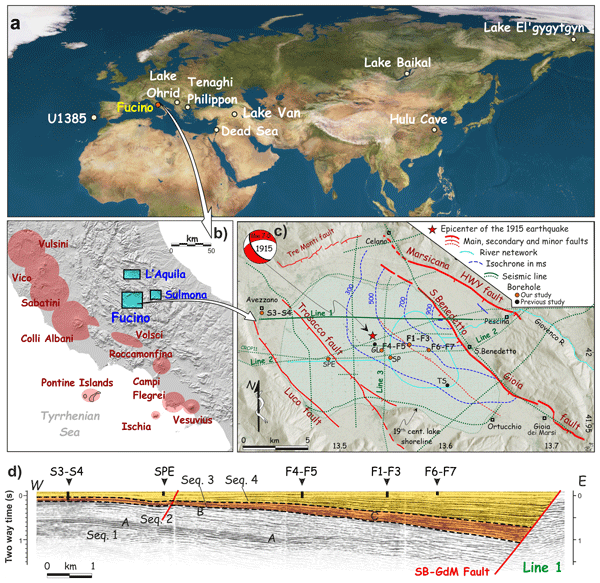
A total of 42 Earth scientists from 14 countries met in Gioia dei Marsi, central Italy, on 23 to 27 October 2023 to explore the potential for deep drilling of the thick lake sediment sequence of the Fucino Basin. The aim was to reconstruct the history of climate, ecosystem, and biodiversity changes and of the explosive volcanism and tectonics in central Italy over the last 3.5 million years, constrained by a detailed radiometric chronology.
Arianna V. Del Gaudio, Aaron Avery, Gerald Auer, Werner E. Piller, and Walter Kurz
Clim. Past, 20, 2237–2266, https://doi.org/10.5194/cp-20-2237-2024, https://doi.org/10.5194/cp-20-2237-2024, 2024
Short summary
Short summary
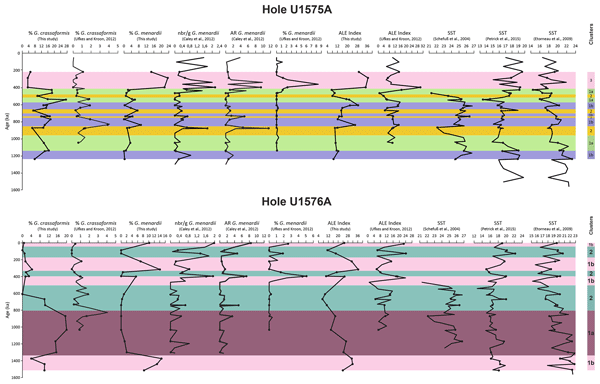
The Benguela Upwelling System is a region in the SE Atlantic Ocean of high biological productivity. It comprises several water masses such as the Benguela Current, South Atlantic Central Water, and Indian Ocean Agulhas waters. We analyzed planktonic foraminifera from IODP Sites U1575 and U1576 to characterize water masses and their interplay in the Pleistocene. This defined changes in the local thermocline, which were linked to long-term Benguela Niño- and Niña-like and deglaciation events.
Ariane Mueting and Bodo Bookhagen
Earth Surf. Dynam., 12, 1121–1143, https://doi.org/10.5194/esurf-12-1121-2024, https://doi.org/10.5194/esurf-12-1121-2024, 2024
Short summary
Short summary
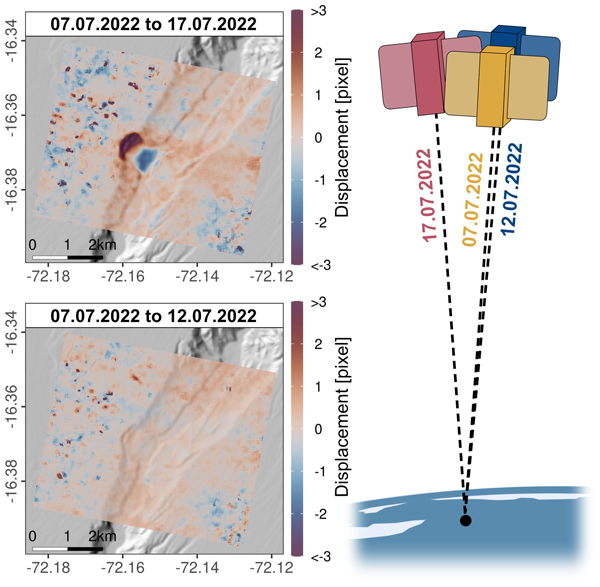
This study investigates the use of optical PlanetScope data for offset tracking of the Earth's surface movement. We found that co-registration accuracy is locally degraded when outdated elevation models are used for orthorectification. To mitigate this bias, we propose to only correlate scenes acquired from common perspectives or base orthorectification on more up-to-date elevation models generated from PlanetScope data alone. This enables a more detailed analysis of landslide dynamics.
Christoph Heubeck, Nic Beukes, Michiel de Kock, Martin Homann, Emmanuelle J. Javaux, Takeshi Kakegawa, Stefan Lalonde, Paul Mason, Phumelele Mashele, Dora Paprika, Chris Rippon, Mike Tice, Rodney Tucker, Ryan Tucker, Victor Ndazamo, Astrid Christianson, and Cindy Kunkel
Sci. Dril., 33, 129–172, https://doi.org/10.5194/sd-33-129-2024, https://doi.org/10.5194/sd-33-129-2024, 2024
Short summary
Short summary
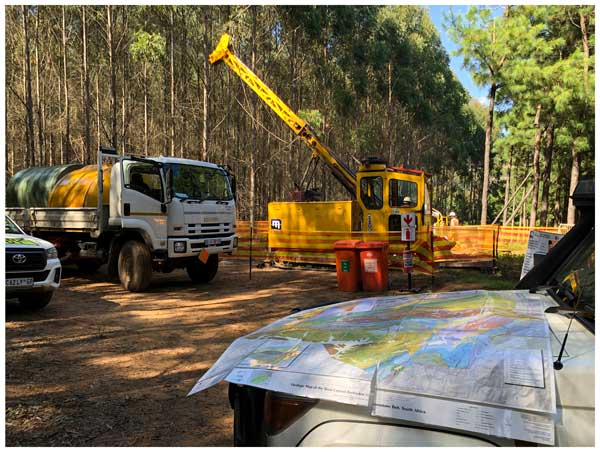
What was Earth like when young? Under what conditions did bacteria spread? We studied some of the best-preserved, oldest rocks in South Africa. Layers there are about vertical; we drilled sideways. Sedimentary strata from eight boreholes showed that they had been deposited in rivers, sandy shorelines, tidal flats, estuaries, and the ocean. Some have well-preserved remnants of microbes. We will learn how life was established on a planet which would appear very inhospitable to us nowadays.

Jonathan M. G. Stine, Joshua M. Feinberg, Adam K. Huttenlocker, Randall B. Irmis, Declan Ramirez, Rashida Doctor, John McDaris, Charles M. Henderson, Michael T. Read, Kristina Brady Shannon, Anders Noren, Ryan O'Grady, Ayva Sloo, Patrick Steury, Diego P. Fernandez, Amy C. Henrici, and Neil J. Tabor
Sci. Dril., 33, 109–128, https://doi.org/10.5194/sd-33-109-2024, https://doi.org/10.5194/sd-33-109-2024, 2024
Short summary
Short summary
We present initial results from the upper 450 m of ER-1, a legacy core collected from modern-day Bears Ears National Monument, Utah, USA. This section contains a relatively complete record of Upper Carboniferous to Early Permian sediments, providing a unique window on Earth's last icehouse–hothouse transition. Ongoing research will tie our results to important fossil sites, allowing us to better understand how this climate shift contributed to the evolution of terrestrial life.
Catherine C. Beck, Melissa Berke, Craig S. Feibel, Verena Foerster, Lydia Olaka, Helen M. Roberts, Christopher A. Scholz, Kat Cantner, Anders Noren, Geoffery Mibei Kiptoo, James Muirhead, and the Deep Drilling in the Turkana Basin (DDTB) project team
Sci. Dril., 33, 93–108, https://doi.org/10.5194/sd-33-93-2024, https://doi.org/10.5194/sd-33-93-2024, 2024
Short summary
Short summary
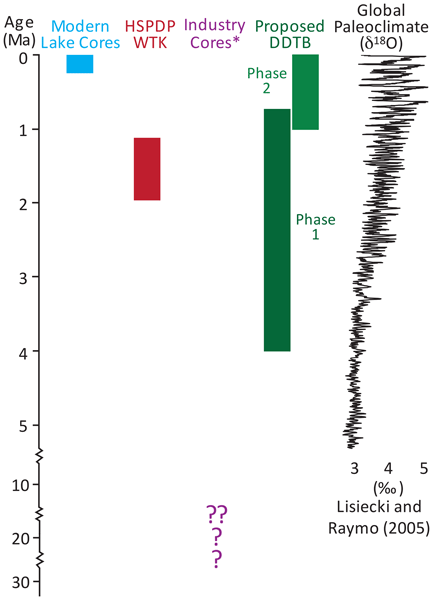
The Deep Drilling in the Turkana Basin project seeks to determine the relative impacts of tectonics and climate on eastern African ecosystems. To organize goals for coring, we hosted a workshop in Nairobi, Kenya, which focused on how a 4 Myr sedimentary core from Turkana will uniquely address research objectives related to basin evolution, past climates and environments, and modern resources. We concluded that a Pliocene to modern record is best accomplished through a two-phase drilling project.
Nico Wunderling, Anna S. von der Heydt, Yevgeny Aksenov, Stephen Barker, Robbin Bastiaansen, Victor Brovkin, Maura Brunetti, Victor Couplet, Thomas Kleinen, Caroline H. Lear, Johannes Lohmann, Rosa Maria Roman-Cuesta, Sacha Sinet, Didier Swingedouw, Ricarda Winkelmann, Pallavi Anand, Jonathan Barichivich, Sebastian Bathiany, Mara Baudena, John T. Bruun, Cristiano M. Chiessi, Helen K. Coxall, David Docquier, Jonathan F. Donges, Swinda K. J. Falkena, Ann Kristin Klose, David Obura, Juan Rocha, Stefanie Rynders, Norman Julius Steinert, and Matteo Willeit
Earth Syst. Dynam., 15, 41–74, https://doi.org/10.5194/esd-15-41-2024, https://doi.org/10.5194/esd-15-41-2024, 2024
Short summary
Short summary
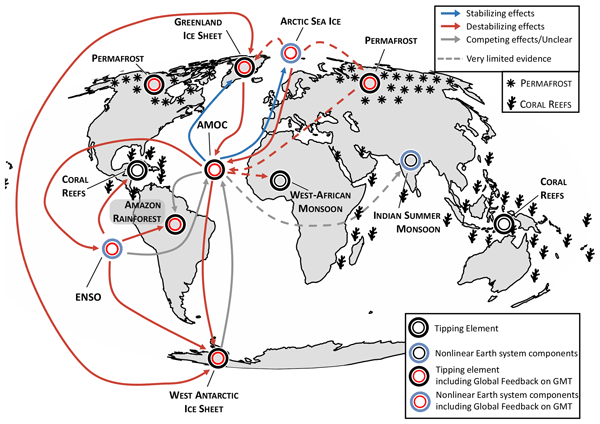
This paper maps out the state-of-the-art literature on interactions between tipping elements relevant for current global warming pathways. We find indications that many of the interactions between tipping elements are destabilizing. This means that tipping cascades cannot be ruled out on centennial to millennial timescales at global warming levels between 1.5 and 2.0 °C or on shorter timescales if global warming surpasses 2.0 °C.
Mallory Pilie, Martha E. Gibson, Ingrid C. Romero, Noelia B. Nuñez Otaño, Matthew J. Pound, Jennifer M. K. O'Keefe, and Sophie Warny
J. Micropalaeontol., 42, 291–307, https://doi.org/10.5194/jm-42-291-2023, https://doi.org/10.5194/jm-42-291-2023, 2023
Short summary
Short summary
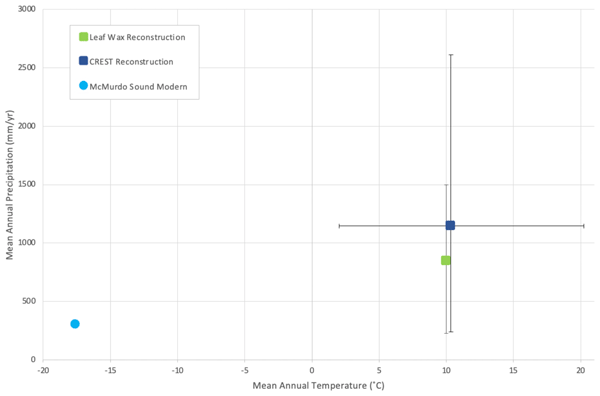
The ANDRILL SMS site provides the first Middle Miocene Antarctic fungal record. The CREST plant-based paleoclimate reconstructions confirm an intensification of the hydrological cycle during the MCO, with the Ross Sea region reconstructed 279 % wetter than modern conditions and a maximum mean annual temperature of 10.3 °C for the warmest intervals of the MCO. The plant-based reconstructions indicate a temperate, no dry season with a warm summer (Cfb) Köppen–Geiger climate classification.
Mathias Harzhauser, Oleg Mandic, and Werner E. Piller
Biogeosciences, 20, 4775–4794, https://doi.org/10.5194/bg-20-4775-2023, https://doi.org/10.5194/bg-20-4775-2023, 2023
Short summary
Short summary
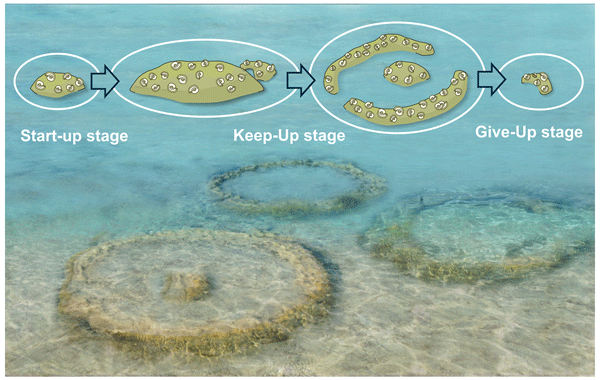
Bowl-shaped spirorbid microbialite bioherms formed during the late Middle Miocene (Sarmatian) in the central Paratethys Sea under a warm, arid climate. The microbialites and the surrounding sediment document a predominance of microbial activity in the shallow marine environments of the sea at that time. Modern microbialites are not analogues for these unique structures, which reflect a series of growth stages with an initial “start-up stage”, massive “keep-up stage” and termination of growth.
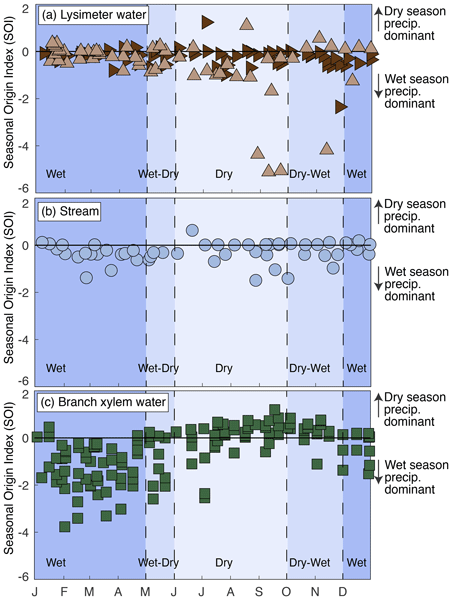
Emily I. Burt, Gregory R. Goldsmith, Roxanne M. Cruz-de Hoyos, Adan Julian Ccahuana Quispe, and A. Joshua West
Hydrol. Earth Syst. Sci., 27, 4173–4186, https://doi.org/10.5194/hess-27-4173-2023, https://doi.org/10.5194/hess-27-4173-2023, 2023
Short summary
Short summary
When it rains, water remains in the ground for variable amounts of time before it is taken up by plants or becomes streamflow. Understanding how long water stays in the ground before it is taken up by plants or becomes streamflow helps predict what will happen to the water cycle in future climates. Some studies suggest that plants take up water that has been in the ground for a long time; in contrast, we find that plants take up a significant amount of recent rain.
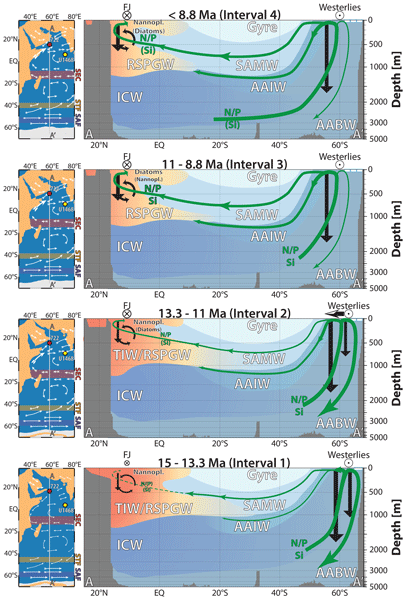
Gerald Auer, Or M. Bialik, Mary-Elizabeth Antoulas, Noam Vogt-Vincent, and Werner E. Piller
Clim. Past, 19, 2313–2340, https://doi.org/10.5194/cp-19-2313-2023, https://doi.org/10.5194/cp-19-2313-2023, 2023
Short summary
Short summary
We provided novel insights into the behaviour of a major upwelling cell between 15 and 8.5 million years ago. To study changing conditions, we apply a combination of geochemical and paleoecological parameters to characterize the nutrient availability and subsequent utilization by planktonic primary producers. These changes we then juxtapose with established records of contemporary monsoon wind intensification and changing high-latitude processes to explain shifts in the plankton community.
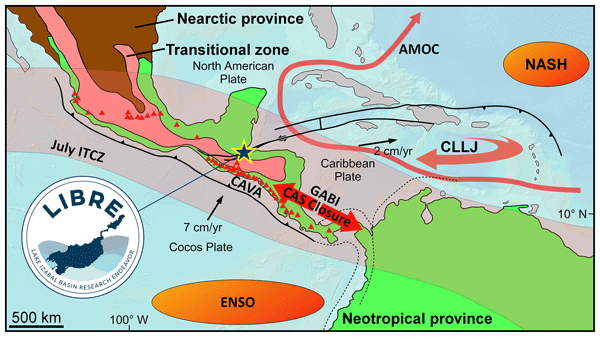
Jonathan Obrist-Farner, Andreas Eckert, Peter M. J. Douglas, Liseth Perez, Alex Correa-Metrio, Bronwen L. Konecky, Thorsten Bauersachs, Susan Zimmerman, Stephanie Scheidt, Mark Brenner, Steffen Kutterolf, Jeremy Maurer, Omar Flores, Caroline M. Burberry, Anders Noren, Amy Myrbo, Matthew Lachniet, Nigel Wattrus, Derek Gibson, and the LIBRE scientific team
Sci. Dril., 32, 85–100, https://doi.org/10.5194/sd-32-85-2023, https://doi.org/10.5194/sd-32-85-2023, 2023
Short summary
Short summary
In August 2022, 65 scientists from 13 countries gathered in Antigua, Guatemala, for a workshop, co-funded by the US National Science Foundation and the International Continental Scientific Drilling Program. This workshop considered the potential of establishing a continental scientific drilling program in the Lake Izabal Basin, eastern Guatemala, with the goals of establishing a borehole observatory and investigating one of the longest continental records from the northern Neotropics.
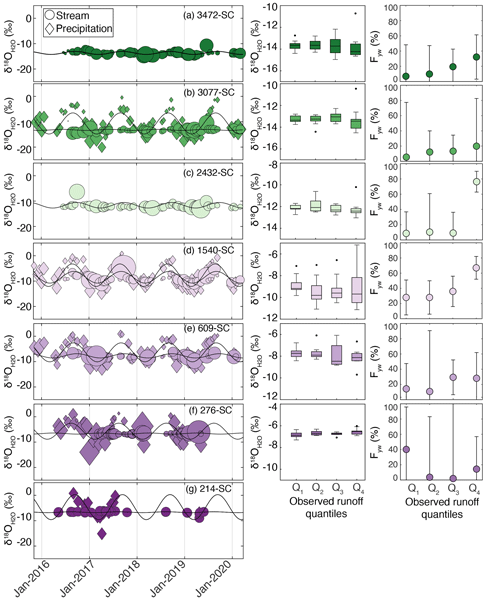
Emily I. Burt, Daxs Herson Coayla Rimachi, Adan Julian Ccahuana Quispe, Abra Atwood, and A. Joshua West
Hydrol. Earth Syst. Sci., 27, 2883–2898, https://doi.org/10.5194/hess-27-2883-2023, https://doi.org/10.5194/hess-27-2883-2023, 2023
Short summary
Short summary
Mountains store and release water, serving as water towers for downstream regions and affecting global sediment and carbon fluxes. We use stream and rain chemistry to calculate how much streamflow comes from recent rainfall across seven sites in the Andes mountains and the nearby Amazon lowlands. We find that the type of rock and the intensity of rainfall control water retention and release, challenging assumptions that mountain topography exerts the primary effect on watershed hydrology.
Maxwell P. Dahlquist and A. Joshua West
Earth Surf. Dynam., 10, 705–722, https://doi.org/10.5194/esurf-10-705-2022, https://doi.org/10.5194/esurf-10-705-2022, 2022
Short summary
Short summary
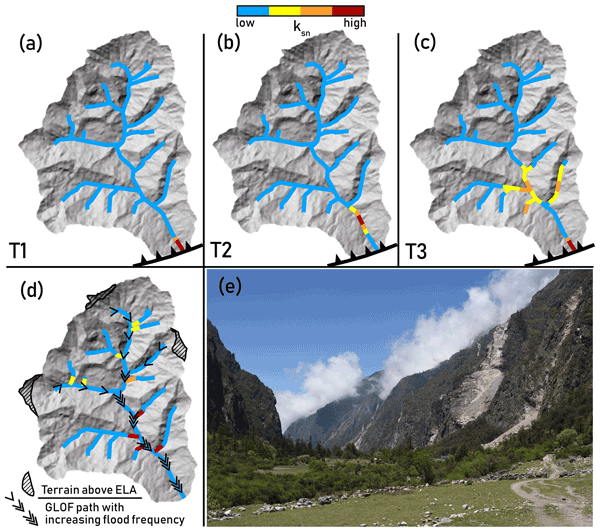
Himalayan rivers are full of giant boulders that rarely move except during glacial lake outburst floods (GLOFs), which therefore must be important drivers of erosion in the Himalayas. GLOFs are rare, so little is known about their long-term erosional impact. We found that rivers in Nepal have channel geometry that, compared with markers of upstream glaciation, confirm GLOFs as a major control on erosion. This previously unrecognized control should be accounted for in landscape evolution studies.
Stefan Mulitza, Torsten Bickert, Helen C. Bostock, Cristiano M. Chiessi, Barbara Donner, Aline Govin, Naomi Harada, Enqing Huang, Heather Johnstone, Henning Kuhnert, Michael Langner, Frank Lamy, Lester Lembke-Jene, Lorraine Lisiecki, Jean Lynch-Stieglitz, Lars Max, Mahyar Mohtadi, Gesine Mollenhauer, Juan Muglia, Dirk Nürnberg, André Paul, Carsten Rühlemann, Janne Repschläger, Rajeev Saraswat, Andreas Schmittner, Elisabeth L. Sikes, Robert F. Spielhagen, and Ralf Tiedemann
Earth Syst. Sci. Data, 14, 2553–2611, https://doi.org/10.5194/essd-14-2553-2022, https://doi.org/10.5194/essd-14-2553-2022, 2022
Short summary
Short summary
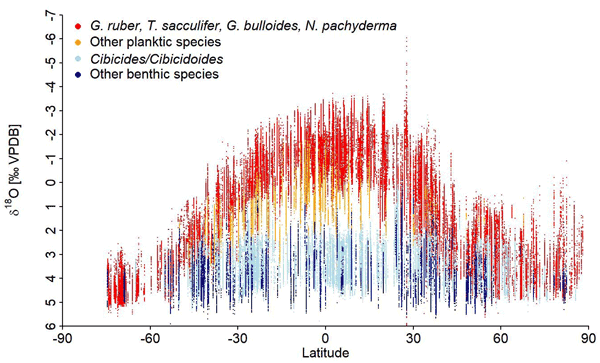
Stable isotope ratios of foraminiferal shells from deep-sea sediments preserve key information on the variability of ocean circulation and ice volume. We present the first global atlas of harmonized raw downcore oxygen and carbon isotope ratios of various planktonic and benthic foraminiferal species. The atlas is a foundation for the analyses of the history of Earth system components, for finding future coring sites, and for teaching marine stratigraphy and paleoceanography.
Ariel Henrique do Prado, Renato Paes de Almeida, Cristiano Padalino Galeazzi, Victor Sacek, and Fritz Schlunegger
Earth Surf. Dynam., 10, 457–471, https://doi.org/10.5194/esurf-10-457-2022, https://doi.org/10.5194/esurf-10-457-2022, 2022
Short summary
Short summary
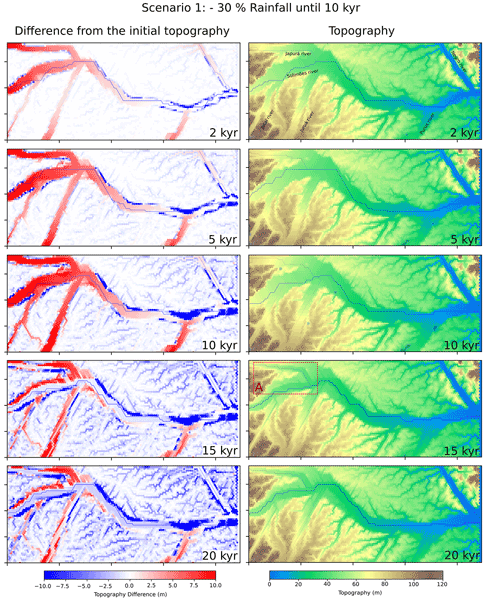
Our work is focused on describing how and why the terrace levels of central Amazonia were formed during the last 100 000 years. We propose to address this question through a landscape evolution numerical model. Our results show that terrace levels at lower elevation were established in response to dry–wet climate changes and the older terrace levels at higher elevations most likely formed in response to a previously higher elevation of the regional base level.
Madison M. Douglas, Gen K. Li, Woodward W. Fischer, Joel C. Rowland, Preston C. Kemeny, A. Joshua West, Jon Schwenk, Anastasia P. Piliouras, Austin J. Chadwick, and Michael P. Lamb
Earth Surf. Dynam., 10, 421–435, https://doi.org/10.5194/esurf-10-421-2022, https://doi.org/10.5194/esurf-10-421-2022, 2022
Short summary
Short summary
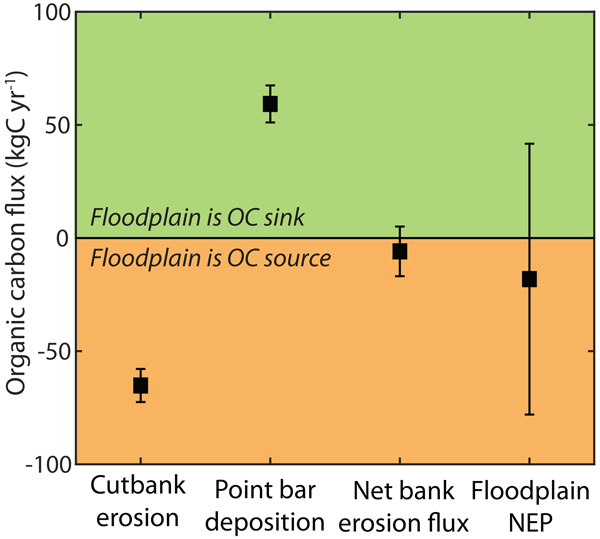
Arctic rivers erode into permafrost and mobilize organic carbon, which can react to form greenhouse gasses or be re-buried in floodplain deposits. We collected samples on a permafrost floodplain in Alaska to determine if more carbon is eroded or deposited by river meandering. The floodplain contained a mixture of young carbon fixed by the biosphere and old, re-deposited carbon. Thus, sediment storage may allow Arctic river floodplains to retain aged organic carbon even when permafrost thaws.
Cited articles
Allan, C., Burel, J.-M., Moore, J., Blackburn, C., Linkert, M., Loynton, S., MacDonald, D., Moore, W. J., Neves, C., Patterson, A., Porter, M., Tarkowska, A., Loranger, B., Avondo, J., Lagerstedt, I., Lianas, L., Leo, S., Hands, K., Hay, R. T., Patwardhan, A., Best, C., Kleywegt, Gerard J., Zanetti, G., and Swedlow, J. R.: OMERO: flexible, model-driven data management for experimental biology, Nat. Methods, 9, 245–253, https://doi.org/10.1038/nmeth.1896, 2012.
Allègre, C. J., Dupré, B., Négrel, P., and Gaillardet, J.: Sr-Nd-Pb isotope systematics in Amazon and Congo River systems: constraints about erosion processes, Chem. Geol., 131, 93–112, https://doi.org/10.1016/0009-2541(96)00028-9, 1996.
Almeida, R. P., Althaus, C. E., Janikian L., Gomes, P. V. O, Figueiredo, F. T., Sawakuchi, A. O., Freitas, B. T., and Silva, L. H. G.: Reappraisal of the Cretaceous and Paleogene paleogeography of eastern Amazonia based on systematic paleocurrent measurements, Cretaceous Res., 163, 105948, https://doi.org/10.1016/j.cretres.2024.105948, 2024.
Ambrose, G. and Harris, P.: Fundamentos de Design Criativo, Bookman Editora, 191 pp., ISBN 9788540701274, 2012.
Andò, S.: Gravimetric separation of heavy minerals in sediments and rocks, Minerals, 10, 273, https://doi.org/10.3390/min10030273, 2020.
Antoine, P.-O., Abello, M. A., Adnet, S., Sierra, A. J. A., Baby, P., Billet, G., Boivin, M., Calderon, Y., Candela, A. Chabain, J., Corfu, F., Croft, D. A., Ganerød, M., Jaramillo, C., Klaus, S., Marivaux, L., Navarrete, R. E., Orliac, M. J., Parra, F., Pérez, M. E., Pujos, F., Rage, J.-C., Ravel, A., Robinet, C., Roddaz, M., Tejada-Lara, J. V., Vélez-Juarbe, J., Wesselingh, F. P., and Salas-Gismondi, R.: A 60-million-year Cenozoic history of western Amazonian ecosystems in Contamana, eastern Peru, Gondwana Res., 31, 30–59, https://doi.org/10.1016/j.gr.2015.11.001, 2016.
Baker, P. A., Fritz, S. C., Silva, C. G., Rigsby, C. A., Absy, M. L., Almeida, R. P., Caputo, M., Chiessi, C. M., Cruz, F. W., Dick, C. W., Feakins, S. J., Figueiredo, J., Freeman, K. H., Hoorn, C., Jaramillo, C., Kern, A. K., Latrubesse, E. M., Ledru, M. P., Marzoli, A., Myrbo, A., Noren, A., Piller, W. E., Ramos, M. I. F., Ribas, C. C., Trnadade, R., West, A. J., Wahnfried, I., and Willard, D. A.: Trans-Amazon Drilling Project (TADP): origins and evolution of the forests, climate, and hydrology of the South American tropics, Sci. Dril., 20, 41–49, https://doi.org/10.5194/sd-20-41-2015, 2015.
Beck, L. and Cable, T. T.: Interpretation for the 21st century: Fifteen guiding principles for interpreting nature, ISBN 1571671331, 2002.
Bertassoli, D. J., Sawakuchi, A. O., Chiessi, C. M., Schefuss, E., Hartmann, G. A., Haggi, C., Cruz, F. W., Zabel, M., McGlue, M. M., Santos, R. A., and Pupim, F. N.: Spatiotemporal variations of riverine discharge within the Amazon Basin during the Late Holocene coincide with extratropical temperature anomalies, Geophys. Res. Lett., 46, 9013–9022, https://doi.org/10.1029/2019GL082936, 2019.
Bicudo, T. C., Sacek, V., Almeida, R. P, Bates, J. M., and Ribas, C. C.: Andean tectonics and mantle dynamics as a pervasive influence on Amazonian ecosystem, Sci. Rep., 9, 16879, https://doi.org/10.1038/s41598-019-53465-y, 2019.
Bicudo, T. C., Sacek, V., and Almeida, R. P.: Reappraisal of the relative importance of dynamic topography and Andean orogeny on Amazon landscape evolution, Earth Planet. Sc. Lett., 546, 116423, https://doi.org/10.1016/j.epsl.2020.116423, 2020.
Bishop, B. T., Beck, S. L., Zandt, G., Wagner, L., Long, M., Antonijevic, S. K., Kumar, A., and Tavera, H.: Causes and consequences of flat-slab subduction in southern Peru, Geosphere, 13, 1392–1407, https://doi.org/10.1130/GES01440.1, 2017.
Bouchez, J., Gaillardet, J., France-Lanord, C., Maurice, L., and Dutra-Maia, P.: Grain size control of river suspended sediment geochemistry: clues from Amazon River depth profiles, Geochem. Geophy. Geosy., 12, Q03008, https://doi.org/10.1029/2010GC003380, 2011.
Brilha, J.: Geoheritage: inventories and evaluation, Geoheritage, 4, 69–86, 2018.
Buylaert, J.-P., Jain, M., Murray, A. S., Thompson, K. J., Thiel, C., and Sohbati, R.: A robust feldspar luminescence dating method for middle and late Pleistocene sediments, Boreas, 41, 435–451, https://doi.org/10.1111/j.1502-3885.2012.00248.x, 2012.
Caputo, M. V. and Soares, E. A.: Eustatic and tectonic change effects in the reversion of the transcontinental Amazon River drainage system, Braz. J. Geol., 46, 301–328, https://doi.org/10.1590/2317-4889201620160066, 2016.
Cenozoic CO2 Proxy Integration Project (CENCO-PIP) Consortium: Toward a Cenozoic history of atmospheric CO2, Science, 382, eadi5177, https://doi.org/10.1126/science.adi5177, 2023.
Cheary, R. W. and Coelho, A.: A fundamental parameters approach to X-ray line-profile fitting, Appl. Crystallogr., 25, 109–121, https://doi.org/10.1107/S0021889891010804, 1992.
Cheng, H., Sinha, A., Cruz, F. W., Wang, X., Edwards, R. L., D'Horta, F. M., Ribas, C. C., Vuille, M., Stott, L. D., and Auler, A. S.: Climate change patterns in Amazonia and biodiversity, Nat. Commun., 4, 1411, https://doi.org/10.1038/ncomms2415, 2013.
Cordani, U. G., Ramos, V. A., Fraga, L. M., Cegarra, M., Delgado, I., Souza, K. G., Gomes, F. E. M., and Schobbenhaus, C.: Tectonic map of South America: scale 1 : 5 000 000, Commission for the Geological Map of the World, Paris, France, https://doi.org/10.14682/2016TEMSA, 2016.
CPRM (Serviço Geológico do Brasil): Mapa cronoestratigráfico simplificado do Brasil, scale 1:5,000,000, https://rigeo.sgb.gov.br/handle/doc/17619 (last access: 8 June 2026), 2015.
Crifò, C. and Strömberg, C. A.: Spatial patterns of soil phytoliths in a wet vs. dry Neotropical forest: implications for paleoecology, Palaeogr. Palaeocl. Palaeoec., 562, https://doi.org/10.1016/j.palaeo.2020.110100, 2021.
Cunha, P. R. C.: Bacia do Acre, Boletim de Geociências da Petrobras, 15, 207–215, 2007.
da Silva-Caminha, S. A. F., D'Apolito, C., Jaramillo, C., Espinosa, B. S., and Rueda, M.: Palynostratigraphy of the Ramon and Solimões formations in the Acre Basin, Brazil, J. South Am. Earth Sci., 103, 102720, https://doi.org/10.1016/j.jsames.2020.102720, 2020.
Dearing, J. A., Livingstone, I., and Zhou, L. P.: A late Quaternary magnetic record of Tunisian loess and its climatic significance, Geophys. Res. Lett., 23, 189–192, https://doi.org/10.1029/95GL03132, 1996.
DePaolo, D. J.: Trace element and isotopic effects of combined wallrock assimilation and fractional crystallization, Earth Planet. Sc. Lett., 53, 189–202, https://doi.org/10.1016/0012-821X(81)90153-9, 1981.
Dickau, R., Whitney, B. S., Iriarte, J., Mayle, F. E. , Soto, J. D., Metcalfe, P., Street-Perrott, F. A., Loader, N. J., Ficken, K. J., and Killeen, T. J.: Differentiation of neotropical ecosystems by modern soil phytolith assemblages and its implications for palaeoenvironmental and archaeological reconstructions, Rev. Palaeobot. Palyno., 193, 15–37, https://doi.org/10.1016/j.revpalbo.2013.01.004, 2013.
Erzinger, J., Wiersberg, T., and Zimmer, M.: Real-time mud gas logging and sampling during drilling, Geofluids, 6, 225–233, https://doi.org/10.1111/j.1468-8123.2006.00152.x, 2006.
Espinoza, J. C., Ronchail, J., Guyot, J. L., Cochonneau, G., Naziano, F., Lavado, W., Olivera, E., Pombosa, R., and Vauchel, P.: Spatio-temporal rainfall variability in the Amazon Basin countries (Brazil, Peru, Bolivia, Colombia, and Ecuador), Int. J. Climatol., 29, 1574–1594, https://doi.org/10.1002/joc.1791, 2009.
Espurt, N., Baby, P., Brusset, S., Roddaz, M., Hermoza, W., Regard, V., Antoine, P.-O., Salas-Gismondi, P. R., and Bolaños, R.: How does the Nazca Ridge subduction influence the modern Amazonian foreland basin?, Geology, 35, 515–518, https://doi.org/10.1130/g23237A.1, 2007.
Espurt, N., Baby, P., Brusset, S., Roddaz, M., Hermoza, H., and Barbarian, J.: The Nazca Ridge and uplift of the Fitzcarrald Arch: implications for regional geology in northern South America, in: Amazonia, Landscape and Species Evolution (1st edition), edited by: Hoorn, C. and Wesselingh, F. P., Blackwell Publishing, ISBN 978-1-4051-8113-6, 2010.
Etiope, G. and Schwietzke, S.: Global geological methane emissions: An update of top-down and bottom-up estimates, Elem. Sci. Anth., 7, 47, https://doi.org/10.1525/elementa.383, 2019.
Expedition 337 Scientists: Methods, edited by: Inagaki, F., Hinrichs, K.-U., Kubo, Y., and the Expedition 337 Scientists, Proc. IODP, 337, Integrated Ocean Drilling Program Management International, Inc., Tokyo, https://doi.org/10.2204/iodp.proc.337.102.2013, 2013.
Figueiredo, J., Hoorn, C., van der Ven, P., and Soares, E.: Late Miocene onset of the Amazon River and the Amazon deep-sea fan: Evidence from the Foz do Amazonas Basin, Geology, 37, 619–622, https://doi.org/10.1130/G30633C.1, 2009.
Frailey, C. D., Lavina, E. L. , Rancy, A., and de Souza-Filho, J. P.: A proposed Pleistocene/Holocene lake in the Amazon basin and its significance to Amazonian geology and biogeography, Acta Amazon., 18, 119–143, https://doi.org/10.1590/1809-43921988183143, 1988.
Galehouse, J. S.: Point counting, in: Procedures in sedimentary petrology, edited by: Carver, R. E., Wiley, New York, 385–407, ISBN: 9780471138556, 1971.
Gat, J. R. and Matsui, E.: Atmospheric water balance in the Amazon basin: an isotopic evapotranspiration model, J. Geophys. Res. Atm., 96, 13179–13188, https://doi.org/10.1029/91JD00054, 1991.
Gautheron, C., Espurt, N., Barbarand, J., Roddaz, M., Baby, P., Brusset, S., Tassan-got, L., and Douville, E.: Direct dating of thick- and thin-skin thrusts in the Peruvian Subandean zone through apatite (U–Th)
Gautheron, C., Pinna-Jamme, R., Derycke, A., Ahadi, F., Sanchez, C., Haurine, F., Monvoisin, G., Barbosa, D., Delpech, G., Maltese, J., Sarda, P., and Tassan-Got, L.: Technical note: Analytical protocols and performance for apatite and zircon (U–Th)
Gautheron, C., Sawakuchi, A. O., Santos Albuquerque, M. F., Cabriolu, C., Parra, M., Ribas, C. C., Pupim, F. N., Schwartz, S., Kern, A. K., Gómez, S., Almeida, R. P., Horbe, A. M. C., Haurine, F., Miska, J. S., Nouet, J., Findling, N., Riffel, S. B., and Pinna-Jamme, R.: Cenozoic weathering of fluvial terraces and emergence of biogeographic boundaries in Central Amazonia, Global Planet. Change, 212, 103815, https://doi.org/10.1016/j.gloplacha.2022.103815, 2022.
Gehrels, G. E., Valencia, V. A., and Ruiz, J.: Enhanced precision, accuracy, efficiency, and spatial resolution of U-Pb ages by laser ablation-multicollector-inductively coupled plasma-mass spectrometry, Geochem., Geophy., Geosy., 9, https://doi.org/10.1029/2007GC001805, 2008.
Gonsales, P.: Design Thinking para Educadores, Instituto Educadigital, 76 pp., https://www.academia.edu/31989372/Design_Thinking_para_Educadores (last access: 5 June 2026), 2024.
Govin, A., Holzwarth, U., Heslop, D., Keeling, L. F., Zabel, M., Mulitza, S., Collins, J. A., and Chiessi, C. M.: Distribution of major elements in Atlantic surface sediments (36 degrees N-49 degrees S): Imprint of terrigenous input and continental weathering, Geochem. Geophy. Geosy., 13, Q01013, https://doi.org/10.1029/2011GC003785, 2012.
Grigolato, J., Chiessi, C. M., Bertassoli, D. J., Campos, M. C., Shimizu, M. H., Magalhães, R. H., Nace, T., Sawakuchi, A. O., Wahnfried, I. D., Neri, R., Cunha, A. C., Silva, C. G., Baker, P. A., Govin, A., and Zabel, M.: Past Amazon precipitation under different Atlantic Meridional Overturning Circulation and sea surface temperature scenarios of the last deglaciation, Quaternary Sci. Rev., 362, 109425, https://doi.org/10.1016/j.quascirev.2025.109425, 2025.
Gross, M. and Piller, W. E.: Saline waters in Miocene western Amazonia – an alternative view, Front. Earth Sci., 8, 116, https://doi.org/10.3389/feart.2020.00116, 2020.
Gross, M., Ramos, M. I., Caporaletti, M., and Piller, W. E.: Ostracods (Crustacea) and their palaeoenvironmental implication for the Solimões Formation (Late Miocene; Western Amazonia/Brazil), J. South Am. Earth Sci., 42, 216–241, https://doi.org/10.1016/j.jsames.2012.10.002, 2013.
Gross, M., Ramos, M. I. F., and Piller, W. E.: On the Miocene Cyprideis species flock (Ostracoda; Crustacea) of Western Amazonia (Solimões Formation): Refining taxonomy on species level, Zootaxa, 3899, 1–69, https://doi.org/10.11646/zootaxa.3899.1.1, 2014.
Guérin, G., Mercier, N., and Adamiec, G: Dose-rate conversion factors: update, Ancient TL, 29, 5–8, 2011.
Harris, S. H., Smith, R. L., and Barker, C. E.: Microbial and chemical factors influencing methane production in laboratory incubations of low-rank subsurface coals, Int. J. Coal Geol., 76(1-2), 46-51, https://doi.org/10.1016/j.coal.2008.05.019, 2008
Hoorn, C., Boschman, L. M., Kukla, T., Sciumbata, M., and Val, P.: The Miocene wetland of western Amazonia and its role in Neotropical biogeography, Bot. J. Linn. Soc., 199, 25–35, https://doi.org/10.1093/botlinnean/boab098, 2022.
Hoorn, C., Lohmann, L. G., Boschman, L. M., and Condamine, F. L.: Neogene history of the Amazonian flora: a perspective based on geological, palynological, and molecular phylogenetic data, Annu. Rev. Earth Pl. Sc., 51, 419–446, https://doi.org/10.1146/annurev-earth-081522-090454, 2023.
Höppner, N., Lucassen, F., Chiessi, C. M., Sawakuchi, A. O., and Kasemann, S. A.: Holocene provenance shift of suspended particulate matter in the Amazon River basin, Quaternary Sci. Rev., 190, 66–80, https://doi.org/10.1016/j.quascirev.2018.04.021, 2018.
Horbe, A. M. C., Roddaz, M., Gomes, L. B., Castro, R. T., Dantas, E. L., and do Carmo, D. A.: Provenance of the Neogene sediments from the Solimões Formation (Solimões and Acre Basins), Brazil, J. S. Am. Earth Sci., 93, 232–241, https://doi.org/10.1016/j.jsames.2019.05.004, 2019.
Horton, B. K.: Sedimentary record of Andean mountain building, Earth Sci. Rev., 178, 279–309, https://doi.org/10.1016/j.earscirev.2017.11.025, 2018.
Jacobsen, S. B. and Wasserburg, G. J.: Sm-Nd isotopic evolution of chondrites, Earth Planet. Sc. Lett., 50, 139–155, https://doi.org/10.1016/0012-821X(80)90125-9, 1980.
Jaramillo, C. and Rueda, M.: A morphological electronic database of Cretaceous-tertiary fossil pollen and spores from Northern South America, Panama, Smithsonian Tropical Research Institute, https://biogeodb.stri.si.edu/jaramillosdb/web/morphological/m-index (last access: 5 June 2026), 2025.
Jaramillo, C., Romero, I., D'Apolito, C., Bayona, G., Duarte, E., Louwye, S., Escobar, J., Luque, J., Carrillo-Briceno, J. D., Zapata, V., Mora, A., Schouten, S., Zavada, M., Harrington, G., Ortiz, J., and Wesselingh, F.: Miocene flooding events of Western Amazonia, Sci. Adv., 3, e1601693, https://doi.org/10.1126/sciadv.1601693, 2017.
Jaramillo, C. A., D'Apolito, C., Silva-Caminha, S. A. F., and Caballero-Rodriguez, D.: A palynological zonation for the Neogene of the Solimões /Amazon Basin, northwestern Amazonia, Palynology, https://doi.org/10.1080/01916122.2024.2413153, 2025.
Karp, A. T., Andrae, J. W., McInerney, F. A., Polissar, P. J., and Freeman, K. H.: Soil carbon loss and weak fire feedbacks during Pliocene C4 grassland expansion in Australia, Geophys. Res. Lett., 48, e2020GL090964, https://doi.org/10.1029/2020GL090964, 2021.
Kern, A. K., Gross, M., Galeazzi, C. P., Pupim, F. N., Sawakuchi, A. O., Cheng, R. P., Piller, W. E., Kuhlmann, G. C., and Basei, M. A. S.: Re-investigating Miocene age control and paleoenvironmental reconstructions in western Amazonia (northwestern Solimões Basin, Brazil), Palaeogr. Palaeocl. Palaeoec., 545, 109652, https://doi.org/10.1016/j.palaeo.2020.109652, 2020.
Kistler, L.: Ancient DNA extraction from plants, in: Ancient DNA. Methods in Molecular Biology, edited by: Shapiro, B. and Hofreiter, M., 840, 71–79, https://doi.org/10.1007/978-1-61779-516-9, 2011.
Kraft, L., Campos, M. C., Nascimento, R. A., Dias, B. B., Crivellari, S., Kochhann, M. V. L., Bertassoli, D. J., Venancio, I. M., Santos, T. P., Baker, P. A., Silva, C. G., and Chiessi, C. M.: AMOC-forced southward migration of the ITCZ under a warm climate background, Palaeogr. Palaeocl. Palaeoec., 661, 112705, https://doi.org/10.1016/j.palaeo.2024.112705, 2025.
Latrubesse, E., Silva, S. F., Cozzuol, M., and Absy, M. L.: Late Miocene continental sedimentation in the southwestern Amazonia and its regional significance: Biotic and geological evidence, J. S. Am. Earth Sci., 23, 61–80, https://doi.org/10.1016/j.jsames.2006.09.021, 2007.
Latrubesse, E. M., Cozzuol, M., Silane, A. F., Rigsby, C. A., Absy, M., and Jaramillo, C.: The Late Miocene paleogeography of the Amazon Basin and the evolution of the Amazon River system, Earth Sci. Rev., 99, 99–124, https://doi.org/10.1016/j.earscirev.2010.02.005, 2010.
Mahan, S. A., Rittenour, T. M., Nelson, M. S., Ataee, N., Brown, N., DeWitt, R., and Thomsen, K.: Guide for interpreting and reporting luminescence dating results, GSA Bull., 135, 1480–1502, https://doi.org/10.1130/B36404.1, 2023.
Maia, R. G., Godoy, H. K., Yamaguti, H. S., Moura, P. A., Costa, F. S., Holanda, M. A., and Costa, J.: Projeto de carvão no Alto Solimões. Relatório Final, CPRM-DNPM, 137 pp., https://rigeo.sgb.gov.br/handle/doc/9392 (last access: 5 June 2026), 1977.
Martinelli, L. A., Victoria, R. L., Sternberg, L. S. L., Ribeiro, A., and Moreira, M. Z.: Using stable isotopes to determine sources of evaporated water to the atmosphere in the Amazon basin, J. Hydrol., 183, 191–204, https://doi.org/10.1016/0022-1694(95)02974-5, 1996.
Martinez, A. E. J, Sawakuchi, A. O., Bertassoli, D. J., Wiersberg, T., Tsai, S. M., Araújo, K. R., Tamura, L. N., Barbosa, M. B., Bicudo, T. C., de Brito, A. P., Wahnfried, I. D., Bezerra, I. S., Noren, A., Silva, C. G., Fritz, S. C., and Baker, P.: Subsurface gaseous hydrocarbons and carbon dioxide recorded during the Trans-Amazon Drilling Project (TADP) in the Acre Basin, western Amazon, Geofluids, https://doi.org/10.1155/gfl/6658750, 2025
Morcote-Ríos, G., Giraldo-Cañas, D., and Raz, L.: Phytoliths of Amazonian grasses: diversity and applications, Cinchonia 20, 18–58, 2025.
Murray, A. S. and Wintle, A. G.: The single aliquot regenerative dose protocol: potential for improvements in reliability, Radiat. Meas., 37, 377–381, https://doi.org/10.1016/S1350-4487(03)00053-2, 2003.
NASA JPL: NASADEM Merged DEM Global 1 arc second V00, OpenTopography, https://doi.org/10.5069/G93T9FD9, 2021.
Nascimento, D. R., Sawakuchi, A. O., Guedes, C. C. F., Giannini, P. C. F., Grohmann, C. H., and Ferreira, M. P.: Provenance of sands from the confluence of the Amazon and Madeira rivers based on detrital heavy minerals and luminescence of quartz and feldspar, Sediment. Geol., 316, 1–12, https://doi.org/10.1016/j.sedgeo.2014.11.002, 2015.
Negri, F. R., Bocquentin-Villanueva, J., Ferigolo, J., and Antoine, P.-O.: A review of Tertiary mammal faunas and birds from western Amazonia, in: Amazonia: Landscape and Species Evolution, a Look into the Past, edited by: Hoorn, C. and Wesselingh, F. P., Wiley-Blackwell, 29–37, https://doi.org/10.1002/9781444306408, 2010.
Oliveira, R. S. and Vidotti, R. M.: The role of tectonic inheritance in the development of an Andean retroarc foreland basin system: The Acre Basin (NW Brazil), Mar. Petrol. Geol., 160, https://doi.org/10.1016/j.marpetgeo.2023.106645, 2024.
Peaple, M. D., Bhattacharya, T., Tierney, J. E., Knott, J. R., Lowenstein T. K., and Feakins, S. J.: Biomarker evidence for an MIS M2 glacial-pluvial in the Mojave Desert before warming and drying in the Late Pliocene, Paleoceanography and Paleoclimatology, 39, e2023PA004687, https://doi.org/10.1029/2023PA004687, 2024.
Pinto, L.: Traçage de l'érosion Cénozoïc des Andes Centrales à l'aide dela minéralogie et de la géochemie des sediments (Nord du Chili et Nord-Ouest de la Bolivie), PhD, University Paul Sabatier, http://www.theses.fr/2003TOU30034 (last access: 5 June 2026), 2003.
Piperno, D. R.: Phytoliths: A Comprehensive Guide for Archaeologists and Paleocologists, Altamira Press, ISBN 0759103852, 2006.
Pupim, F. N., Sawakuchi, A. O., Almeida, R. P., Ribas, C. C., Kern, A. K., Hartrmann, G. A., Chiessi, C. M., Tamura, L. N., Mineli, T. D., Savian, J. F., Grohmann, C. H., Bertassoli, D. J., Stern, A. G., Cruz, F. W., and Cracraft, J.: Chronology of Terra Firme formation in Amazonian lowlands reveals a dynamic Quaternary landscape, Quaternary Sci. Rev., 210, 154–163, https://doi.org/10.1016/j.quascirev.2019.03.008, 2019.
Räsänen, M. E., Linna, A. M., Santos, J. C. R., and Negri, F. R.: Late Miocene tidal deposits in the Amazonian foreland basin, Science, 269, 386–390, https://doi.org/10.1126/science.269.5222.386, 1995.
Ribas, C. C., Aleixo, A., Nogueira, A. C. R., Miyaki, C. Y., and Cracraft, J.: Amazonia over the past three million years, P. Roy. Soc. Lond. B. Bio., 279, 681–689, https://doi.org/10.1098/rspb.2011.1120, 2012.
Roddaz, M., Viers, J., Brusset, S., Baby, P., and Hérail, G.: Sediment provenances and drainage evolution of the Neogene Amazonian foreland basin, Earth Planet. Sc. Lett., 239, 57–78, https://doi.org/10.1016/j.epsl.2005.08.007, 2005.
Rull, V.: Neotropical biodiversity: timing and potential drivers, Trends Ecol. Evol., 26, 508–513, https://doi.org/10.1016/j.tree.2011.05.011, 2011.
Sacek, V., Mutz, S. G., Bicudo, T. C., Almeida, R. P., and Ehlers, T. A.: The Amazon paleoenvironment resulted from geodynamic, climate, and sea-level interactions, Earth Planet. Sc. Lett., 605, 118033, https://doi.org/10.1016/j.epsl.2023.118033, 2023.
Sawakuchi, A. O., Jain, M., Mineli, T. D., Nogueira, L., Bertassoli, D. J., Häggi, C., Sawakuchi, H. O., Pupim, F. N., Grohmann, C. H., Chiessi, C. M., Zabel, M., Mulitza, S., Mazoca, C. E. M., and Cunha, D. F.: Luminescence of quartz and feldspar fingerprints provenance and correlates with the source area denudation in the Amazon River basin, Earth Planet. Sc. Lett., 492, 152–162, https://doi.org/10.1016/j.epsl.2018.04.006, 2018.
Sawakuchi, H. O., Bastviken, D., Enrich-Prast, A., Ward, N. D., Camargo, P. B., and Richey, J. E.: Low diffusive methane emissions from the main channel of a large Amazonian run-of-the-river reservoir attributed to high methane oxidation, Front. Environ. Sci., 9, 655455, https://doi.org/10.3389/fenvs.2021.655455, 2021.
Song, Z., Mcgrouther, K., and Wang, H.: Occurrence, turnover and carbon sequestration potential of phytoliths in terrestrial ecosystems, Earth Sci. Rev., 158, 19–30, https://doi.org/10.1016/j.earscirev.2016.04.007, 2016.
Stewart, I.: Sustainable geoscience, Nat. Geosci., 9, 262, https://doi.org/10.1038/ngeo2678, 2016.
Stiles, E., Gelfo, J. N., Raigemborn, M. S. , Kohn, M. J., Canares, B. A., Trayler, R. B., Ibañez-Mejía, M., Erra, G., Goin, F., and Strömberg, C. A. E.: Phytoliths reveal Paleocene-Eocene forest expansions preceded dryland vegetation in southern South America, Geol. Soc. Am. Bull. 138, https://doi.org/10.1130/B38275.1, 2025.
Stirling, D.: DNA extraction from fungi, yeast, and bacteria, in: PCR Protocols. Methods in Molecular Biology, edited by: Bartlett, J. M. S. and Stirling, D., 226, 53–54, ISBN 978-0896036420, 2003.
Strömberg, C. A. E.: The origin and spread of grass-dominated ecosystems during the Tertiary of North America and how it relates to the evolution of hypsodonty in equids, PhD, University of California, Berkeley, https://backend.production.deepblue-documents.lib.umich.edu/server/api/core/bitstreams/6cdfdbb5-4766-448a-9f8b-1998a5cc327f/content (last access: 5 June 2026), 2003.
Strömberg, C. A. E., Dunn, R. E., Crifò, C., and Harris, E. B.: Phytoliths in paleoecology: Analytical considerations, current use, and future directions, in: Methods in Paleoecology. Reconstructing Cenozoic terrestrial environments and ecological communities, edited by: Croft, D. A., Simpson, S., and Su, D. F., Vertebrate Paleobiology and Paleoanthropology Book Series, Springer Publishers, 233–285, https://doi.org/10.1007/978-3-319-94265-0_12, 2018.
Sun, S., Schefuß, E., Mulitza, S., Chiessi, C. M., Sawakuchi, A. O., Zabel, M., Baker, P. A., Hefter, J., and Mollenhauer, G.: Origin and processing of terrestrial organic carbon in the Amazon system: lignin phenols in river, shelf, and fan sediments, Biogeosciences, 14, 2495–2512, https://doi.org/10.5194/bg-14-2495-2017, 2017.
Sundell, K. E., Gehrels, G. E., and Pecha, M. E.: Rapid U-Pb geochronology by laser ablation multi-collector ICP-MS, Geostand. Geoanal. Res., 45, 37–57, https://doi.org/10.1111/ggr.12355, 2021.
Tassinari, C. C. G., Cordani, U. G., Nutman, A. P., Schmus, W. R. V, Bettencourt, J. S., and Taylor, P. N.: Geochronological systematics on basement rocks from the Río Negro-Juruena Province (Amazonian Craton) and tectonic implications, Int. Geol. Rev., 38, 161–175, https://doi.org/10.1080/00206819709465329, 1996.
Tassinari, C. C. G., Bettencourt, J. S., Geraldes, M. C., Macambira, M. J. B., and Lafon, J. M.: The Amazonian craton, in: Tectonic Evolution of South America, The 31st International Geological Congress, Rio de Janeiro, Brazil, edited by: Cordani, U. G., Milani, E. J., Thomaz Filho, A., and Campos, D. A., 41–95, ISBN 8590148211, 2000.
ter Steege, H.: Hyperdominance in the Amazonian tree flora, Science 342, 12430921–12430929, https://doi.org/10.1126/science.1243092, 2013.
Tilden, F.: Interpreting Our Heritage, The University of North Carolina Press, ISBN 9780807858677, 1957.
Traverse, A.: Paleopalynology, Second Edition, Springer, Dordrecht, 813 pp., https://doi.org/10.1007/978-1-4020-5610-9, 2007.
Tucker, M. E. and Jones, S. J.: Sedimentary petrology, John Wiley & Sons, ISBN: 978-1-118-78648-2, 2023.
UNDP: Design Thinking: A Guide for Prototyping and Testing Solutions for Sustainable Development Goals, United Nations Development Programme, 48 pp., https://bility.wdo.org/wp-content/uploads/2021/03/Design-Thinking-A-guide-for-prototyping (last access: 5 June 2026), 2017.
Vasquez, V. R. and Whiting, W. B.: Accounting for both random errors and systematic errors in uncertainty propagation analysis of computer models involving experimental measurements with Monte Carlo methods, Risk Anal., 25, 1669–1681, https://doi.org/10.1111/j.1539-6924.2005.00704.x, 2005.
Vermeesch, P.: Maximum depositional age estimation revisited, Geosci. Front., 12, 843–850, https://doi.org/10.1016/j.gsf.2020.08.008, 2021.
Viers, J., Roddaz, M., Filizola, N., Guyot, J. L., Sondag, F., Brunet, P., Zouiten, C., Boucayrand, C., Martin, F., and Boaventura, G. R.: Seasonal and provenance controls on Nd-Sr isotopic compositions of Amazon rivers suspended sediments and implications for Nd and Sr fluxes exported to the Atlantic Ocean, Earth Planet. Sc. Lett., 274, 511–523, https://doi.org/10.1016/j.epsl.2008.08.011, 2008.
Wanderley-Filho, J. R., Eiras, J. F., Cunha, P. R. C., and van der Ven, P. H: The Paleozoic Solimões and Amazonas basins and the Acre foreland basin of Brazil, in: Amazonia: Landscape and Species Evolution, a Look into the Past, edited by: Hoorn, C. and Wesselingh, F. P., Wiley-Blackwell, 29–37, https://doi.org/10.1002/9781444306408, 2010.
Webb, S. D.: Biological implications of the middle Miocene Amazon seaway, Science, 269, 361–362, https://doi.org/10.1126/science.269.5222.361, 1995.
Wesselingh, F. P., Räsänen, M. E., Irion, G., Vonhof, H. B., Kaandorp, R., Renema, W., Romero Pittman, L., and Gringas, M.: Lake Pebas: A palaeoecological reconstruction of a Miocene, long-lived lake complex in western Amazonia, Cainozoic Res., 1, 35–81, 2006.
Westaway, R.: Late Cenozoic sedimentary sequences in Acre state, southwestern Amazonia: fluvial or tidal? Deductions from the IGCP 449 fieldtrip, J. S. Am. Earth Sci., 21, 120–134, https://doi.org/10.1016/j.jsames.2005.08.004, 2006.
Westmeijer, G., Escudero, C., Bergin, C., Turner, S., Ståhle, M., Mehrshad, M., Leroy, P., Buck, M., López-Hernández, P., Kallmeyer, J., Amils, R., Bertilsson, S., and Dopson, M.: Continental scientific drilling and microbiology: (extremely) low biomass in bedrock of central Sweden, Biogeosciences, 21, 591–604, https://doi.org/10.5194/bg-21-591-2024, 2024.
Wiersberg, T., Pierdominici, S., Lorenz, H., Almqvist, B., Klonowska, I., and COSC Science Team: Identification of gas inflow zones in the COSC-1 borehole (Jämtland, central Sweden) by drilling mud gas monitoring, downhole geophysical logging, and drill core analysis, Appl. Geochem., 114, 104513, https://doi.org/10.1016/j.apgeochem.2019.104513, 2020.
Wilkinson, M., Dumontier, M., Aalbersberg, I., Appleton, G., Axton,. M, Baak, A., Blomberg, N., Boiten, J.-W., Da Silva Santos, L. B., Bourne, P. E., Bouwman, J., Brookes, A. J., Clark, T., Crosas, M., Dillo, I., Dumon, O., Edmunds, S., Evelo, C. T., Finkers, R., Gonzalez-Beltran, A., Gray, A. J. G., Groth, P., Goble, C., Grethe, J. S., Heringa, J., Hoen, P. A. C., Hooft, R., Kuhn, T., Kok, R., Kok, J., Lusher, S. J., Martone, M. E., Mons, A., Packer, A. L., Persson, B., Rocca-Serra, P., Roos, M., Van Schaik, R., Sansone, S.-A., Schultes, E., Sengstag, T., Slater, T., Strawn, G., Swertz, M. A., Thompson, M., Van Der Lei, J., Van Mulligen, E., Velterop, J., Waagmeester, A., Wittenburg, P., Wolstencroft, K., Zhao, J., and Mons, B.: The FAIR Guiding Principles for scientific data management and stewardship, Sci. Data, 3, 160018, https://doi.org/10.1038/sdata.2016.18, 2016.
Williams, R.: Design para quem não é designer: princípios de design e tipografia para iniciantes, Callis, 216 pp., ISBN 857416836X, 2013.
Zabel, M., Schneider, R. R., Wagner, T., Adegbie, A. T., De Vries, U., and Kolonic, S.: Late Quaternary climate changes in central Africa as inferred from terrigenous input to the Niger Fan, Quaternary Res., 56, 207–217, https://doi.org/10.1006/qres.2001.2261, 2001.
Zhang, Y. C., Chiessi, C. M., Mulitza, S., Zabel, M., Trindade, R. I. F., Hollanda, M., Dantas, E. L., Govin, A., Tiedemann, R., and Wefer, G.: Origin of increased terrigenous supply to the NE South American continental margin during Heinrich Stadial 1 and the Younger Dryas, Earth Planet. Sc. Lett., 432, 493–500, https://doi.org/10.1016/j.epsl.2015.09.054, 2015.
Zhang, Y. C., Chiessi, C. M., Mulitza, S., Sawakuchi, A. O., Haggi, C., Zabel, M., Portilho-Ramos, R. C., Schefuss, E., Crivellari, S., and Wefer, G.: Different precipitation patterns across tropical South America during Heinrich and Dansgaard-Oeschger stadials, Quaternary Sci. Rev., 177, 1–9, https://doi.org/10.1016/j.quascirev.2017.10.012, 2017.
Short summary
The Trans-Amazon Drilling Project seeks to reconstruct the origins of biodiversity in the world's largest and most diverse rain forest, and the roles of landscape changes driven by Andean uplift and global climate change in diversification. We provide a project overview and preliminary results from a drill core from the Acre Basin of western Brazil, which recovered an 860 m sequence that was deposited in a large river system and which will yield critical insights on evolutionary history.
The Trans-Amazon Drilling Project seeks to reconstruct the origins of biodiversity in the...


