

Articles | Volume 35, issue 2
https://doi.org/10.5194/sd-35-193-2026
© Author(s) 2026. This work is distributed under
the Creative Commons Attribution 4.0 License.
the Creative Commons Attribution 4.0 License.
https://doi.org/10.5194/sd-35-193-2026
© Author(s) 2026. This work is distributed under
the Creative Commons Attribution 4.0 License.
the Creative Commons Attribution 4.0 License.
Science report
| 
29 Sep 2026
Science report |
| 29 Sep 2026
| 29 Sep 2026
Where are the lake deposits? Two atypical overdeepening fills from the Rhine Glacier lobe in southwestern Germany
Johannes E. Pomper
CORRESPONDING AUTHOR

Institute of Earth and Environmental Sciences, University of Freiburg, 79104 Freiburg, Germany
Christian Zeeden
LIAG Institute for Applied Geophysics, Stilleweg 2, 30655 Hannover, Germany
Frank Preusser
Institute of Earth and Environmental Sciences, University of Freiburg, 79104 Freiburg, Germany
Ulrike Wielandt-Schuster
Regierungspräsidium Freiburg, Landesamt für Geologie, Rohstoffe und Bergbau (LGRB), 79104 Freiburg, Germany
Lukas Gegg
Institute of Earth and Environmental Sciences, University of Freiburg, 79104 Freiburg, Germany
Related authors
No articles found.
William McCreary, Venera May, Daniela Mueller, Elena Serra, and Frank Preusser
E&G Quaternary Sci. J., 75, 131–162, https://doi.org/10.5194/egqsj-75-131-2026, https://doi.org/10.5194/egqsj-75-131-2026, 2026
Short summary
Short summary
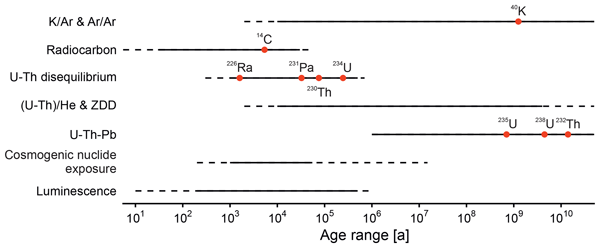
This paper provides a review of numeric dating methods for the Quaternary, which is unique in its focus on applications of the methods to volcanism. The methods included are K/Ar and Ar/Ar, radiocarbon, uranium series, cosmogenic nuclide exposure, and luminescence dating, each with a section on extra concerns for application to volcanic products. The paper’s objective is to serve as a resource for researchers using these methods or using dates produced by these methods for further research.
Marie-Luise Adolph, Junbo Wang, Liping Zhu, Leon J. Clarke, Andrew C. G. Henderson, Hendrik Vogel, Gerhard Daut, Peter Frenzel, Jianting Ju, Qiangqiang Kou, Dierk Michaelis, Olga Schmitz, Anja Schwarz, Volkhard Spiess, Arne Ulfers, Cidan Zhaxi, Daniel Ariztegui, Natasha Barbolini, Thorsten Bauersachs, Erwin Braun, Giulia Ceriotti, Brian Grivna, Marlene Hoehle, Rolf Kipfer, Wilhelmine Klamt, Cindy Kunkel, Aliisa Laakkonen, Minghui Li, Qingfeng Ma, Paul Moser Röggla, Kaja Müller, Anders Noren, Ryan O'Grady, Santiago Otero, Maïlys Picard, Anna Pint, Camille Thomas, Jerome Van der Woerd, Mathias Vinnepand, Claudia Wrozyna, Christian Zeeden, Xinghuan Zhu, and Torsten Haberzettl
Sci. Dril., 35, 99–117, https://doi.org/10.5194/sd-35-99-2026, https://doi.org/10.5194/sd-35-99-2026, 2026
Short summary
Short summary
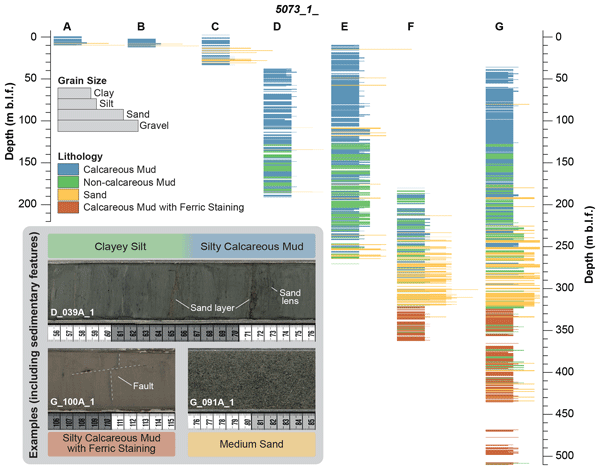
We drilled deep into sediments beneath a large lake on the Tibetan Plateau, Nam Co, to learn how climate and environments have changed over multiple ice age cycles. The recovered sediments show repeated shifts between major changes in lake conditions, water chemistry, and ecosystems. These findings help clarify how wind systems responded to natural climate cycles and improve understanding of how high mountain regions may react to future climate change and environmental stress.
Charlotte E. Engelmann, Frank Preusser, Alexander Fülling, Jakob Wilk, Elisabeth Eiche, Dennis Quandt, Stefan Hergarten, and Jan H. Blöthe
E&G Quaternary Sci. J., 74, 235–262, https://doi.org/10.5194/egqsj-74-235-2025, https://doi.org/10.5194/egqsj-74-235-2025, 2025
Short summary
Short summary
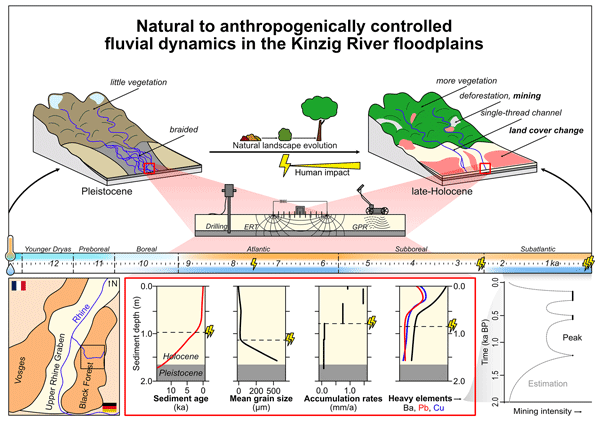
It is unclear since when and how meso-scale central European river systems have been dominated by human instead of natural influences. Here, the floodplain sediments of the Kinzig River, southwestern Germany, were studied as they recorded natural and human landscape changes. Sediment deposition phases were found, the modern phase of which coincides with increased deposition and heavy metal contaminations that correlate with mining records, indicating that the river system has shifted intensely over 1000 years.
Madhurima Marik, Elena Serra, Gilles Rixhon, and Frank Preusser
E&G Quaternary Sci. J., 74, 169–192, https://doi.org/10.5194/egqsj-74-169-2025, https://doi.org/10.5194/egqsj-74-169-2025, 2025
Short summary
Short summary
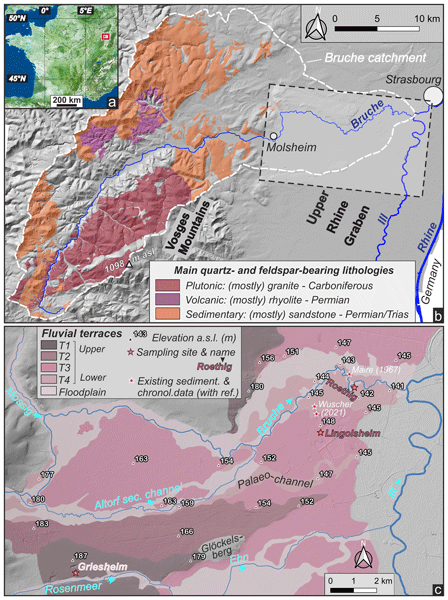
This study examines the evolution of the lower Bruche River valley in north-eastern France through its fluvial terraces, reflecting past river dynamics and environmental changes. Terrace formations are dated using luminescence to ~ 12–14 ka, ~ 27–35 ka, and at least 200 ka. Methodological improvements over conventional luminescence dating techniques are also discussed and refined in this study.
Lukas Gegg
E&G Quaternary Sci. J., 74, 125–127, https://doi.org/10.5194/egqsj-74-125-2025, https://doi.org/10.5194/egqsj-74-125-2025, 2025
Short summary
Short summary
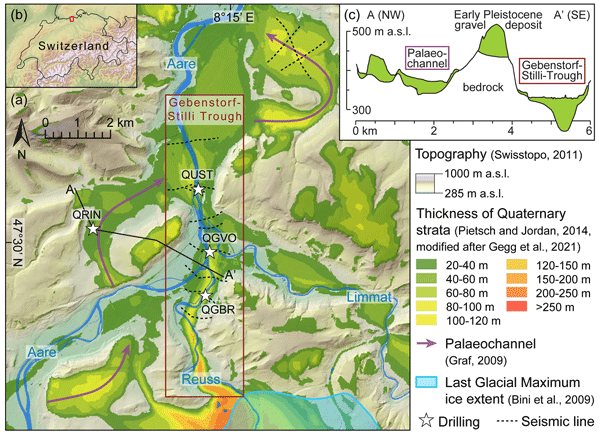
Drillings, outcrops, and seismic data provide insights into a glacial basin and a former river channel in northern Switzerland. Both are infilled with diverse (glacial, lacustrine, fluvial, colluvial) sediments attributed to three separate glaciations. The depth of the glacial basin depends strongly on the underlying rock type, which together with (hydro)fractures provides evidence on the conditions and erosion processes at the ice–rock interface.
Felix Martin Hofmann and Frank Preusser
E&G Quaternary Sci. J., 74, 1–35, https://doi.org/10.5194/egqsj-74-1-2025, https://doi.org/10.5194/egqsj-74-1-2025, 2025
Short summary
Short summary
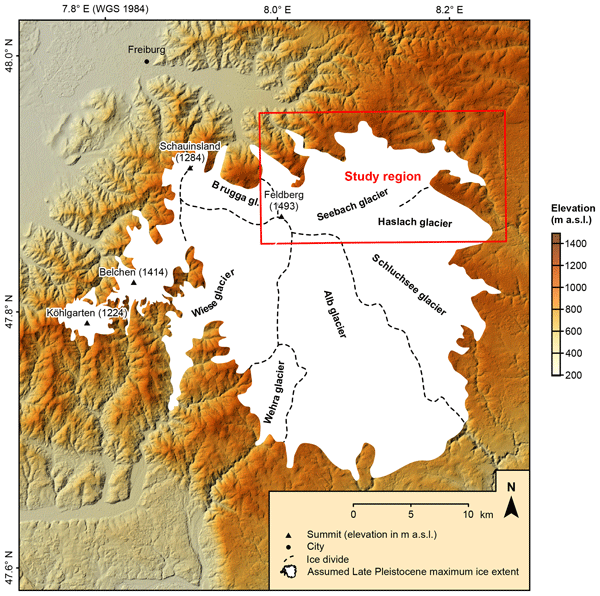
Previous reconstructions conclude that the southern Black Forest, south-west Germany, temporarily hosted four ice caps during the Late Pleistocene (129 000–11 700 years before present). This work reviews existing studies on glacial landforms north-east of its highest summit, Feldberg (1493 m above sea level), in the light of new observations. Whilst this study largely confirms previous work, we reject and newly describe several glacial landforms.
Lukas Gegg, Felicitas A. Griebling, Nicole Jentz, and Ulrike Wielandt-Schuster
E&G Quaternary Sci. J., 73, 239–249, https://doi.org/10.5194/egqsj-73-239-2024, https://doi.org/10.5194/egqsj-73-239-2024, 2024
Short summary
Short summary
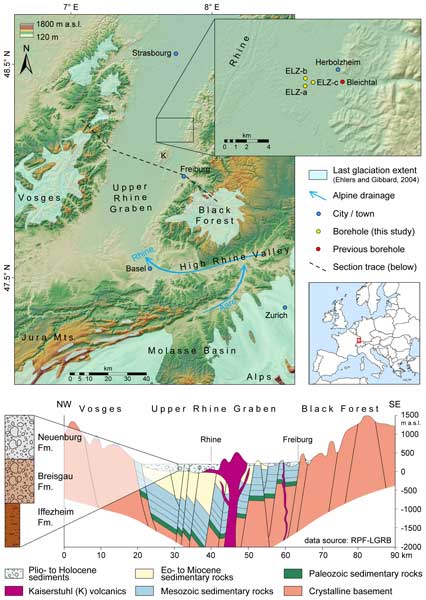
The subdivision and distinction of gravel units is an important tool in terrestrial Quaternary stratigraphy but can be challenging. Here, we investigate the glaciofluvial infill of the Upper Rhine Graben as an archive of recurring Alpine glaciations. With the help of statistical approaches, we identify differences in petrographic compositions, thereby differentiating two units that are likely representative of the last and penultimate glaciation, which have previously been difficult to pinpoint.
Alexander Fülling, Hans Rudolf Graf, Felix Martin Hofmann, Daniela Mueller, and Frank Preusser
E&G Quaternary Sci. J., 73, 203–216, https://doi.org/10.5194/egqsj-73-203-2024, https://doi.org/10.5194/egqsj-73-203-2024, 2024
Short summary
Short summary
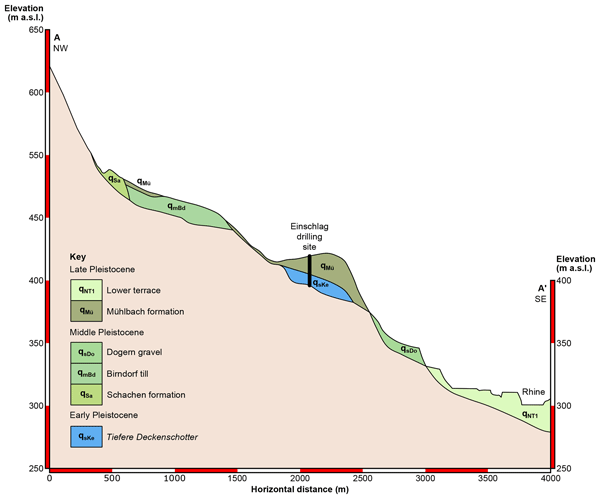
The Mühlbach series has been given as evidence for a Late Pliocene/Early Pleistocene Aare–Rhine fluvial system in northern Switzerland and southwest Germany. We show that these deposits represent a variety of different units. At the type location, luminescence dating indicates an age of 55 ka, and we interpret the deposits as slope reworking. Beside methodological implications, our studies recommend caution regarding the interpretation of stratigraphic units for which limited data are available.
Bennet Schuster, Lukas Gegg, Sebastian Schaller, Marius W. Buechi, David C. Tanner, Ulrike Wielandt-Schuster, Flavio S. Anselmetti, and Frank Preusser
Sci. Dril., 33, 191–206, https://doi.org/10.5194/sd-33-191-2024, https://doi.org/10.5194/sd-33-191-2024, 2024
Short summary
Short summary
The Tannwald Basin, explored by drilling and formed by repeated advances of the Rhine Glacier, reveals key geological insights. Ice-contact sediments and evidence of deformation highlight gravitational and glaciotectonic processes. ICDP DOVE 5068_1_C core data define lithofacies associations, reflecting basin infill cycles, marking at least three distinct glacial advances. Integrating these findings aids understanding the broader glacial evolution of the Lake Constance amphitheater.
Felix Martin Hofmann, Claire Rambeau, Lukas Gegg, Melanie Schulz, Martin Steiner, Alexander Fülling, Laëtitia Léanni, Frank Preusser, and ASTER Team
Geochronology, 6, 147–174, https://doi.org/10.5194/gchron-6-147-2024, https://doi.org/10.5194/gchron-6-147-2024, 2024
Short summary
Short summary
We determined 10Be concentrations in moraine boulder surfaces in the southern Black Forest, SW Germany. We applied three independent dating methods to younger lake sediments. With the aid of independent age datasets, we calculated the growth of 10Be concentrations in moraine boulder surfaces.
Lukas Gegg and Johann Gegg
Sci. Dril., 32, 55–59, https://doi.org/10.5194/sd-32-55-2023, https://doi.org/10.5194/sd-32-55-2023, 2023
Short summary
Short summary
Geoscientists working with drill cores often struggle with proper photo documentation. We present a simple smartphone-based setup for acquiring high-resolution undistorted core pictures as an alternative to state-of-the-art commercial line scan imaging systems that are typically expensive and inflexible. It makes use of the phone's panoramic picture mode while being guided along the core in question on a rail, and the resulting images are of similar quality to classic line scan photos.
Lukas Gegg and Frank Preusser
E&G Quaternary Sci. J., 72, 23–36, https://doi.org/10.5194/egqsj-72-23-2023, https://doi.org/10.5194/egqsj-72-23-2023, 2023
Short summary
Short summary
Erosion processes below glacier ice have carved large and deep basins in the landscapes surrounding mountain ranges as well as polar regions. With our comparison, we show that these two groups of basins are very similar in their shapes and sizes. However, open questions still remain especially regarding the sediments that later fill up these basins. We aim to stimulate future research and promote exchange between researchers working around the Alps and the northern central European lowlands.
Lea Schwahn, Tabea Schulze, Alexander Fülling, Christian Zeeden, Frank Preusser, and Tobias Sprafke
E&G Quaternary Sci. J., 72, 1–21, https://doi.org/10.5194/egqsj-72-1-2023, https://doi.org/10.5194/egqsj-72-1-2023, 2023
Short summary
Short summary
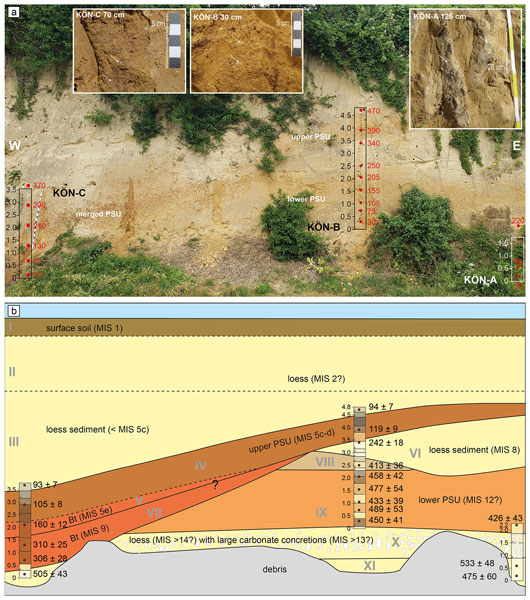
The loess sequence of Köndringen, Upper Rhine Graben, comprises several glacial–interglacial cycles. It has been investigated using a multi-method approach including the measurement of colour, grain size, organic matter, and carbonate content. The analyses reveal that the sequence comprises several fossil soils and layers of reworked soil material. According to luminescence dating, it reaches back more than 500 000 years.
Flavio S. Anselmetti, Milos Bavec, Christian Crouzet, Markus Fiebig, Gerald Gabriel, Frank Preusser, Cesare Ravazzi, and DOVE scientific team
Sci. Dril., 31, 51–70, https://doi.org/10.5194/sd-31-51-2022, https://doi.org/10.5194/sd-31-51-2022, 2022
Short summary
Short summary
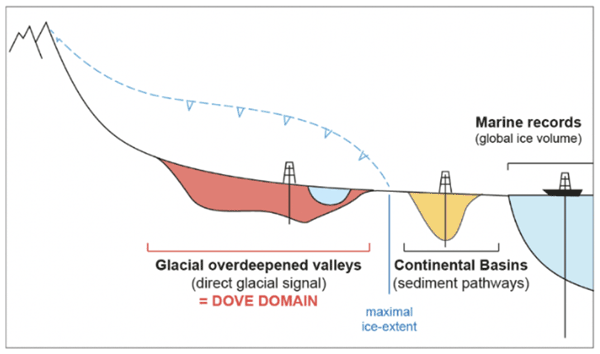
Previous glaciations eroded below the ice deep valleys in the Alpine foreland, which, with their sedimentary fillings, witness the timing and extent of these glacial advance–retreat cycles. Drilling such sedimentary sequences will thus provide well-needed evidence in order to reconstruct the (a)synchronicity of past ice advances in a trans-Alpine perspective. Eventually these data will document how the Alpine foreland was shaped and how the paleoclimate patterns varied along and across the Alps.
Mubarak Abdulkarim, Stoil Chapkanski, Damien Ertlen, Haider Mahmood, Edward Obioha, Frank Preusser, Claire Rambeau, Ferréol Salomon, Marco Schiemann, and Laurent Schmitt
E&G Quaternary Sci. J., 71, 191–212, https://doi.org/10.5194/egqsj-71-191-2022, https://doi.org/10.5194/egqsj-71-191-2022, 2022
Short summary
Short summary
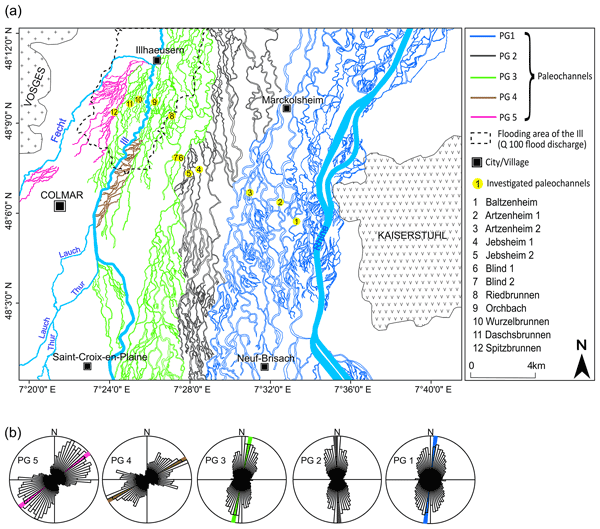
We used a combination of remote sensing, field investigations, and laboratory analysis to map and characterize abandoned river channels within the French Upper Rhine alluvial plain. Our results show five major paleochannel groups with significant differences in their pattern, morphological characteristics, and sediment filling. The formation of these paleochannel groups is attributed to significant changes in environmental processes in the area during the last ~ 11 700 years.
Tabea Schulze, Lea Schwahn, Alexander Fülling, Christian Zeeden, Frank Preusser, and Tobias Sprafke
E&G Quaternary Sci. J., 71, 145–162, https://doi.org/10.5194/egqsj-71-145-2022, https://doi.org/10.5194/egqsj-71-145-2022, 2022
Short summary
Short summary
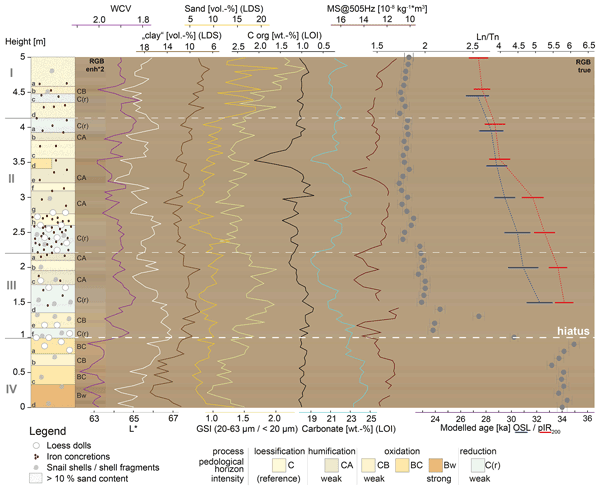
A loess sequence in SW Germany was investigated using a high-resolution multi-method approach. It dates to 34–27 ka and comprises layers of initial soil formation. Drier conditions and a different atmospheric circulation pattern during the time of deposition are expected as the soil layers are less strongly developed compared to similar horizons further north. Dust accumulation predates the last advance of Alpine glaciers, and no loess deposition is recorded for the time of maximum ice extent.
Frank Preusser, Markus Fuchs, and Christine Thiel
E&G Quaternary Sci. J., 70, 201–203, https://doi.org/10.5194/egqsj-70-201-2021, https://doi.org/10.5194/egqsj-70-201-2021, 2021
Frank Preusser, Markus Fuchs, and Christine Thiel
DEUQUA Spec. Pub., 3, 1–3, https://doi.org/10.5194/deuquasp-3-1-2021, https://doi.org/10.5194/deuquasp-3-1-2021, 2021
Cited articles
Anselmetti, F. S., Bavec, M., Crouzet, C., Fiebig, M., Gabriel, G., Preusser, F., Ravazzi, C., and DOVE scientific team: Drilling Overdeepened Alpine Valleys (ICDP-DOVE): quantifying the age, extent, and environmental impact of Alpine glaciations, Sci. Dril., 31, 51–70, https://doi.org/10.5194/sd-31-51-2022, 2022.
Bachmann, G. H., Müller, M., and Weggen, K.: Evolution of the Molasse Basin (Germany, Switzerland), Tectonophysics, 137, 77–92, https://doi.org/10.1016/0040-1951(87)90315-5, 1987.
Bamford, C. A., Pomper, J. E., Hergarten, S., Preusser, F., Sprafke, T., and Gegg, L.: New insights into one of the oldest glacial deposits in the northern Alpine foreland (Höchsten, SW Germany), Boreas, 54, 729–743, https://doi.org/10.1111/bor.12684, 2025.
Bandou, D., Schlunegger, F., Kissling, E., Marti, U., Schwenk, M., Schläfli, P., Douillet, G., and Mair, D.: Three-dimensional gravity modelling of a Quaternary overdeepening fill in the Bern area of Switzerland discloses two stages of glacial carving, Sci. Rep., 12, 1441, https://doi.org/10.1038/s41598-022-04830-x, 2022.
Bandou, D., Schlunegger, F., Kissling, E., Marti, U., Reber, R., and Pfander, J.: Overdeepenings in the Swiss plateau: U-shaped geometries underlain by inner gorges, Swiss J. Geosci., 116, 19, https://doi.org/10.1186/s00015-023-00447-y, 2023.
Benn, D. I. and Evans, D. J. A.: The interpretation and classification of subglacially-deformed materials, Quat. Sci. Rev., 15, 23–52, https://doi.org/10.1016/0277-3791(95)00082-8, 1996.
Bennett, M. R., Doyle, P., and Mather, A. E.: Dropstones: their origin and significance, Palaeogeogr. Palaeoclimatol. Palaeoecol., 121, 331–339, https://doi.org/10.1016/0031-0182(95)00071-2, 1996.
Beraus, S., Burschil, T., Buness, H., Köhn, D., Bohlen, T., and Gabriel, G.: A comprehensive crosshole seismic experiment in glacial sediments at the ICDP DOVE site in the Tannwald Basin, Sci. Dril., 33, 237–248, https://doi.org/10.5194/sd-33-237-2024, 2024.
Beraus, S., Köhn, D., Bohlen, T., Burschil, T., Schuster, B., Buness, H., and Gabriel, G.: Seismic crosshole full-waveform inversion of high-frequency SV-waves for glacial sediment characterization, Geophys. Prospect., 73, 1587–1605, https://doi.org/10.1111/1365-2478.70024, 2025.
Bibus, E. and Kösel, M.: Rezente und fossile Böden als Gliederungskriterium der Rheingletscherablagerungen am Höchsten, Z. Dtsch. Geol. Ges., 154, 343–356, https://doi.org/10.1127/zdgg/154/2003/343, 2003.
Bradwell, T. and Stoker, M.: Scottish Landform Example: subaqueous moraines around the Summer Isles and in the approaches to Loch Broom (Wester Ross Marine Protected Area), Scott. Geogr. J., 139, 20–36, https://doi.org/10.1080/14702541.2023.2226452, 2023.
Buechi, M. W., Frank, S. M., Graf, H. R., Menzies, J., and Anselmetti, F. S.: Subglacial emplacement of tills and meltwater deposits at the base of overdeepened bedrock troughs, Sedimentology, 64, 658–685, https://doi.org/10.1111/sed.12319, 2017.
Buechi, M. W., Graf, H. R., Haldimann, P., Lowick, S. E., and Anselmetti, F. S.: Multiple Quaternary erosion and infill cycles in overdeepened basins of the northern Alpine foreland, Swiss J. Geosci., 111, 133–167, https://doi.org/10.1007/s00015-017-0289-9, 2018.
Buechi, M. W., Landgraf, A., Madritsch, H., Mueller, D., Knipping, M., Nyffenegger, F., Preusser, F., Schaller, S., Schnellmann, M., and Deplazes, G.: Terminal glacial overdeepenings: Patterns of erosion, infilling and new constraints on the glaciation history of Northern Switzerland, Quat. Sci. Rev., 344, 108970, https://doi.org/10.1016/j.quascirev.2024.108970, 2024.
Burschil, T., Buness, H., Tanner, D. C., Wielandt-Schuster, U., Ellwanger, D., and Gabriel, G.: High-resolution reflection seismics reveal the structure and the evolution of the Quaternary glacial Tannwald Basin, Surf. Geophys., 16, 593–610, https://doi.org/10.1002/nsg.12011, 2018.
Cohen, D., Jouvet, G., Zwinger, T., Landgraf, A., and Fischer, U. H.: Subglacial hydrology from high-resolution ice-flow simulations of the Rhine Glacier during the Last Glacial Maximum: a proxy for glacial erosion, E&G Quaternary Sci. J., 72, 189–201, https://doi.org/10.5194/egqsj-72-189-2023, 2023.
Cook, S. J. and Swift, D. A.: Subglacial basins: Their origin and importance in glacial systems and landscapes, Earth-Sci. Rev., 115, 332–372, https://doi.org/10.1016/j.earscirev.2012.09.009, 2012.
Dehnert, A., Lowick, S. E., Preusser, F., Anselmetti, F. S., Drescher-Schneider, R., Graf, H. R., Heller, F., Horstmeyer, H., Kemna, H. A., Nowaczyk, N. R., Züger, A., and Furrer, H.: Evolution of an overdeepened trough in the northern Alpine Foreland at Niederweningen, Switzerland, Quat. Sci. Rev., 34, 127–145, https://doi.org/10.1016/j.quascirev.2011.12.015, 2012.
Doppler, G., Heissig, K., and Reichenbacher, B.: Die Gliederung des Tertiars im suddeutschen Molassebecken, Newsl. Stratigr., 41, 359–375, https://doi.org/10.1127/0078-0421/2005/0041-0359, 2006.
Dürst Stucki, M. and Schlunegger, F.: Identification of erosional mechanisms during past glaciations based on a bedrock surface model of the central European Alps, Earth Planet. Sci. Lett., 384, 57–70, https://doi.org/10.1016/j.epsl.2013.10.009, 2013.
Dyke, A. S. and Morris, T. F.: Drumlin fields, dispersal trains, and ice streams in arctic Canada, Can. Geogr. Géographe Can., 32, 86–90, https://doi.org/10.1111/j.1541-0064.1988.tb00860.x, 1988.
Ellwanger, D., Wielandt-Schuster, U., Franz, M., and Simon, T.: The Quaternary of the southwest German Alpine Foreland (Bodensee-Oberschwaben, Baden-Württemberg, Southwest Germany), E&G Quaternary Sci. J., 60, 22, https://doi.org/10.3285/eg.60.2-3.07, 2011.
Evans, D. J. A.: Till: A Glacial Process Sedimentology, Wiley-Blackwell, Chichester, 390 pp., https://doi.org/10.1002/9781118652541, 2018.
Evans, D. J. A., Phillips, E. R., Hiemstra, J. F., and Auton, C. A.: Subglacial till: Formation, sedimentary characteristics and classification, Earth-Sci. Rev., 78, 115–176, https://doi.org/10.1016/j.earscirev.2006.04.001, 2006.
Evans, D. J. A., Hiemstra, J. F., and Cofaigh, C. Ó.: Stratigraphic architecture and sedimentology of a Late Pleistocene subaqueous moraine complex, southwest Ireland, J. Quat. Sci., 27, 51–63, https://doi.org/10.1002/jqs.1513, 2012.
Eyles, C., Eyles, N., and França, A.: Glaciation and tectonics in an active intracratonic basin: the Late Palaeozoic Itararé Group, Paraná Basin, Brazil, Sedimentology, 40, 1–25, https://doi.org/10.1111/j.1365-3091.1993.tb01087.x, 1993.
Eyles, N., Eyles, C. H., and Miall, A. D.: Lithofacies types and vertical profile models; an alternative approach to the description and environmental interpretation of glacial diamict and diamictite sequences, Sedimentology, 30, 393–410, https://doi.org/10.1111/j.1365-3091.1983.tb00679.x, 1983.
Fabbri, S., Buechi, M. W., Horstmeyer, H., Hilbe, M., Hübscher, C., Schmelzbach, C., Weiss, B., and Anselmetti, F. S.: A subaquatic moraine complex in overdeepened Lake Thun (Switzerland) unravelling the deglaciation history of the Aare Glacier, Quat. Sci. Rev., 187, 62–79, https://doi.org/10.1016/j.quascirev.2018.03.010, 2018.
Fabbri, S. C., Haas, I., Kremer, K., Motta, D., Girardclos, S., and Anselmetti, F. S.: Subaqueous geomorphology and delta dynamics of Lake Brienz (Switzerland): implications for the sediment budget in the alpine realm, Swiss J. Geosci., 114, 22, https://doi.org/10.1186/s00015-021-00399-1, 2021.
Fiebig, M., Ellwanger, D., and Doppler, G.: Pleistocene glaciations of southern Germany, in: Developments in quaternary sciences, vol. 15, Elsevier, 163–173, https://doi.org/10.1016/B978-0-444-53447-7.00014-3, 2011.
Firla, G., Lüthgens, C., Neuhuber, S., Schmalfuss, C., Kroemer, E., Preusser, F., and Fiebig, M.: Analyzing complex single grain feldspar equivalent dose distributions for luminescence dating of glacially derived sediments, Quat. Geochronol., 85, 101627, https://doi.org/10.1016/j.quageo.2024.101627, 2024.
Firla, G., Lüthgens, C., Burschil, T., Neuhuber, S., Pini, R., Marchhart, O., Wieser, A., Schmalfuss, C., Kroemer, E., and Fiebig, M.: An MIS 8 terrestrial record retrieved from a glacially overdeepened basin in the northern foreland of the European Alps, E&G Quaternary Sci. J., 75, 85–105, https://doi.org/10.5194/egqsj-75-85-2026, 2026.
Gegg, L. and Gegg, J.: Poor Man's Line Scan – a simple tool for the acquisition of high-resolution, undistorted drill core photos, Sci. Dril., 32, 55–59, https://doi.org/10.5194/sd-32-55-2023, 2023.
Gegg, L. and Preusser, F.: Comparison of overdeepened structures in formerly glaciated areas of the northern Alpine foreland and northern central Europe, E&G Quaternary Sci. J., 72, 23–36, https://doi.org/10.5194/egqsj-72-23-2023, 2023.
Gegg, L., Deplazes, G., Keller, L., Madritsch, H., Spillmann, T., Anselmetti, F. S., and Buechi, M. W.: 3D morphology of a glacially overdeepened trough controlled by underlying bedrock geology, Geomorphology, 394, 107950, https://doi.org/10.1016/j.geomorph.2021.107950, 2021.
Gegg, L., Salcher, B. C., Pollhammer, T., Cohen, D., Fischer, U. H., and Landgraf, A.: An inventory of subglacial overdeepenings in southern Germany and Austria, Boreas, 54, 527–541, https://doi.org/10.1111/bor.12693, 2025a.
Gegg, L., Anselmetti, F. S., Deplazes, G., Fuelling, A., Madritsch, H., Mueller, D., Preusser, F., and Buechi, M. W.: Glaciations and landscape change in the Lower Aare Valley (Northern Switzerland) through the Middle Pleistocene, Quat. Res., 1–20, https://doi.org/10.1017/qua.2024.61, 2025b.
Gomez, N., Lowe, D., Mills, A., Slaney, N., and Arnott, R. W. C.: Ediacaran proximal glaciomarine sedimentation in the Bonavista Peninsula, Avalon Zone, Newfoundland, Canada, J. Sediment. Res., 96, 130–157, https://doi.org/10.2110/jsr.2025.022, 2026.
Heiri, O., Lotter, A. F., and Lemcke, G.: Loss on ignition as a method for estimating organic and carbonate content in sediments: reproducibility and comparability of results, J. Paleolimnol., 25, 101–110, https://doi.org/10.1023/A:1008119611481, 2001.
Hilbe, M., Anselmetti, F. S., Eilertsen, R. S., Hansen, L., and Wildi, W.: Subaqueous morphology of Lake Lucerne (Central Switzerland): implications for mass movements and glacial history, Swiss J. Geosci., 104, 425–443, https://doi.org/10.1007/s00015-011-0083-z, 2011.
Hooyer, T. S. and Iverson, N. R.: Clast-fabric development in a shearing granular material: Implications for subglacial till and fault gouge, Geol. Soc. Am. Bull., 112, 683–692, https://doi.org/10.1130/0016-7606(2000)112<683:CDIASG>2.0.CO;2, 2000.
International Organization for Standardization: Geotechnical investigation and testing – Identification and classification of soil Part 2: Principles for a classification, https://www.iso.org/standard/66346.html (last access: 13 August 2026), 2017.
Jong, M. G. G. D., Seyfried, H., Simon, T., Banzhaf, R., Schwab, A., Holuba, K.-H., and Müller, T.: The extent of the Rhine Glacier in eastern Upper Swabia (southern Germany) at the height of the Last Glacial Maximum: new morphological constraints from high-resolution digital terrain models, Z. Dtsch. Ges. Für Geowiss., 176, 795–823, https://doi.org/10.1127/zdgg/2025/0456, 2025.
Kamleitner, S., Ivy-Ochs, S., Manatschal, L., Akçar, N., Christl, M., Vockenhuber, C., Hajdas, I., and Synal, H.-A.: Last Glacial Maximum glacier fluctuations on the northern Alpine foreland: Geomorphological and chronological reconstructions from the Rhine and Reuss glacier systems, Geomorphology, 423, 108548, https://doi.org/10.1016/j.geomorph.2022.108548, 2023.
Kessler, T. C., Klint, K. E. S., Nilsson, B., and Bjerg, P. L.: Characterization of sand lenses embedded in tills, Quat. Sci. Rev., 53, 55–71, https://doi.org/10.1016/j.quascirev.2012.08.011, 2012.
Knight, J.: The interpretation of glacial erratics: late Pleistocene examples from Ireland, J. Palaeogeogr., 15, 100352, https://doi.org/10.1016/j.jop.2026.100352, 2026.
Lesemann, J.-E., Alsop, G. I., and Piotrowski, J. A.: Incremental subglacial meltwater sediment deposition and deformation associated with repeated ice-bed decoupling: a case study from the Island of Funen, Denmark, Quat. Sci. Rev., 29, 3212–3229, https://doi.org/10.1016/j.quascirev.2010.06.010, 2010.
LGRB: Lithostratigraphische Entwicklung des Baden-Württembergischen Rheingletschergebiets: Übertiefste Becken- und Moränen-Landschaft, LGRB-Fachbericht 2015/4, Freiburg i. Br., 86 pp., https://produkte.lgrb-bw.de/docPool/c525_data.pdf (last access: 13 August 2026), 2015.
LGRB: Geologische Karte von Baden-Wuerttemberg 1 : 50 000 (GeoLa), LGRB, https://maps.lgrb-bw.de/ (last access: 4 July 2025), 2025.
Menzies, J. and Ellwanger, D.: Insights into subglacial processes inferred from the micromorphological analyses of complex diamicton stratigraphy near Illmensee-Lichtenegg, Höchsten, Germany, Boreas, 40, 271–288, https://doi.org/10.1111/j.1502-3885.2010.00194.x, 2011.
Menzies, J. and Shilts, B. W.: 8 – Subglacial environments, in: Modern and Past Glacial Environments, edited by: Menzies, J., Butterworth-Heinemann, Oxford, 183–278, https://doi.org/10.1016/B978-075064226-2/50011-8, 2002.
Monegato, G. and Ravazzi, C.: The late pleistocene multifold glaciation in the alps: updates and open questions, Alp. Mediterr. Quat., 31, 225–229, https://doi.org/10.26382/AIQUA.2018.AIQUAconference, 2018.
Monegato, G., Gianotti, F., Ivy-Ochs, S., Reitner, J. M., Scardia, G., and Akçar, N.: The Early and Middle Pleistocene Glaciations in the Alps, Alp. Mediterr. Quat., 36, 127–148, https://doi.org/10.26382/AMQ.2023.07, 2023.
Penck, A. and Brückner, E.: Die Alpen im Eiszeitalter, Chr. Herm. Tauchnitz, Leipzig, 1909.
Platt, N. H. and Keller, B.: Distal alluvial deposits in a foreland basin setting – the Lower Freshwater Miocene), Switzerland: sedimentology, architecture and palaeosols, Sedimentology, 39, 545–565, https://doi.org/10.1111/j.1365-3091.1992.tb02136.x, 1992.
Pomper, J., Salcher, B. C., Eichkitz, C., Prasicek, G., Lang, A., Lindner, M., and Götz, J.: The glacially overdeepened trough of the Salzach Valley, Austria: Bedrock geometry and sedimentary fill of a major Alpine subglacial basin, Geomorphology, 295, 147–158, https://doi.org/10.1016/j.geomorph.2017.07.009, 2017.
Preusser, F., Graf, H. R., Keller, O., Krayss, E., and Schlüchter, C.: Quaternary glaciation history of northern Switzerland, E&G Quaternary Sci. J., 60, 21, https://doi.org/10.3285/eg.60.2-3.06, 2011.
Ravier, E.: Physical characteristics of hydrofracture systems and their fills in glacial sediments, Sediment. Geol., 463, 106593, https://doi.org/10.1016/j.sedgeo.2024.106593, 2024.
Ravier, E., Buoncristiani, J.-F., Clerc, S., Guiraud, M., Menzies, J., and Portier, E.: Sedimentological and deformational criteria for discriminating subglaciofluvial deposits from subaqueous ice-contact fan deposits: A Pleistocene example (Ireland), Sedimentology, 61, 1382–1410, https://doi.org/10.1111/sed.12111, 2014.
Rolf, C.: Das Kryogenmagnetometer im Magnetiklabor Grubenhagen, Geol. Jahrb., 52, 161–188, 2000.
Rolf, C. and Wonik, T.: Die Forschungsbohrungen Lichtenegg und Gaisbeuren (Baden-Württemberg): Gesteinsmagnetik und Bohrlochgeophysik, Leibnitz Institut für Angewandte Geophysik, Hannover, 2021.
Rolf, C., Fromm, K., and Ellwanger, D.: Zur Magnetostratigraphie an Deckenschottern aus dem südlichen Oberschwaben, LGRB Informationen, 26, 171–180, 2012.
Schaller, S., Buechi, M. W., Schuster, B., and Anselmetti, F. S.: Drilling into a deep buried valley (ICDP DOVE): a 252 m long sediment succession from a glacial overdeepening in northwestern Switzerland, Sci. Dril., 32, 27–42, https://doi.org/10.5194/sd-32-27-2023, 2023.
Schaller, S., Becerra, P., Beraus, S., Buechi, M. W., Mair, D., Sardar Abadi, M., Schuster, B., and Anselmetti, F. S.: Data-driven lithofacies prediction of unconsolidated sediments from wireline logs, Sedimentologika, 3, 1–18, https://doi.org/10.57035/journals/sdk.2025.e31.1819, 2025.
Schlunegger, F., Kissling, E., Bandou, D. T., Douillet, G. A., Mair, D., Marti, U., Reber, R., Schläfli, P., and Schwenk, M. A.: The Aare main overdeepening on the northern margin of the European Alps: basins, riegels, and slot canyons, Earth Surf. Dynam., 12, 1371–1389, https://doi.org/10.5194/esurf-12-1371-2024, 2024.
Schmalfuss, C., Neuhuber, S., Firla, G., Lüthgens, C., Schuster, B., Gegg, L., Anselmetti, F. S., and Fiebig, M.: Revisiting the “Hole of Bad Aussee”: A key sedimentary record of Quaternary landscape dynamics in the Eastern Alps (Austria), Quat. Int., 755, 110086, https://doi.org/10.1016/j.quaint.2025.110086, 2026.
Schuster, B., Gegg, L., Schaller, S., Buechi, M. W., Tanner, D. C., Wielandt-Schuster, U., Anselmetti, F. S., and Preusser, F.: Shaped and filled by the Rhine Glacier: the overdeepened Tannwald Basin in southwestern Germany, Sci. Dril., 33, 191–206, https://doi.org/10.5194/sd-33-191-2024, 2024.
Schwenk, M. A., Schläfli, P., Bandou, D., Gribenski, N., Douillet, G. A., and Schlunegger, F.: From glacial erosion to basin overfill: a 240 m-thick overdeepening–fill sequence in Bern, Switzerland, Sci. Dril., 30, 17–42, https://doi.org/10.5194/sd-30-17-2022, 2022a.
Schwenk, M. A., Stutenbecker, L., Schläfli, P., Bandou, D., and Schlunegger, F.: Two glaciers and one sedimentary sink: the competing role of the Aare and the Valais glaciers in filling an overdeepened trough inferred from provenance analysis, E&G Quaternary Sci. J., 71, 163–190, https://doi.org/10.5194/egqsj-71-163-2022, 2022b.
Shvetsov, M.: Concerning Some Additional Aids in Studying Sedimentary Formations, Bull. Mosc. Soc. Nat., 29, 61–66, 1954.
Swisstopo 2025: Federal Office of Topography, swissBEDROCK 1 : 25 000 (TopFels25), https://www.swisstopo.admin.ch/en/3d-swissbedrock-en, last access: 10 December 2025.
Tomonaga, Y., Buechi, M. W., Deplazes, G., and Kipfer, R.: First dating of an early Chibanian (Middle Pleistocene) glacial overdeepening in the Alpine Foreland using the 4He/U-Th method, Geology, 53, 40–44, https://doi.org/10.1130/G52544.1, 2024.
van der Meer, J. J. M., Kjær, K. H., Krüger, J., Rabassa, J., and Kilfeather, A. A.: Under pressure: clastic dykes in glacial settings, Quat. Sci. Rev., 28, 708–720, https://doi.org/10.1016/j.quascirev.2008.07.017, 2009.
Veness, R. L., Clark, C. D., Ely, J. C., Knight, J. L., Igneczi, A., and Bradley, S. L.: Modelling erratic dispersal accounting for shifting ice flow geometries: A new method and explanations of erratic dispersal of the British–Irish Ice Sheet, J. Quat. Sci., 40, 944–957, https://doi.org/10.1002/jqs.3720, 2025.
Vereş, D. Ş.: A comparative study between loss on ignition and total carbon analysis on Mineralogenic sediments, Stud. UBB Geol., 47, 171–182, 2002.
Zeeden, C., Ulfers, A., Wonik, T., and Grelle, T.: Downhole logging data from DOVE-ICDP borehole 5068_6 at Gaisbeuren, PANGAEA [data set], https://doi.org/10.1594/PANGAEA.995767, 2026a.
Zeeden, C., Ulfers, A., Wonik, T., and Grelle, T.: Downhole logging data from DOVE-ICDP borehole 5068_H at Lichtenegg, PANGAEA [data set], https://doi.org/10.1594/PANGAEA.995769, 2026b.
Short summary
The research focuses on overdeepenings in the former Rhine glacier domain north from Lake Constance in southwestern Germany. We expand the current knowledge of the Quaternary stratigraphy of the Lake Constance Amphitheatre by revealing two new drill cores, both reaching the quaternary base of two different overdeepened basins. As a result, we show that our investigated sediment successions are quite atypical for alpine foreland overdeepenings.
The research focuses on overdeepenings in the former Rhine glacier domain north from Lake...


