

Articles | Volume 35, issue 1
https://doi.org/10.5194/sd-35-21-2026
© Author(s) 2026. This work is distributed under
the Creative Commons Attribution 4.0 License.
the Creative Commons Attribution 4.0 License.
https://doi.org/10.5194/sd-35-21-2026
© Author(s) 2026. This work is distributed under
the Creative Commons Attribution 4.0 License.
the Creative Commons Attribution 4.0 License.
Technical development
| 
26 Feb 2026
Technical development |
| 26 Feb 2026
| 26 Feb 2026
Recommendations for using core X-ray fluorescence data on basaltic rock as a tool to assess compositional variability
Ashley M. Morris
CORRESPONDING AUTHOR

MagMaX Laboratory, Department of Geology and Geophysics, University of Utah, Salt Lake City, UT, USA
Sarah Lambart
MagMaX Laboratory, Department of Geology and Geophysics, University of Utah, Salt Lake City, UT, USA
Carlos A. Alvarez Zarikian
Scientific Ocean Drilling, Texas A&M University, College Station, TX, USA
John M. Millett
Norwegian Geotechnical Institute, Oslo, Norway
Department of Geology and Geophysics, University of Aberdeen, King's College, Aberdeen, UK
Volcanic Basin Energy Research AS, Hoienhald, Oslo, Norway
Morgan T. Jones
Department of Ecology, Environment, and Geoscience, Umea University, Umea, Sweden
Sverre Planke
Norwegian Geotechnical Institute, Oslo, Norway
Volcanic Basin Energy Research AS, Hoienhald, Oslo, Norway
Peter Betlem
Norwegian Geotechnical Institute, Oslo, Norway
Department of Arctic Geology, The University Centre in Svalbard (UNIS), Svalbard, Norway
Sayantani Chatterjee
Earthquake Research Institute, The University of Tokyo, Bunkyō, Tokyo, Japan
Marialena Christopoulou
Sea-Bird Scientific, Bellevue, WA, USA
Eric C. Ferré
Department of Geological Sciences, New Mexico State University, Las Cruces, NM, USA
Irina Y. Filina
Department of Earth and Atmospheric Sciences, University of Nebraska, Lincoln, NE, USA
Joost Frieling
Department of Earth Sciences, University of Oxford, Oxford, UK
Department of Geology, Ghent University, Ghent, Belgium
Reed P. Scherer
Department of Earth, Atmosphere and Environment, Northern Illinois University, DeKalb, IL, USA
Natalia Varela
Department of Environmental Sciences, University of Virginia, Charlottesville, VA, USA
School of Earth Sciences and the Research Ireland Centre for Applied Geosciences, University College Dublin, Dublin, Ireland
Stacy L. Yager
Department of Environment, Geology, and Natural Resources, Ball State University, Munice, IN, USA
Related authors
No articles found.
Simon M. Schad, Denise K. Kulhanek, Jiří Bárta, Stella Z. Buchwald, Sten-Andreas Grundvåg, William J. Foster, Mads E. Jelby, Morgan T. Jones, Luke Marsden, Sverre Planke, Kasia K. Śliwińska, Aleksandra Smyrak-Sikora, Lidya G. Tarhan, Madeleine L. Vickers, Valentin Zuchuat, and Kim Senger
Earth Syst. Sci. Data Discuss., https://doi.org/10.5194/essd-2026-487, https://doi.org/10.5194/essd-2026-487, 2026
Preprint under review for ESSD
Short summary
Short summary
This study gathers ancient climate data from Svalbard, a Norwegian Arctic archipelago. Its rocks preserve a 540-million-year record of major extinctions and warming events. Researchers compiled scattered data into organized, open-access packages covering chemical markers and fossils. These resources help scientists understand Arctic responses to rapid climate change, which is vital for improving future predictions and supporting new research.
Leïla Morzelle, Peter Betlem, Geoffroy Mohn, and Julie Tugend
Earth Syst. Sci. Data Discuss., https://doi.org/10.5194/essd-2026-194, https://doi.org/10.5194/essd-2026-194, 2026
Revised manuscript under review for ESSD
Short summary
Short summary
We generated 12 high-resolution 3D models covering 43 km² in the Swiss Alps. Built from drone surveys and precise georeferencing, the dataset captures rock outcrops, surface variations and landscape features such as glaciers at centimeter- to decimeter-scale detail. Openly shared, the FATDOM dataset offers a reliable resource to support future research in tectonics and geomorphology, and help preserve valuable geological heritage in a changing climate.
Frank W. Jakobsen, Monica Winsborrow, Tove Nielsen, Jan Sverre Laberg, Andreia Plaza-Faverola, Christoph Böttner, Adrián López-Quirós, Sverre Planke, and Benjamin Bellwald
Clim. Past, 21, 2441–2464, https://doi.org/10.5194/cp-21-2441-2025, https://doi.org/10.5194/cp-21-2441-2025, 2025
Short summary
Short summary
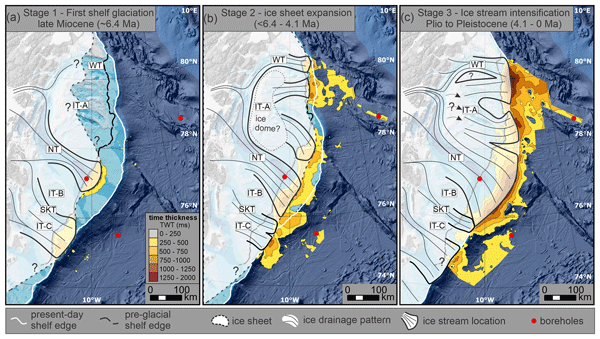
We use regional 2D seismic to reconstruct the Late Miocene to Pleistocene ice sheet history of the Northeast Greenland continental shelf. Regional borehole correlations show that the first ice stream advance across the shelf occurred around 6.4 Ma. Subsequently, a marked change in ice sheet configuration towards intensified cross-shelf ice streaming post-dates 4.1 Ma, possibly correlating to the intensification of the Northern Hemisphere glaciations.
Aleksandra Smyrak-Sikora, Peter Betlem, Victoria S. Engelschiøn, William J. Foster, Sten-Andreas Grundvåg, Mads E. Jelby, Morgan T. Jones, Grace E. Shephard, Kasia K. Śliwińska, Madeleine L. Vickers, Valentin Zuchuat, Lars Eivind Augland, Jan Inge Faleide, Jennifer M. Galloway, William Helland-Hansen, Maria A. Jensen, Erik P. Johannessen, Maayke Koevoets, Denise Kulhanek, Gareth S. Lord, Tereza Mosociova, Snorre Olaussen, Sverre Planke, Gregory D. Price, Lars Stemmerik, and Kim Senger
Clim. Past, 21, 2133–2187, https://doi.org/10.5194/cp-21-2133-2025, https://doi.org/10.5194/cp-21-2133-2025, 2025
Short summary
Short summary
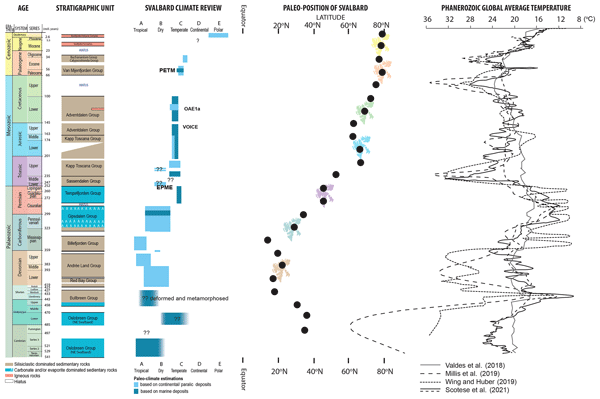
In this review article we present Svalbard’s unique geological archive, revealing its climate history over the last 540 million years. We uncover how this Arctic region recorded key global events, including the End-Permian Mass Extinction, and climate crises like the Paleocene–Eocene Thermal Maximum. The overall climate trend recorded in sedimentary successions in Svalbard is discussed in the context of global climate fluctuations and continuous drift of Svalbard from near equatorial to Arctic latitudes.
Yannick F. Bats, Klaas G. J. Nierop, Alice Stuart-Lee, Joost Frieling, Linda van Roij, Gert-Jan Reichart, and Appy Sluijs
Biogeosciences, 22, 4689–4704, https://doi.org/10.5194/bg-22-4689-2025, https://doi.org/10.5194/bg-22-4689-2025, 2025
Short summary
Short summary
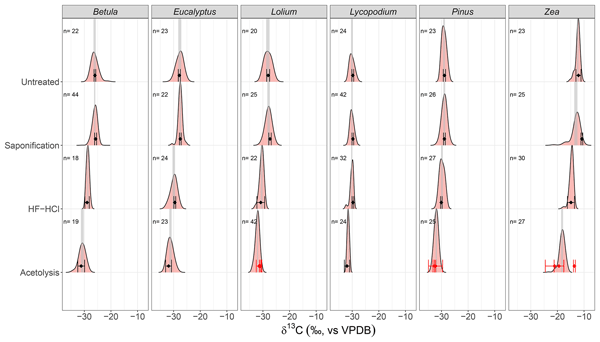
In this study, we analyzed the molecular and stable carbon isotopic composition (δ13C) of pollen and spores (sporomorphs) that underwent chemical treatments that simulate diagenesis during fossilization. We show that the successive removal of sugars and lipids results in the depletion of 13C in the residual sporomorph, leaving rich aromatic compounds. This residual aromatic-rich structure likely represents diagenetically resistant sporopollenin, implying that diagenesis results in the depletion of 13C in pollen.
Alice R. Paine, Joost Frieling, Timothy M. Shanahan, Tamsin A. Mather, Nicholas McKay, Stuart A. Robinson, David M. Pyle, Isabel M. Fendley, Ruth Kiely, and William D. Gosling
Clim. Past, 21, 817–839, https://doi.org/10.5194/cp-21-817-2025, https://doi.org/10.5194/cp-21-817-2025, 2025
Short summary
Short summary
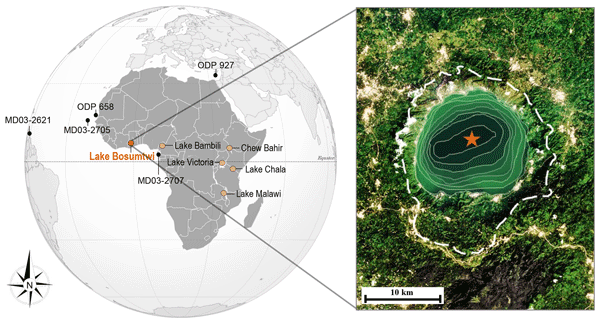
Few tropical mercury (Hg) records extend beyond ~ 12 ka, meaning our current understanding of Hg behaviour may not fully account for the impact of long-term hydroclimate changes on the Hg cycle in these environments. Here, we present an ~ 96 kyr Hg record from Lake Bosumtwi, Ghana. A coupled response is observed between Hg flux and shifts in sediment composition reflective of changes in lake level, suggesting that hydroclimate may be a key driver of tropical Hg cycling over millennial timescales.
Peter Betlem, Nil Rodes, Sara Mollie Cohen, and Marie A. Vander Kloet
Geosci. Commun., 8, 51–65, https://doi.org/10.5194/gc-8-51-2025, https://doi.org/10.5194/gc-8-51-2025, 2025
Short summary
Short summary
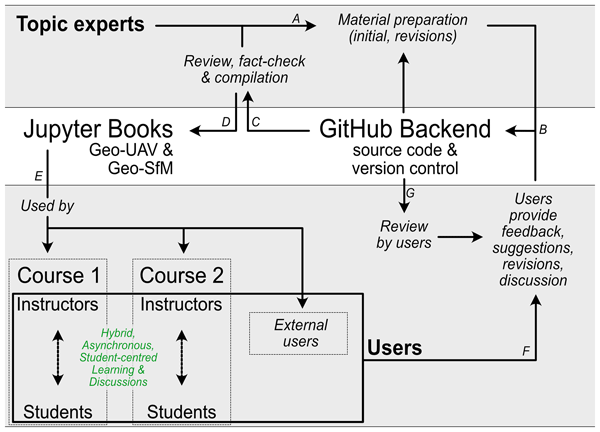
Together with our students, we co-created two open geoscientific course modules using the Jupyter Book framework. Students were happy with the framework's accessibility, inclusivity, interactivity, and multimedia content and eagerly contributed to the educational materials through the GitHub backend when given the opportunity. Our efforts are an important step in the development of geoscientific open educational content co-created by technical experts, social scientists, and students alike.
Kim Senger, Grace Shephard, Fenna Ammerlaan, Owen Anfinson, Pascal Audet, Bernard Coakley, Victoria Ershova, Jan Inge Faleide, Sten-Andreas Grundvåg, Rafael Kenji Horota, Karthik Iyer, Julian Janocha, Morgan Jones, Alexander Minakov, Margaret Odlum, Anna Sartell, Andrew Schaeffer, Daniel Stockli, Marie Annette Vander Kloet, and Carmen Gaina
Geosci. Commun., 7, 267–295, https://doi.org/10.5194/gc-7-267-2024, https://doi.org/10.5194/gc-7-267-2024, 2024
Short summary
Short summary
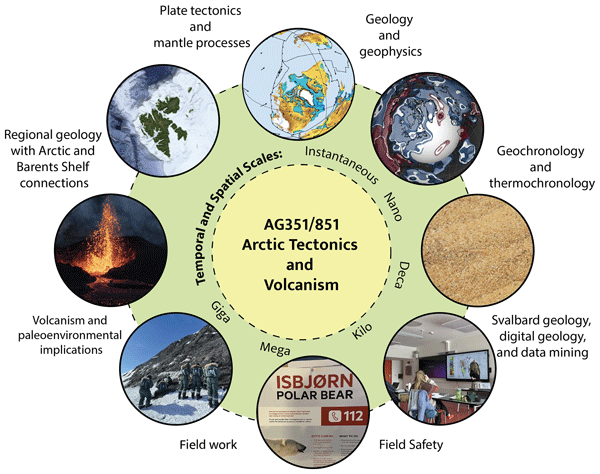
The article describes a course that we have developed at the University Centre in Svalbard that covers many aspects of Arctic geology. The students experience this course through a wide range of lecturers, focussing both on the small and larger scales and covering many geoscientific disciplines.
Joseph A. Ruggiero, Reed P. Scherer, Joseph Mastro, Cesar G. Lopez, Marcus Angus, Evie Unger-Harquail, Olivia Quartz, Amy Leventer, and Claus-Dieter Hillenbrand
J. Micropalaeontol., 43, 323–336, https://doi.org/10.5194/jm-43-323-2024, https://doi.org/10.5194/jm-43-323-2024, 2024
Short summary
Short summary
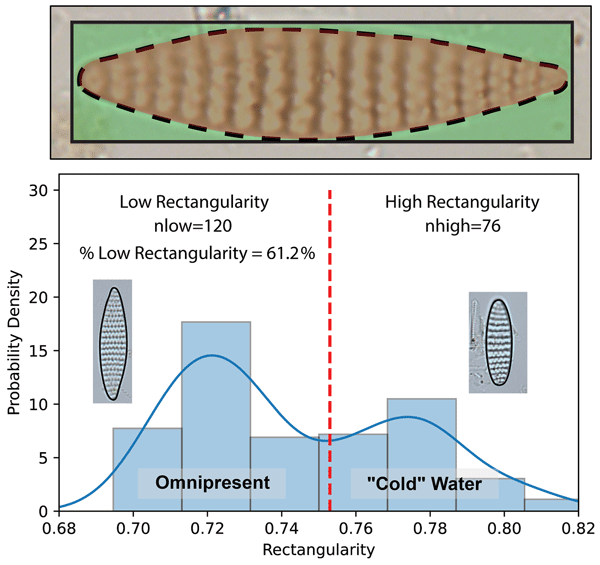
We quantify sea surface temperature (SST) in the past Southern Ocean using the diatom Fragilariopsis kerguelensis that displays variable population with SST. We explore the use of this relatively new proxy by applying it to sediment assemblages from the Sabrina Coast and Amundsen Sea. We find that Amundsen Sea and Sabrina Coast F. kerguelensis populations are different from each other. An understanding of F. kerguelensis dynamics may help us generate an SST proxy to apply to ancient sediments.
Heather Furlong and Reed Paul Scherer
J. Micropalaeontol., 43, 269–282, https://doi.org/10.5194/jm-43-269-2024, https://doi.org/10.5194/jm-43-269-2024, 2024
Short summary
Short summary
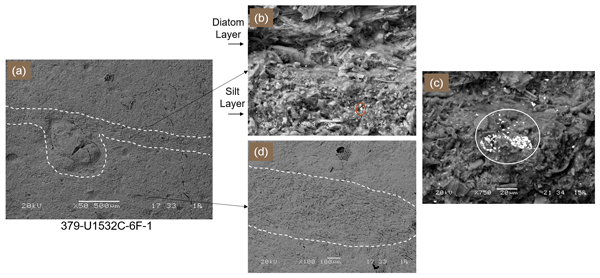
Diatom assemblages are vital components of the Antarctic ecosystem and nutrient supply chain, and they are often utilized as paleoclimate proxies to better understand past climatic changes. We demonstrate enhanced diatom production and accumulation in the outer Amundsen Sea during a Mid-Pliocene interglacial that coincides with pulses of ice-rafted terrestrial debris, providing compelling evidence that iceberg calving seeds diatom productivity in the Southern Ocean.
Serena N. Dameron, R. Mark Leckie, David Harwood, Reed Scherer, and Peter-Noel Webb
J. Micropalaeontol., 43, 187–209, https://doi.org/10.5194/jm-43-187-2024, https://doi.org/10.5194/jm-43-187-2024, 2024
Short summary
Short summary
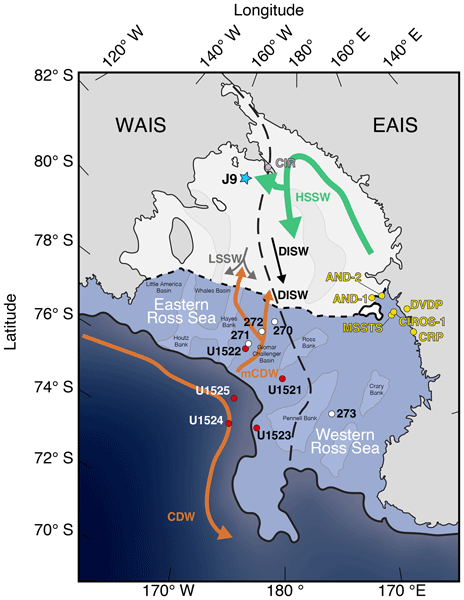
In 1977-79, the Ross Ice Shelf Project recovered ocean sediments ~ 450 km south of the present-day ice shelf calving front. Within these sediments are microfossils, which are used to recreate the history of the West Antarctic Ice Sheet (WAIS) and address how the ice sheet responded to past times of extreme warmth. The microfossils reveal the WAIS collapsed multiple times in the past 17 million years. These results inform predictions of future WAIS response to rising global temperatures.
Chris D. Fokkema, Tobias Agterhuis, Danielle Gerritsma, Myrthe de Goeij, Xiaoqing Liu, Pauline de Regt, Addison Rice, Laurens Vennema, Claudia Agnini, Peter K. Bijl, Joost Frieling, Matthew Huber, Francien Peterse, and Appy Sluijs
Clim. Past, 20, 1303–1325, https://doi.org/10.5194/cp-20-1303-2024, https://doi.org/10.5194/cp-20-1303-2024, 2024
Short summary
Short summary
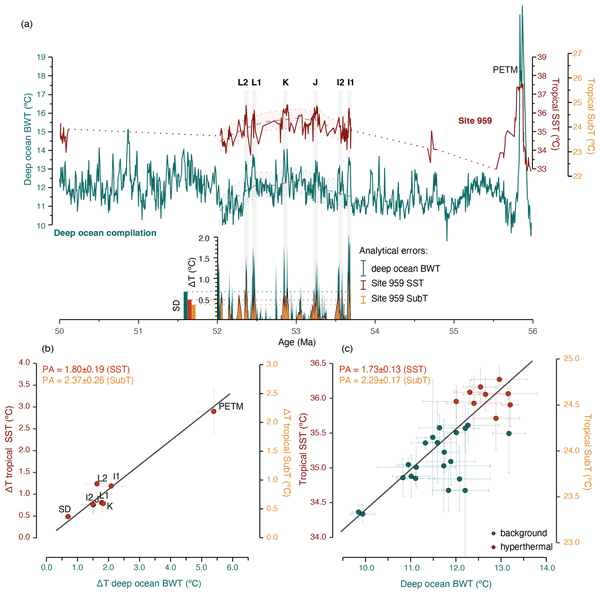
Polar amplification (PA) is a key uncertainty in climate projections. The factors that dominantly control PA are difficult to separate. Here we provide an estimate for the non-ice-related PA by reconstructing tropical ocean temperature variability from the ice-free early Eocene, which we compare to deep-ocean-derived high-latitude temperature variability across short-lived warming periods. We find a PA factor of 1.7–2.3 on 20 kyr timescales, which is somewhat larger than model estimates.
Montserrat Alonso-Garcia, Jesus Reolid, Francisco J. Jimenez-Espejo, Or M. Bialik, Carlos A. Alvarez Zarikian, Juan Carlos Laya, Igor Carrasquiera, Luigi Jovane, John J. G. Reijmer, Gregor P. Eberli, and Christian Betzler
Clim. Past, 20, 547–571, https://doi.org/10.5194/cp-20-547-2024, https://doi.org/10.5194/cp-20-547-2024, 2024
Short summary
Short summary
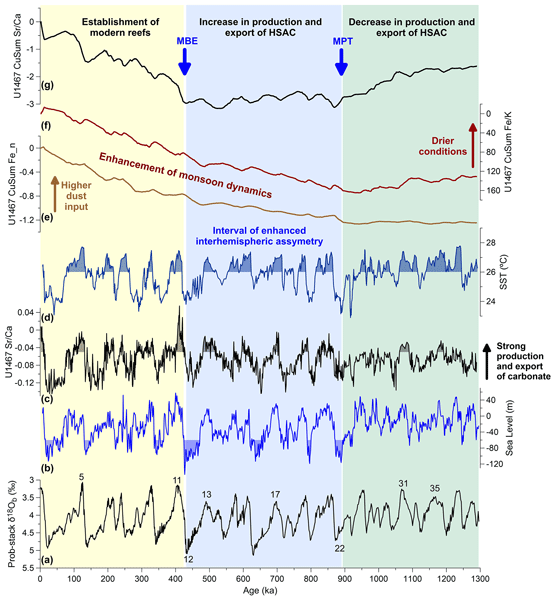
The Maldives Inner Sea (northern Indian Ocean) offers an excellent study site to explore the impact of climate and sea-level changes on carbonate platforms. The sediments from International Ocean Discovery Program (IODP) Site U1467 have been studied to determine the drivers of carbonate production in the atolls over the last 1.3 million years. Even though sea level is important, the intensity of the summer monsoon and the Indian Ocean dipole probably modulated the production at the atolls.
Peter Betlem, Thomas Birchall, Gareth Lord, Simon Oldfield, Lise Nakken, Kei Ogata, and Kim Senger
Earth Syst. Sci. Data, 16, 985–1006, https://doi.org/10.5194/essd-16-985-2024, https://doi.org/10.5194/essd-16-985-2024, 2024
Short summary
Short summary
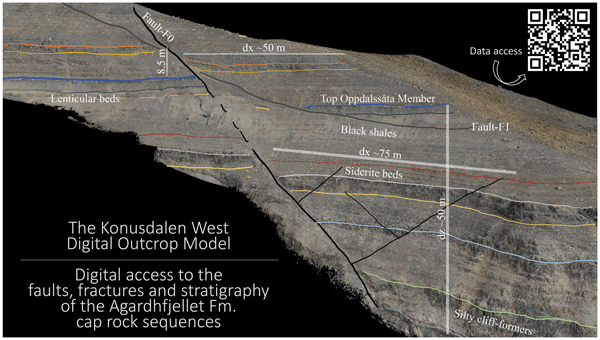
We present the digitalisation (i.e. textured outcrop and terrain models) of the Agardhfjellet Fm. cliffs exposed in Konusdalen West, Svalbard, which forms the seal of a carbon capture site in Longyearbyen, where several boreholes cover the exposed interval. Outcrop data feature centimetre-scale accuracies and a maximum resolution of 8 mm and have been correlated with the boreholes through structural–stratigraphic annotations that form the basis of various numerical modelling scenarios.
Alice R. Paine, Isabel M. Fendley, Joost Frieling, Tamsin A. Mather, Jack H. Lacey, Bernd Wagner, Stuart A. Robinson, David M. Pyle, Alexander Francke, Theodore R. Them II, and Konstantinos Panagiotopoulos
Biogeosciences, 21, 531–556, https://doi.org/10.5194/bg-21-531-2024, https://doi.org/10.5194/bg-21-531-2024, 2024
Short summary
Short summary
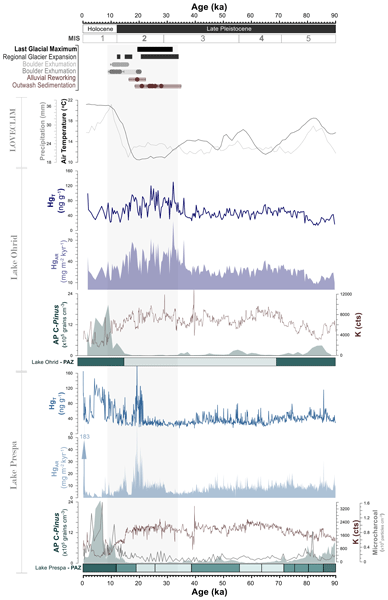
Many important processes within the global mercury (Hg) cycle operate over thousands of years. Here, we explore the timing, magnitude, and expression of Hg signals retained in sediments of lakes Prespa and Ohrid over the past ∼90 000 years. Divergent signals suggest that local differences in sediment composition, lake structure, and water balance influence the local Hg cycle and determine the extent to which sedimentary Hg signals reflect local- or global-scale environmental changes.
Madeleine L. Vickers, Morgan T. Jones, Jack Longman, David Evans, Clemens V. Ullmann, Ella Wulfsberg Stokke, Martin Vickers, Joost Frieling, Dustin T. Harper, Vincent J. Clementi, and IODP Expedition 396 Scientists
Clim. Past, 20, 1–23, https://doi.org/10.5194/cp-20-1-2024, https://doi.org/10.5194/cp-20-1-2024, 2024
Short summary
Short summary
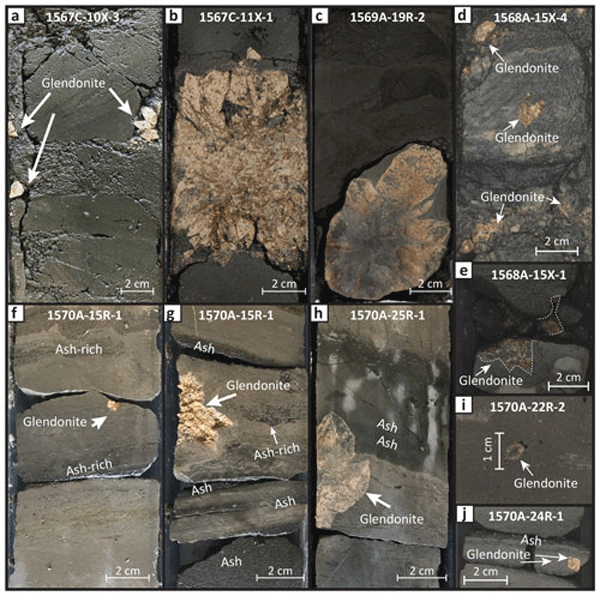
The discovery of cold-water glendonite pseudomorphs in sediments deposited during the hottest part of the Cenozoic poses an apparent climate paradox. This study examines their occurrence, association with volcanic sediments, and speculates on the timing and extent of cooling, fitting this with current understanding of global climate during this period. We propose that volcanic activity was key to both physical and chemical conditions that enabled the formation of glendonites in these sediments.
Joost Frieling, Linda van Roij, Iris Kleij, Gert-Jan Reichart, and Appy Sluijs
Biogeosciences, 20, 4651–4668, https://doi.org/10.5194/bg-20-4651-2023, https://doi.org/10.5194/bg-20-4651-2023, 2023
Short summary
Short summary
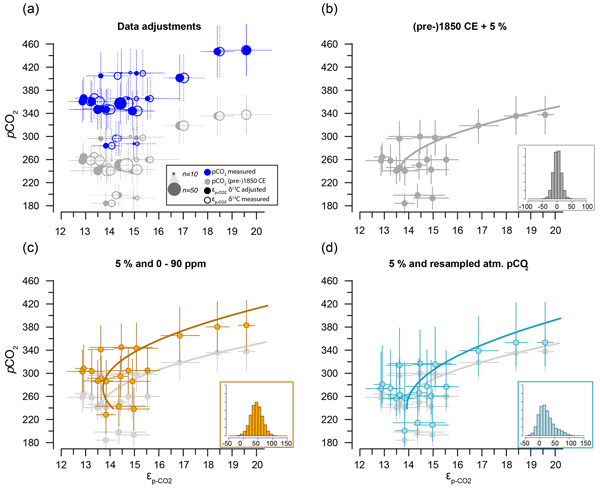
We present a first species-specific evaluation of marine core-top dinoflagellate cyst carbon isotope fractionation (εp) to assess natural pCO2 dependency on εp and explore its geological deep-time paleo-pCO2 proxy potential. We find that εp differs between genera and species and that in Operculodinium centrocarpum, εp is controlled by pCO2 and nutrients. Our results highlight the added value of δ13C analyses of individual micrometer-scale sedimentary organic carbon particles.
Stephen P. Hesselbo, Aisha Al-Suwaidi, Sarah J. Baker, Giorgia Ballabio, Claire M. Belcher, Andrew Bond, Ian Boomer, Remco Bos, Christian J. Bjerrum, Kara Bogus, Richard Boyle, James V. Browning, Alan R. Butcher, Daniel J. Condon, Philip Copestake, Stuart Daines, Christopher Dalby, Magret Damaschke, Susana E. Damborenea, Jean-Francois Deconinck, Alexander J. Dickson, Isabel M. Fendley, Calum P. Fox, Angela Fraguas, Joost Frieling, Thomas A. Gibson, Tianchen He, Kat Hickey, Linda A. Hinnov, Teuntje P. Hollaar, Chunju Huang, Alexander J. L. Hudson, Hugh C. Jenkyns, Erdem Idiz, Mengjie Jiang, Wout Krijgsman, Christoph Korte, Melanie J. Leng, Timothy M. Lenton, Katharina Leu, Crispin T. S. Little, Conall MacNiocaill, Miguel O. Manceñido, Tamsin A. Mather, Emanuela Mattioli, Kenneth G. Miller, Robert J. Newton, Kevin N. Page, József Pálfy, Gregory Pieńkowski, Richard J. Porter, Simon W. Poulton, Alberto C. Riccardi, James B. Riding, Ailsa Roper, Micha Ruhl, Ricardo L. Silva, Marisa S. Storm, Guillaume Suan, Dominika Szűcs, Nicolas Thibault, Alfred Uchman, James N. Stanley, Clemens V. Ullmann, Bas van de Schootbrugge, Madeleine L. Vickers, Sonja Wadas, Jessica H. Whiteside, Paul B. Wignall, Thomas Wonik, Weimu Xu, Christian Zeeden, and Ke Zhao
Sci. Dril., 32, 1–25, https://doi.org/10.5194/sd-32-1-2023, https://doi.org/10.5194/sd-32-1-2023, 2023
Short summary
Short summary
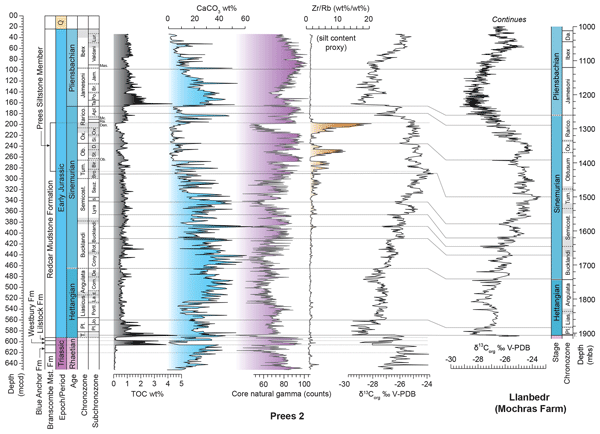
We present initial results from a 650 m long core of Late Triasssic to Early Jurassic (190–202 Myr) sedimentary strata from the Cheshire Basin, UK, which is shown to be an exceptional record of Earth evolution for the time of break-up of the supercontinent Pangaea. Further work will determine periodic changes in depositional environments caused by solar system dynamics and used to reconstruct orbital history.
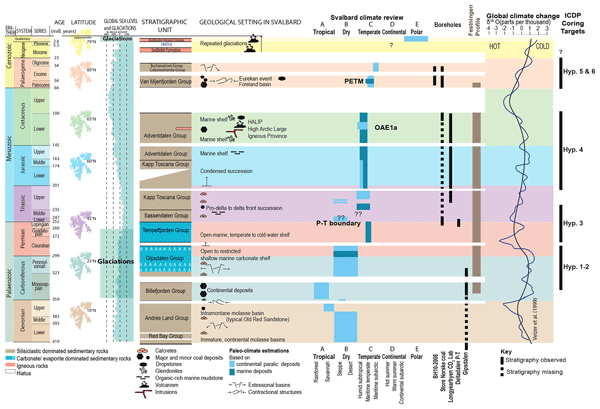
Kim Senger, Denise Kulhanek, Morgan T. Jones, Aleksandra Smyrak-Sikora, Sverre Planke, Valentin Zuchuat, William J. Foster, Sten-Andreas Grundvåg, Henning Lorenz, Micha Ruhl, Kasia K. Sliwinska, Madeleine L. Vickers, and Weimu Xu
Sci. Dril., 32, 113–135, https://doi.org/10.5194/sd-32-113-2023, https://doi.org/10.5194/sd-32-113-2023, 2023
Short summary
Short summary
Geologists can decipher the past climates and thus better understand how future climate change may affect the Earth's complex systems. In this paper, we report on a workshop held in Longyearbyen, Svalbard, to better understand how rocks in Svalbard (an Arctic archipelago) can be used to quantify major climatic shifts recorded in the past.
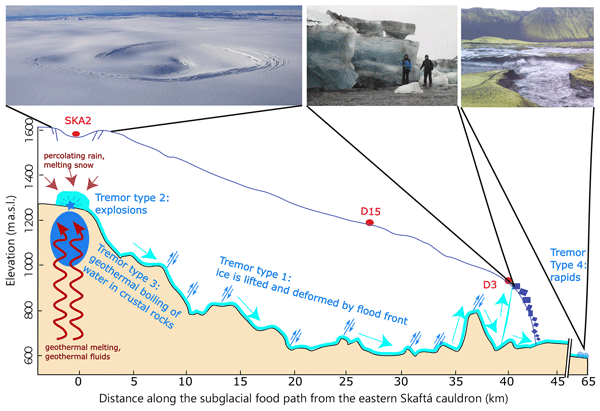
Eva P. S. Eibl, Kristin S. Vogfjörd, Benedikt G. Ófeigsson, Matthew J. Roberts, Christopher J. Bean, Morgan T. Jones, Bergur H. Bergsson, Sebastian Heimann, and Thoralf Dietrich
Earth Surf. Dynam., 11, 933–959, https://doi.org/10.5194/esurf-11-933-2023, https://doi.org/10.5194/esurf-11-933-2023, 2023
Short summary
Short summary
Floods draining beneath an ice cap are hazardous events that generate six different short- or long-lasting types of seismic signals. We use these signals to see the collapse of the ice once the water has left the lake, the propagation of the flood front to the terminus, hydrothermal explosions and boiling in the bedrock beneath the drained lake, and increased water flow at rapids in the glacial river. We can thus track the flood and assess the associated hazards better in future flooding events.
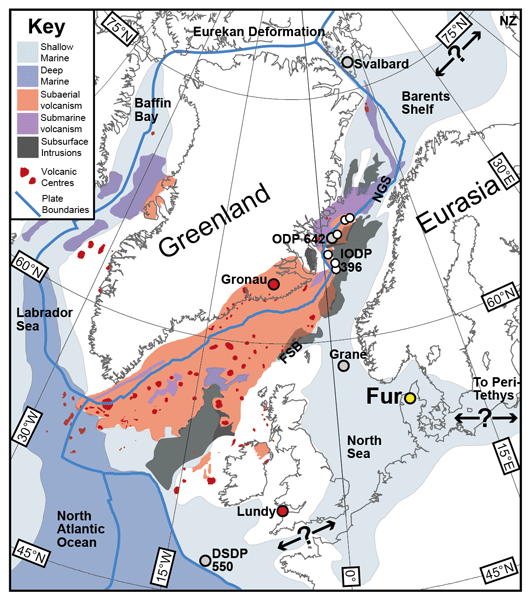
Morgan T. Jones, Ella W. Stokke, Alan D. Rooney, Joost Frieling, Philip A. E. Pogge von Strandmann, David J. Wilson, Henrik H. Svensen, Sverre Planke, Thierry Adatte, Nicolas Thibault, Madeleine L. Vickers, Tamsin A. Mather, Christian Tegner, Valentin Zuchuat, and Bo P. Schultz
Clim. Past, 19, 1623–1652, https://doi.org/10.5194/cp-19-1623-2023, https://doi.org/10.5194/cp-19-1623-2023, 2023
Short summary
Short summary
There are periods in Earth’s history when huge volumes of magma are erupted at the Earth’s surface. The gases released from volcanic eruptions and from sediments heated by the magma are believed to have caused severe climate changes in the geological past. We use a variety of volcanic and climatic tracers to assess how the North Atlantic Igneous Province (56–54 Ma) affected the oceans and atmosphere during a period of extreme global warming.
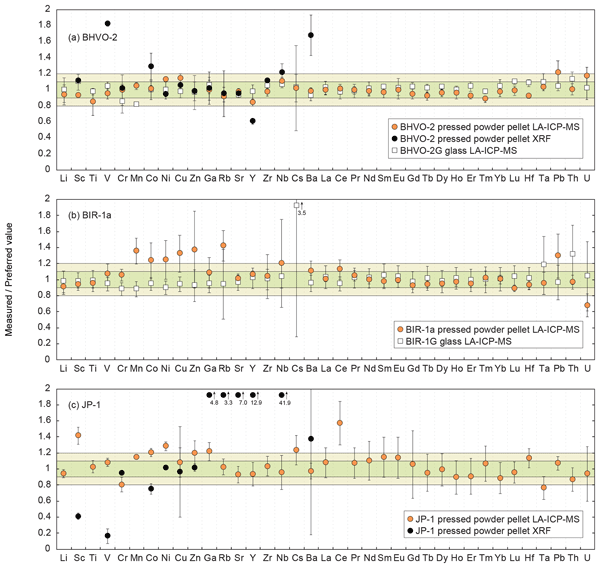
Mathieu Rospabé, Fatma Kourim, Akihiro Tamura, Eiichi Takazawa, Manolis Giampouras, Sayantani Chatterjee, Keisuke Ishii, Matthew J. Cooper, Marguerite Godard, Elliot Carter, Natsue Abe, Kyaw Moe, Damon A. H. Teagle, and Oman Drilling Project “ChikyuOman2018 Leg 3” Science
Team
Sci. Dril., 30, 75–99, https://doi.org/10.5194/sd-30-75-2022, https://doi.org/10.5194/sd-30-75-2022, 2022
Short summary
Short summary
During ChikyuOman2018 Leg3, we adapted a sample preparation and analytical procedure in order to analyse (ultra-)trace element concentrations using the D/V Chikyu on-board instrumentation. This dry (acid-free) and safe method has been developed for the determination of 37 elements (lowest reachable concentrations: 1–2 ppb) in igneous rocks from the oceanic lithosphere and could be adapted to other materials and/or chemicals of interest in the course of future ocean drilling operations.
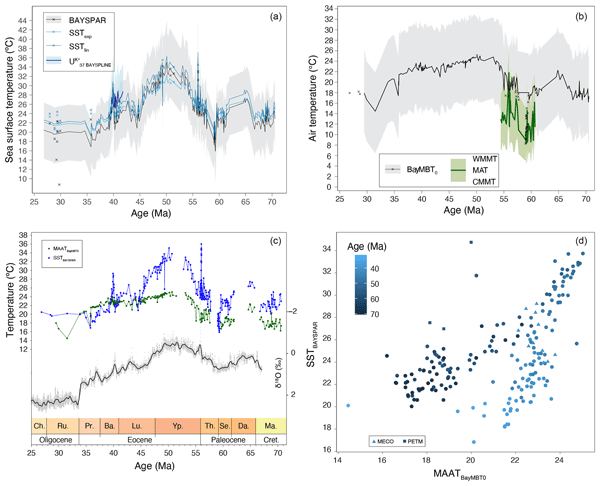
Peter K. Bijl, Joost Frieling, Marlow Julius Cramwinckel, Christine Boschman, Appy Sluijs, and Francien Peterse
Clim. Past, 17, 2393–2425, https://doi.org/10.5194/cp-17-2393-2021, https://doi.org/10.5194/cp-17-2393-2021, 2021
Short summary
Short summary
Here, we use the latest insights for GDGT and dinocyst-based paleotemperature and paleoenvironmental reconstructions in late Cretaceous–early Oligocene sediments from ODP Site 1172 (East Tasman Plateau, Australia). We reconstruct strong river runoff during the Paleocene–early Eocene, a progressive decline thereafter with increased wet/dry seasonality in the northward-drifting hinterland. Our critical review leaves the anomalous warmth of the Eocene SW Pacific Ocean unexplained.
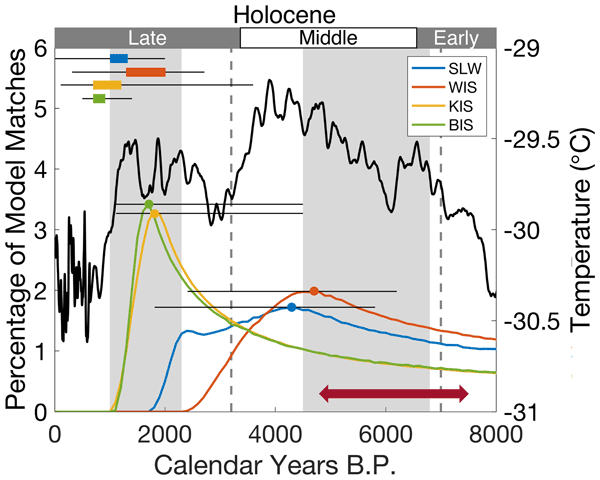
Sarah U. Neuhaus, Slawek M. Tulaczyk, Nathan D. Stansell, Jason J. Coenen, Reed P. Scherer, Jill A. Mikucki, and Ross D. Powell
The Cryosphere, 15, 4655–4673, https://doi.org/10.5194/tc-15-4655-2021, https://doi.org/10.5194/tc-15-4655-2021, 2021
Short summary
Short summary
We estimate the timing of post-LGM grounding line retreat and readvance in the Ross Sea sector of Antarctica. Our analyses indicate that the grounding line retreated over our field sites within the past 5000 years (coinciding with a warming climate) and readvanced roughly 1000 years ago (coinciding with a cooling climate). Based on these results, we propose that the Siple Coast grounding line motions in the middle to late Holocene were driven by relatively modest changes in regional climate.
Cited articles
Alvarez Zarikian, C. A., Yager, S. L., Harper, D. T., Christopoulou, M., Clementi, V. J., Varela, N., and Expedition 396 Scientists: Data Report: X-Ray Fluorescence Scanning of Site U1574, Vøring Plateau, IODP Expedition 396, Proceedings of the International Ocean Discovery Program, 396, https://doi.org/10.14379/iodp.proc.396.2023, 2024.
Bourke, A. and Ross, P.-S.: Portable X-ray fluorescence measurements on exploration drill-cores: Comparing performance on unprepared cores and powders for “whole-rock” analysis, Geochem. Explor. Environ. Anal., 16, 147–157, https://doi.org/10.1144/geochem2014-326, 2016.
Bowman, E. E. and Ducea, M. N.: Pyroxenite melting at subduction zones, Geology, 51, 383–386, https://doi.org/10.1130/G50929.1, 2023.
Dawson, H. L., Dubrule, O., and John, C. M.: Impact of dataset size and convolutional neural network architecture on transfer learning for carbonate rock classification, Comput. Geosci., 171, 105284, https://doi.org/10.1016/j.cageo.2022.105284, 2023.
Drake, B. L., MacDonald, B. L., and Shannon, R. F.: Introduction, In Advances in Portable X-Ray Fluorescence Spectrometry: Instrumentation, Application and Interpretation, Roy. Soc. Ch., 1–10, https://doi.org/10.1039/9781839162695-00001, 2022.
Dunlea, A. G., Murray, R. W., Tada, R., Alvarez-Zarikian, C. A., Anderson, C. H., Gilli, A., Giosan, L., Gorgas, T., Hennekam, R., Irino, T., Murayama, M., Peterson, L. C. Reichart, G.-J., Seki, A., Zheng, H., and Ziegler, M.: Intercomparison of XRF core scanning results from seven labs and approaches to practical calibration, Geochem. Geophys. Geosy., 21, e2020GC009248, https://doi.org/10.1029/2020GC009248, 2020.
Fisher, L., Gazley, M. F., Baensch, A., Barnes, S. J., Cleverley, J., and Duclaux, G.: Resolution of geochemical and lithostratigraphic complexity: A workflow for application of portable X-ray fluorescence to mineral exploration, Geochem. Explor. Environ. Anal., 14, 149–159, https://doi.org/10.1144/geochem2012-158, 2014.
Forster, N., Grave, P., Vickery, N., and Kealhofer, L.: Non-destructive analysis using PXRF: Methodology and application to archaeological ceramics, X-Ray Spectrom., 40, 389–398, https://doi.org/10.1002/xrs.1360, 2011.
Fresia, B., Ross, P.-S., Gloaguen, E., and Bourke, A.: Lithological discrimination based on statistical analysis of multi-sensor drill core logging data in the Matagami VMS district, Quebec, Canada, Ore Geol. Rev., 80, 552–563, https://doi.org/10.1016/j.oregeorev.2016.07.019, 2017.
Gebregiorgis, D., Giosan, L., Hathorne, E. C., Anand, P., Nilsson-Kerr, K., Plass, A., Lückge, A., Clemens, S. C., and Frank, M.: What Can We Learn From X-Ray Fluorescence Core Scanning Data? A Paleomonsoon Case Study, Geochem. Geophys. Geosy., 21, e2019GC008414, https://doi.org/10.1029/2019GC008414, 2020.
Hahn, A., Bowen, M. G., Clift, P. D., Kulhanek, D. K., and Lyle, M. W.: Testing the Analytical Performance of Handheld XRF Using Marine Sediments of IODP Expedition 355, Geol. Mag., 157, 956–60, https://doi.org/10.1017/S0016756819000189, 2020.
Hallberg, J. A.: A geochemical aid to igneous rock type identification in deeply weathered terrain, J. Geochem. Explor., 20, 1–8, https://doi.org/10.1016/0375-6742(84)90085-2, 1984.
Hubbell, J. H. and Seltzer, S. M.: X-Ray Mass Attenuation Coefficients NIST Standard Reference Database 126, National Institute of Standards and Technology, https://doi.org/10.18434/T4D01F, 2004.
Jansen, J. H. F., Van der Gaast, S. J., Koster, B., and Vaars, A. J.: CORTEX, a shipboard XRF-scanner for element analyses in split sediment cores, Marine Geology, 151, 143–153, https://doi.org/10.1016/S0025-3227(98)00074-7, 1998.
Jenkins, R.: X-Ray Fluorescence Analysis, X-ray Characterization of Materials, 171–209, https://doi.org/10.1002/9783527613748.ch3, 1999.
Johnston, R. M., Ryan, J. G., and Expedition 366 Scientists: pXRF and ICP-AES characterization of shipboard rocks and sediments: protocols and strategies, Proceedings of the International Ocean Discovery Program, 366 https://doi.org/10.14379/iodp.proc.366.2018, 2018.
Jonnalagadda, M. K., Belgrano, T. M., Ryan, J. G., Kempton, P. D., Evans, A. D., Grant, L. J. C., Teagle, D. A. H., Coggon, R. M., Reece, J., Sylvan, J. B., Williams, T. J., Estes, E. R., and the Expedition 390/393 Scientists: Data report: High downhole resolution portable X-ray fluorescence geochemistry of South Atlantic Transect basement cores, IODP Expeditions 390C, 395E, 390, and 393, in: South Atlantic Transect, edited by: Coggon, R. M., Teagle, D. A. H., Sylvan, J. B., Reece, J., Estes, E. R., Williams, T. J., Christeson, G. L., and the Expedition 390/393 Scientists, Proceedings of the International Ocean Discovery Program, 390/393, International Ocean Discovery Program, College Station, TX, https://doi.org/10.14379/iodp.proc.390393.2024, 2024.
Koppers, A. and Coggon, R. (Eds.): Exploring Earth by Scientific Ocean Drilling: 2050 Science Framework, International Ocean Discovery Program, 124, https://doi.org/10.6075/J0W66J9H, 2020.
Kunkelova, T., Jung, S. J. A., de Leau, E. S., Odling, N., Thomas, A. L., Betzler, C., Eberli, G. P., Alvarez-Zarikian, C. A., Alonso-García, M., Bialik, O. M., Blättler, C. L., Guo, J. A., Haffen, S., Horozal, S., Inoue, M., Jovane, L., Kroon, D., Lanci, L., Laya, J. C., Hui Mee, A. L., Nakakuni, M., Nath, B. N., Niino, K., Petruny, L. M., Pratiwi, S. D., Slagle, A. L., Su, X., Swart, P. K., Wright, J. D., Yao, Z., Young, J. R, Lindhorst, S., Stainbank, S., Rueggeberg, A., Spezzaferri, S., Carrasqueira, I., Hu, S., and Kroon, D.: A two-million-year record of low-latitude aridity linked to continental weathering from the Maldives, Prog. Earth Planet. Sci., 5, 86, https://doi.org/10.1186/s40645-018-0238-x, 2018.
Lang, O. I. and Lambart, S.: First-row transition elements in pyroxenites and peridotites: A promising tool for constraining mantle source mineralogy, Chem. Geo., 612, 121137, https://doi.org/10.1016/j.chemgeo.2022.121137, 2022.
Lokier, S. W. and Al Junaibi, M.: The petrographic description of carbonate facies: Are we all speaking the same language?, Sedimentology, 63, 1843–1885, https://doi.org/10.1111/sed.12293, 2016.
Meyer, R., Hertogen, J., Pedersen, R. B., Viereck-Götte, L., and Abratis, M.: Interaction of mantle derived melts with crust during the emplacement of the Vøring Plateau, N.E. Atlantic, Marine Geology, 261, 3–16, https://doi.org/10.1016/j.margeo.2009.02.007, 2009.
Morris, A. M., Lambart, S., Stearns M. A., Bowman J. R., Jones M. T., Mohn G. T. F., Andrews G. D. M., Millet J., Tegner C., Chatterjee S., Frieling J., Guo P., Berndt C., Planke S., Alvarez Zarikian C. A., Betlem P., Brinkhuis H., Christopoulou M., Ferré E. C., Filina I. V., Harper D. T., Jolley D. W., Longman J., Scherer R. P., Varela N., Xu W., Yager S. L., Agarwal A., and Clementi V. J.: Evidence for Low-pressure Crustal Anatexis During the Northeast Atlantic Break-up, Geochem. Geophys. Geosy. 25, e2023GC011413, https://doi.org/10.1029/2023GC011413, 2024.
Morris, A., Lambart, S., Alvarez Zarikian, C., Millett, J., Jones, M., Planke, S., Betlem, P., Chatterjee, S., Christpoulou, M., Ferre, E., Filina, I., Frieling, J., Scherer, R., Varela, N., Xu, W., and Yager, S.: Supplement to: Recommendations for using core XRF data on basaltic cores as a tool to assess compositional variability, Zenodo [data set], https://doi.org/10.5281/zenodo.18343315, 2026.
Pälike, H., Shackleton, N. J., and Röhl, U.: Astronomical forcing in Late Eocene marine sediments, Earth Planet. Sci. Lett., 193, 589–602, https://doi.org/10.1016/S0012-821X(01)00501-5, 2001.
Pearce, J. A.: Immobile Element Fingerprinting of Ophiolites, Elements, 10, 101–108, https://doi.org/10.2113/gselements.10.2.101, 2014.
Pearce, J. A. and Norry, M. J.: Petrogenetic implications of Ti, Zr, Y, and Nb variations in volcanic rocks, Contrib. Mineral Petr., 69, 33–47, https://doi.org/10.1007/BF00375192, 1979.
Planke, S., Berndt, C., Alvarez Zarikian, C. A., Agarwal, A., Andrews, G. D. M., Betlem, P., Bhattacharya, J., Brinkhuis, H., Chatterjee, S., Christopoulou, M., Clementi, V. J., Ferré, E. C., Filina, I. Y., Frieling, J., Guo, P., Harper, D. T., Jones, M. T., Lambart, S., Longman, J., Millett, J. M., Mohn, G., Nakaoka, R., Scherer, R. P., Tegner, C., Varela, N., Wang, M., Xu, W., and Yager, S. L.: Expedition 396 methods, in: Mid-Norwegian Margin Magmatism and Paleoclimate Implications, edited by: Planke, S., Berndt, C., Alvarez Zarikian, C. A., and the Expedition 396 Scientists, Proceedings of the International Ocean Discovery Program, 396, International Ocean Discovery Program, College Station, TX, https://doi.org/10.14379/iodp.proc.396.2023, 2023a.
Planke, S., Berndt, C., Alvarez Zarikian, C. A., Agarwal, A., Andrews, G. D. M., Betlem, P., Bhattacharya, J., Brinkhuis, H., Chatterjee, S., Christopoulou, M., Clementi, V. J., Ferré, E. C., Filina, I. Y., Frieling, J., Guo, P., Harper, D. T., Jones, M. T., Lambart, S., Longman, J., Millett, J. M., Mohn, G., Nakaoka, R., Scherer, R. P., Tegner, C., Varela, N., Wang, M., Xu, W., and Yager, S. L.: Expedition 396 summary, in: Mid-Norwegian Margin Magmatism and Paleoclimate Implications, edited by: Planke, S., Berndt, C., Alvarez Zarikian, C. A., and the Expedition 396 Scientists, Proceedings of the International Ocean Discovery Program, 396, International Ocean Discovery Program, College Station, TX, https://doi.org/10.14379/iodp.proc.396.2023, 2023b.
Planke, S., Berndt, C., Alvarez Zarikian, C. A., Agarwal, A., Andrews, G. D. M., Betlem, P., Bhattacharya, J., Brinkhuis, H., Chatterjee, S., Christopoulou, M., Clementi, V. J., Ferré, E. C., Filina, I. Y., Frieling, J., Guo, P., Harper, D. T., Jones, M. T., Lambart, S., Longman, J., Millett, J. M., Mohn, G., Nakaoka, R., Scherer, R. P., Tegner, C., Varela, N., Wang, M., Xu, W., and Yager, S. L.: Site U1566, in: Mid-Norwegian Margin Magmatism and Paleoclimate Implications, edited by: Planke, S., Berndt, C., Alvarez Zarikian, C. A., and the Expedition 396 Scientists, Proceedings of the International Ocean Discovery Program, 396, International Ocean Discovery Program, College Station, TX, https://doi.org/10.14379/iodp.proc.396.104.2023, 2023c.
Planke, S., Berndt, C., Alvarez Zarikian, C. A., Agarwal, A., Andrews, G. D. M., Betlem, P., Bhattacharya, J., Brinkhuis, H., Chatterjee, S., Christopoulou, M., Clementi, V. J., Ferré, E. C., Filina, I. Y., Frieling, J., Guo, P., Harper, D. T., Jones, M. T., Lambart, S., Longman, J., Millett, J. M., Mohn, G., Nakaoka, R., Scherer, R. P., Tegner, C., Varela, N., Wang, M., Xu, W., and Yager, S. L.: Sites U1571 and U1572, in: Mid-Norwegian Margin Magmatism and Paleoclimate Implications, edited by: Planke, S., Berndt, C., Alvarez Zarikian, C. A., and the Expedition 396 Scientists, Proceedings of the International Ocean Discovery Program, 396, International Ocean Discovery Program, College Station, TX, https://doi.org/10.14379/iodp.proc.396.107.2023, 2023d.
Planke, S., Berndt, C., Alvarez Zarikian, C. A., Agarwal, A., Andrews, G. D. M., Betlem, P., Bhattacharya, J., Brinkhuis, H., Chatterjee, S., Christopoulou, M., Clementi, V. J., Ferré, E. C., Filina, I. Y., Frieling, J., Guo, P., Harper, D. T., Jones, M. T., Lambart, S., Longman, J., Millett, J. M., Mohn, G., Nakaoka, R., Scherer, R. P., Tegner, C., Varela, N., Wang, M., Xu, W., and Yager, S. L.: Site U1574, in: Mid-Norwegian Margin Magmatism and Paleoclimate Implications, edited by: Planke, S., Berndt, C., Alvarez Zarikian, C. A., and the Expedition 396 Scientists, Proceedings of the International Ocean Discovery Program, 396, International Ocean Discovery Program, College Station, TX, https://doi.org/10.14379/iodp.proc.396.109.2023, 2023e.
Reagan, M. K., Pearce, J. A., Petronotis, K., Almeev, R., Avery, A. A., Carvallo, C., Chapman, T., Christeson, G. L., Ferré, E. C., Godard, M., Heaton, D. E., Kirchenbaur, M., Kurz, W., Kutterolf, S., Li, H. Y., Li, Y., Michibayashi, K., Morgan, S., Nelson, W. R., Prytulak, J., Python, M., Robertson, A. H. F., Ryan, J. G., Sager, W. W., Sakuyama, T., Shervais, J. W., Shimizu, K., and Whattam, S. A.: Expedition 352 methods, in: Izu-Bonin-Mariana Fore Arc, edited by: Reagan, M. K., Pearce, J. A., Petronotis, K., and the Expedition 352 Scientists, Proceedings of the International Ocean Discovery Program, 352, International Ocean Discovery Program, College Station, TX, https://doi.org/10.14379/iodp.proc.352.102.2015, 2015a.
Reagan, M. K., Pearce, J. A., Petronotis, K., Almeev, R., Avery, A. A., Carvallo, C., Chapman, T., Christeson, G. L., Ferré, E. C., Godard, M., Heaton, D. E., Kirchenbaur, M., Kurz, W., Kutterolf, S., Li, H. Y., Li, Y., Michibayashi, K., Morgan, S., Nelson, W. R., Prytulak, J., Python, M., Robertson, A. H. F., Ryan, J. G., Sager, W. W., Sakuyama, T., Shervais, J. W., Shimizu, K., and Whattam, S. A.: Expedition 352 summary, in: Izu-Bonin-Mariana Fore Arc, edited by: Reagan, M. K., Pearce, J. A., Petronotis, K., and the Expedition 352 Scientists, Proceedings of the International Ocean Discovery Program, 352, International Ocean Discovery Program, College Station, TX, https://doi.org/10.14379/iodp.proc.352.101.2015, 2015b.
Richter, T. O., Van Der Gaast, S., Koster, B., Vaars, A., Gieles, R., De Stigter, H. C., De Haas, H., and Van Weering, T. C. E.: The Avaatech XRF Core Scanner: Technical description and applications to NE Atlantic sediments, Geo. Soc. Spec. Publ., 267, 39–50, https://doi.org/10.1144/GSL.SP.2006.267.01.03, 2006.
Romano, P., Brusca, L., and Liotta, M.: Element mobility during basalt-water-CO2 interaction: Observations in natural systems vs. laboratory experiments and implication for carbon storage, Geochem. T., 25, 4, https://doi.org/10.1186/s12932-024-00087-7, 2024.
Rothwell, R. G. and Croudace, I. W.: Micro-XRF Studies of Sediment Cores: A Perspective on Capability and Application in the Environmental Sciences, in: Micro-XRF Studies of Sediment Cores, edited by: Croudace, I. W. and Rothwell, R. G., Dev. Paleoenviron. Res., 17, https://doi.org/10.1007/978-94-017-9849-5_1, 2015.
Ryan, J. G., Shervais, J. W., Li, Y., Reagan, M. K., Li, H. Y., Heaton, D., Godard, M., Kirchenbaur, M., Whattam, S. A., Pearce, J. A., Chapman, T., Nelson, D., Prytulak, J., Shimizu, K., Petronotis, K., and the IODP Expedition 352 Scientific Team: Application of a handheld X-ray fluorescence spectrometer for real-time, high-density quantitative analysis of drilled igneous rocks and sediments during IODP Expedition 352, Chem. Geol., 451, 55–66, https://doi.org/10.1016/j.chemgeo.2017.01.007, 2017.
Sato, H.: Nickel content of basaltic magmas: Identification of primary magmas and a measure of the degree of olivine fractionation, Lithos, 10, 113–120, https://doi.org/10.1016/0024-4937(77)90037-8, 1977.
Siegel, A. F. and Wagner, M. R.: ANOVA: Testing for Differences Among Many Samples and Much More, in: Practical Business Statistics, 8th edn., 485–510, https://doi.org/10.1016/B978-0-12-820025-4.00015-4, 2022.
Sitko, R. and Zawisza, B.: Quantification in X-Ray Fluorescence Spectrometry, in: X-Ray Spectroscopy, edited by: Sharma, S. K., InTech, 137–162, https://doi.org/10.5772/29367, 2012.
Smith, R. E. and Smith, S. E.: Comments on the use of Ti, Zr, Y, Sr, K, P and Nb in classification of basaltic magmas, Earth Planet. Sc. Lett., 32, 114–120, https://doi.org/10.1016/0012-821X(76)90049-2, 1976.
Sun, S.-S., Nesbitt, R. W., and Sharaskin, A. Ya.: Geochemical characteristics of mid-ocean ridge basalts. Earth Planet. Sc. Lett., 44, 119–138, https://doi.org/10.1016/0012-821X(79)90013-X, 1979.
Super, J.: Looking toward the future of ocean drilling, Nature Geoscience, 17, 1189–1192, https://doi.org/10.1038/s41561-024-01600-4, 2024.
Tegner, C., Guo, P., Chatterjee, S., Lambart, S., Jones, M. T., Planke, S., Neumann, E.-R., Svensen, H. H., Lesher, C. E., Cashman, K., Takahashi, T., Cunningham, E. H., Morris, A. M., Stokke, E. W., Millet, J. M., Mohn, G. T. F., Longman, J., Berndt, C., Alvarez Zarikian, C. A., Betlem, P., Brinkhuis, H., Christopoulou, M., Ferré, E., Filina, I., Frieling, J., Harper, D. T., Scherer, R. P., Varela, N., Xu, W., and Yager, S. L.: New geochemical analyses on samples drilled on the mid-Norwegian margin during IODP Expedition 396, ODP Leg 104 and DSDP Leg 38, GFZ Data Services [data set], https://doi.org/10.5880/digis.2025.011, 2025.
Virtanen, P., Gommers, R., Oliphant, T. E., Haberland, M., Reddy, T., Cournapeau, D., Burovski, E., Peterson, P., Weckesser, W., Bright, J., van der Walt, S. J., Brett, M., Wilson, J., Millman, K. J., Mayorov, N., Nelson, A. R. J., Jones, E., Kern, R., Larson, E., Carey, C. J., Polat, I., Feng, Y., Moore, E. W., VanderPlas, J., Laxalde, D., Perktold, J., Cimrman, R., Henriksen, I., Quintero, E. A., Harris, C. R., Archibald, A. M., Ribeiro, A. H., Pedregosa, F., van Mulbregt, P., and SciPy 1.0 Contributors: SciPy 1.0: Fundamental algorithms for scientific computing in Python, Nat. Methods, 17, 261–272, https://doi.org/10.1038/s41592-019-0686-2, 2020.
Vlag, P. A., Kruiver, P. P., and Dekkers, M. J.: Evaluating climate change by multivariate statistical techniques on magnetic and chemical properties of marine sediments (Azores region), Palaeogeography, Palaeoclimatology, Palaeoecology, 212, 23–44, https://doi.org/10.1016/j.palaeo.2004.05.015, 2004.
Wang, J., Su, B.-X., Robinson, P. T., Xiao, Y., Bai, Y., Liu, X., Sakyi, P. A., Jing, J.-J., Chen, C., Liang, Z., and Bao, Z.-A.: Trace elements in olivine: Proxies for petrogenesis, mineralization and discrimination of mafic-ultramafic rocks,. Lithos, 388–389, 106085, https://doi.org/10.1016/j.lithos.2021.106085, 2021.
Weltje, G. J. and Tjallingii, R.: Calibration of XRF core scanners for quantitative geochemical logging of sediment cores: Theory and application, Earth Planet. Sc. Lett., 274, 423–438, https://doi.org/10.1016/j.epsl.2008.07.054, 2008.
Weltje, G. J., Bloemsma, M. R., Tjallingii, R., Heslop, D., Röhl, U., and Croudace, I. W.: Prediction of geochemical composition from XRF core scanner data: a new multivariate approach including automatic selection of calibration samples and quantification of uncertainties, in: Micro-XRF Studies of Sediment Cores: Applications of a non-destructive tool for the environmental sciences, Springer Netherlands, Dordrecht, 507–534, https://doi.org/10.1007/978-94-017-9849-5_21, 2015.
Short summary
Choosing samples from large sections of hard-rock cores often relies on preliminary chemical analyses, which can be limited and therefore misrepresentative of full chemical variability. This study adapts X-ray fluorescence core-scanning techniques for use on hard-rock basalt cores to outline a method that provides accurate chemical information in greater detail relative to traditional analytical methods. The presented workflow suggests significant contributions to new and legacy core research.
Choosing samples from large sections of hard-rock cores often relies on preliminary chemical...


