

Articles | Volume 35, issue 2
https://doi.org/10.5194/sd-35-255-2026
© Author(s) 2026. This work is distributed under
the Creative Commons Attribution 4.0 License.
the Creative Commons Attribution 4.0 License.
https://doi.org/10.5194/sd-35-255-2026
© Author(s) 2026. This work is distributed under
the Creative Commons Attribution 4.0 License.
the Creative Commons Attribution 4.0 License.
Workshop report
| 
29 Oct 2026
Workshop report |
| 29 Oct 2026
| 29 Oct 2026
Workshop report: Lake KINneret Drilling (KIND) – reconstructing Pliocene–Quaternary hydroclimate and seismic history of the Levant

The Fredy & Nadine Herrmann Institute of Earth Sciences, The Hebrew University of Jerusalem, Jerusalem 91904, Israel
Interuniversity Institute for Marine Sciences, Eilat 88103, Israel
Eshly Aizenshtat-Soffer
Geological Survey of Israel, 30 Malkhe Israel Street, Jerusalem 95501, Israel
Moshe Armon
The Fredy & Nadine Herrmann Institute of Earth Sciences, The Hebrew University of Jerusalem, Jerusalem 91904, Israel
Catherine C. Beck
Department of Geosciences, Hamilton College, Clinton, NY 13323, USA
Steven L. Goldstein
Lamont-Doherty Earth Observatory of Columbia University, 61 Rt. 9W, Palisades, NY 10964, USA
Hannah Hartung
Institute of Geology and Mineralogy, University of Cologne, Cologne, Germany
Yael Kiro
Department of Earth and Planetary Sciences, Weizmann Institute of Science, Rehovot, Israel
Dafna Langgut
Institute of Archaeology, The Steinhardt Museum of Natural History, Tel Aviv University, Tel Aviv, Israel
Thomas Litt
Section Paleontology, University of Bonn, Nussallee 8, 53123 Bonn, Gernany
Shmuel Marco
Department of Geophysics, Tel Aviv University, Tel Aviv, Israel
Steffen Mischke
Institute of Earth Sciences, University of Iceland, Reykjavík, Iceland
Mario Morellón
Departamento de Geodinámica, Estratigrafía y Paleontología, Facultad de Ciencias Geológicas, Universidad Complutense de Madrid, C/José Antonio Nováis, 12, 28040 Madrid, Spain
Anders Noren
Continental Scientific Drilling Coordination Office, University of Minnesota, Minneapolis, MN, USA
Perach Nuriel
Department of Earth Sciences, University of Geneva, 1205, Geneva, Switzerland
Lisa E. Park Boush
Department of Earth Sciences, University of Connecticut, 354 Mansfield Road, Storrs, CT 06269, USA
Adina Paytan
Earth and Planetary Sciences, University of California Santa Cruz, Santa Cruz, CA, USA
Simona Pierdominici
GFZ German Research Centre for Geosciences, Telegrafenberg, 14473 Potsdam, Germany
Elena Robakiewicz
Institut für Geographiedidaktik, Universität zu Köln, Gronewaldstr. 2, 50931 Cologne, Germany
Ron Shaar
The Fredy & Nadine Herrmann Institute of Earth Sciences, The Hebrew University of Jerusalem, Jerusalem 91904, Israel
Mordechai Stein
The Fredy & Nadine Herrmann Institute of Earth Sciences, The Hebrew University of Jerusalem, Jerusalem 91904, Israel
Martin Trauth
Institute of Geosciences, University of Potsdam, Potsdam, Germany
Nadav Wetzler
Geological Survey of Israel, 30 Malkhe Israel Street, Jerusalem 95501, Israel
Charlotte Zachow
Department of Geosciences, Eberhard Karls University of Tuebingen, Hoelderlinstrasse 12, 72074 Tuebingen, Germany
A full list of authors appears at the end of the paper.
Related authors
Dotan Rotem, Yishai Weinstein, Yehudit Harlavan, Adi Torfstein, and Hanne Hvidtfeldt Christiansen
The Cryosphere, 20, 5303–5326, https://doi.org/10.5194/tc-20-5303-2026, https://doi.org/10.5194/tc-20-5303-2026, 2026
Short summary
Short summary
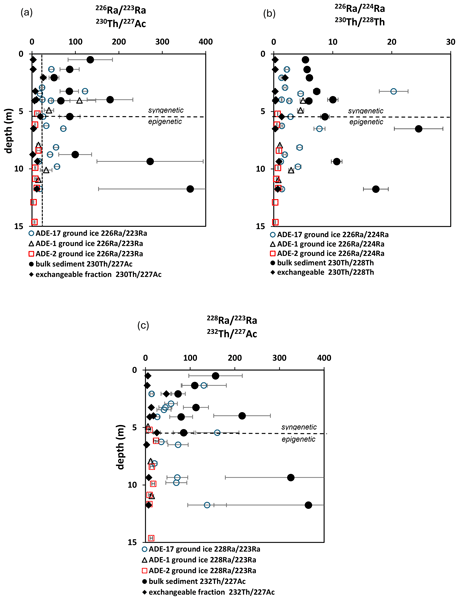
We investigated the residence time of ground ice in the Svalbard permafrost. Marked variations in salinity and the chemical composition were found in three proximal cores. Radioactive Ra and Th isotopes suggest that while some ice has a residence time of several thousands years, the more saline samples show lower long-to-short-lived Ra ratios, implying a residence time under 100 years. This indicates active within-permafrost flow, which highlights the system's resilience to global warming.
Lin Hoober, Barak Herut, Nadya Teutsch, Sarit Ashckenazi-Polivoda, Adi Torfstein, and Sigal Abramovich
Biogeosciences, 23, 5685–5696, https://doi.org/10.5194/bg-23-5685-2026, https://doi.org/10.5194/bg-23-5685-2026, 2026
Short summary
Short summary
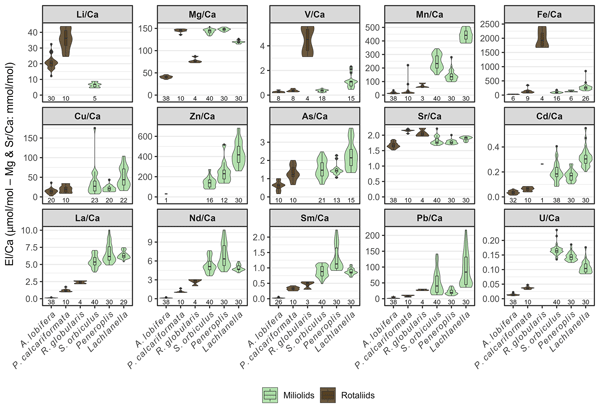
Foraminifera are tiny marine organisms that build shells and have evolved different ways of doing so over millions of years. By comparing two major groups living side by side in the Mediterranean Sea, this study shows that their shells record clear, systematic chemical differences. These contrasts reveal fundamentally different shell-building strategies shaped by evolution, not just by the surrounding environment.
Efraim Bril, Adi Torfstein, Roy Yaniv, and Assaf Hochman
Clim. Past, 22, 339–355, https://doi.org/10.5194/cp-22-339-2026, https://doi.org/10.5194/cp-22-339-2026, 2026
Short summary
Short summary
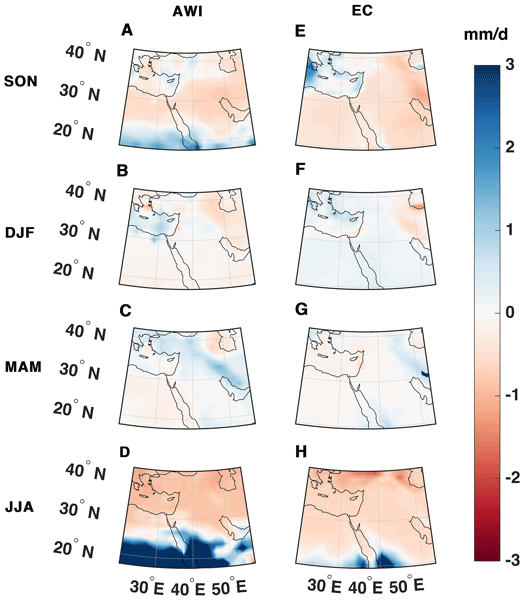
During a past warm period, we found that the eastern Mediterranean region experienced stronger but shorter rain events, especially in the south. The warming made the air wetter, which helped produce more intense rainfall. Using climate models and recent data, we show how this improves our understanding of future changes in dry regions.
Noy Levy, Adi Torfstein, Ralf Schiebel, Natalie Chernihovsky, Klaus Peter Jochum, Ulrike Weis, Brigitte Stoll, and Gerald H. Haug
Biogeosciences, 23, 1065–1088, https://doi.org/10.5194/bg-23-1065-2026, https://doi.org/10.5194/bg-23-1065-2026, 2026
Short summary
Short summary
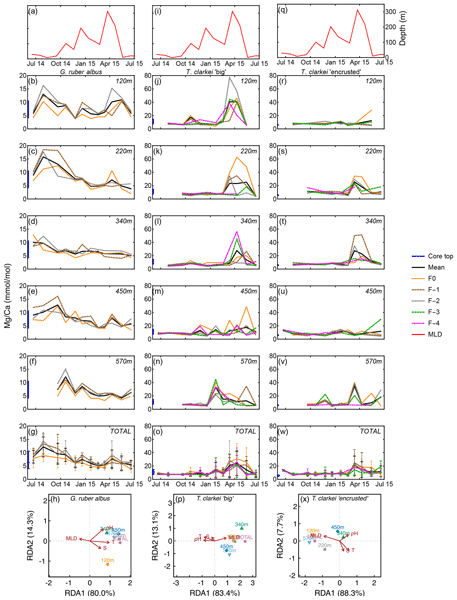
We investigated the shell chemistry of planktic organisms called foraminifera to understand how conditions in the Gulf of Aqaba (north of Red Sea), a relative warm and saline sea, are recorded. We analyzed shell parts, called chambers, and we found that shell chemistry varies significantly between both chambers and foraminifera species. These findings help better understand how deposited shells can be used to reconstruct past ocean temperatures and other conditions.
Dotan Rotem, Yishai Weinstein, Yehudit Harlavan, Adi Torfstein, and Hanne Hvidtfeldt Christiansen
The Cryosphere, 20, 5303–5326, https://doi.org/10.5194/tc-20-5303-2026, https://doi.org/10.5194/tc-20-5303-2026, 2026
Short summary
Short summary
We investigated the residence time of ground ice in the Svalbard permafrost. Marked variations in salinity and the chemical composition were found in three proximal cores. Radioactive Ra and Th isotopes suggest that while some ice has a residence time of several thousands years, the more saline samples show lower long-to-short-lived Ra ratios, implying a residence time under 100 years. This indicates active within-permafrost flow, which highlights the system's resilience to global warming.
Eyal Rahav and Adina Paytan
Ocean Sci., 22, 2711–2723, https://doi.org/10.5194/os-22-2711-2026, https://doi.org/10.5194/os-22-2711-2026, 2026
Short summary
Short summary
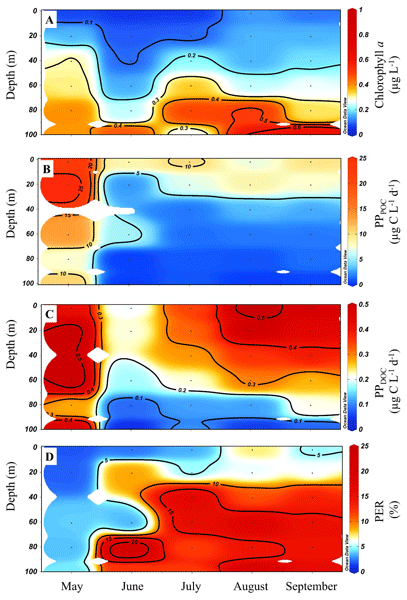
To understand how ocean warming may alter carbon storage, we examined seasonal carbon cycling in the northern Red Sea over five months. As summer warming intensified water-column stratification and reduced nutrient supply, carbon fixation by microscopic algae declined, while a larger fraction of newly produced carbon was released as dissolved material and rapidly respired by bacteria. This near-surface recycling may reduce carbon transfer to depth and weaken ocean carbon storage.
Lin Hoober, Barak Herut, Nadya Teutsch, Sarit Ashckenazi-Polivoda, Adi Torfstein, and Sigal Abramovich
Biogeosciences, 23, 5685–5696, https://doi.org/10.5194/bg-23-5685-2026, https://doi.org/10.5194/bg-23-5685-2026, 2026
Short summary
Short summary
Foraminifera are tiny marine organisms that build shells and have evolved different ways of doing so over millions of years. By comparing two major groups living side by side in the Mediterranean Sea, this study shows that their shells record clear, systematic chemical differences. These contrasts reveal fundamentally different shell-building strategies shaped by evolution, not just by the surrounding environment.
Johannes Schmidt, Markus Reichert, Cathleen Kertscher, Birgit Schneider, Elisabeth Dietze, Laura Bergmann, Abdelfattah Benkaddour, Abdeslam Mikdad, Sylvain Pichat, William Fletcher, Steffen Mischke, and Christoph Zielhofer
Clim. Past, 22, 1537–1557, https://doi.org/10.5194/cp-22-1537-2026, https://doi.org/10.5194/cp-22-1537-2026, 2026
Short summary
Short summary
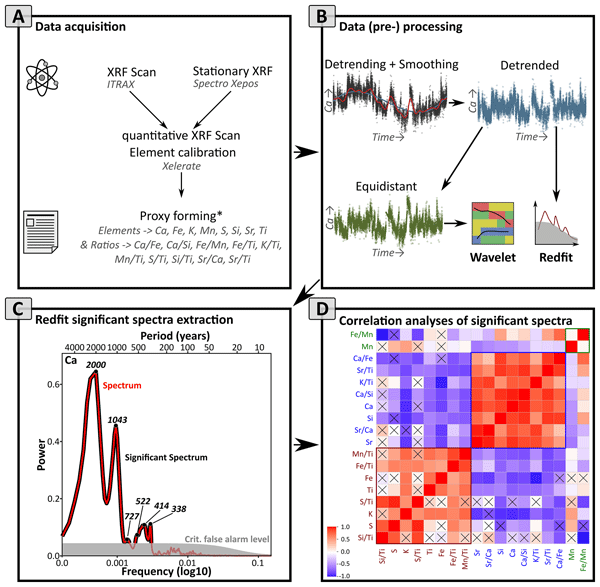
This study uses lake sediments from Lake Sidi Ali in Morocco to understand how climate and the surrounding landscape changed over the past 11,000 years. The results show repeating climate patterns that influenced lake water levels and erosion in the catchment at different timescales. These findings help explain how regional climate and local landscape processes interacted at the North African desert margin.
Yair Rinat, Moshe Armon, and Efrat Morin
Hydrol. Earth Syst. Sci., 30, 4565–4585, https://doi.org/10.5194/hess-30-4565-2026, https://doi.org/10.5194/hess-30-4565-2026, 2026
Short summary
Short summary
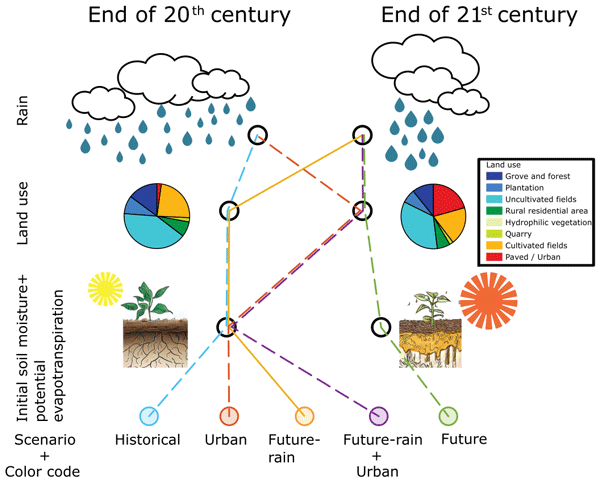
In the coming decades Mediterranean floods are expected to change due to increased urbanization and climate change. We simulate floods under different conditions and show that future rainfall will likely reduce flood magnitudes, but increased urbanization will make them higher. Flood intensification is more pronounced at upstream sections and when soil moisture is high. As future flood trends may change between different regions further research is needed to cope with upcoming challenges.
Ellina Agayar, Moshe Armon, Michael Sprenger, and Heini Wernli
Nat. Hazards Earth Syst. Sci., 26, 3025–3043, https://doi.org/10.5194/nhess-26-3025-2026, https://doi.org/10.5194/nhess-26-3025-2026, 2026
Short summary
Short summary
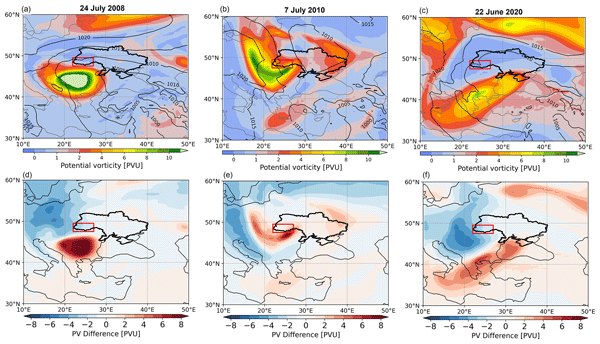
This study investigates the hydrometeorological features of the major floods of 2008, 2010, and 2020 in western Ukraine. All cases were linked to upper-level potential vorticity (PV) anomalies. We also conducted a climatological analysis of PV structure associated with 22 summer heavy precipitation events (2000–2022), highlighting their key role in determining the location and intensity of flood-inducing rainfall events in the Carpathians.
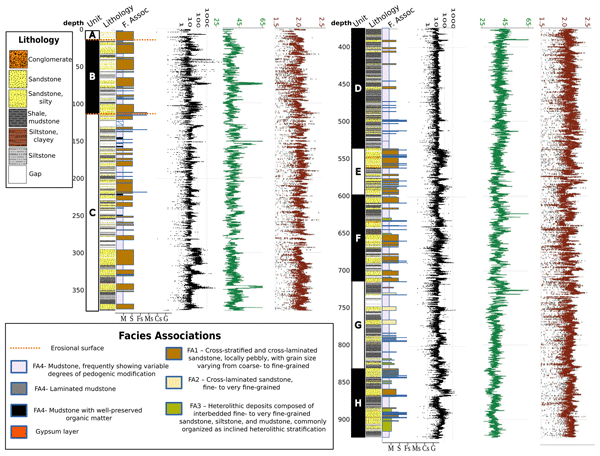
Sherilyn C. Fritz, André O. Sawakuchi, Anders Noren, Paul A. Baker, Cleverson Silva, Carlos Jaramillo, Renato Paes de Almeida, Liliane Janikian, Isaac Salém Bezerra, Marcos Barbosa, Dailson Bertassoli, Rain Blankenship, Cristiano M. Chiessi, Sarah J. Feakins, Maria da Glória Garcia, Cécile Gautheron, Brian Grivna, Gelvam Hartmann, Cindy Kunkel, André Marconato, Angela Martinez, Sebastian G. Marulanda, Carlos Eduardo M. Mazoca, Francisco R. Negri, Mauricio Parra, Werner E. Piller, Fabiano N. Pupim, Victor Salgado, Rachel T. So, Priscila Emerich Souza, Elena Stiles, Caroline A. E. Strömberg, Siu Mui Tsai, Ingo Wahnfried, Josh West, Marc-Élie Adaimé, Jhon Afonso, Thomas Kenji Akabane, Camila Eliza Althaus, Carlos D'Apolito, Kleiton R. Araújo, Roney da Silva de Azevedo Júnior, Jessica Barcellos, Tacio Bicudo, Giovanni Bogota, Bodo Bookhagen, Caio Breda, Alderlene Pimentel de Brito, Francy Carvajal, Daniel Antunes Coppi, Carolina Barbosa Leite da Cruz, Felipe Torres Figueiredo, Kate Freeman, Pedro Victor Oliveira Gomes, Martin Gross, Emma Hartke, Katja Heeschen, William Mozart Henrichs, Leonardo Henrique, Carina Hoorn, Brian K. Horton, Andrés Díaz-Jamamillo, Said Kamrani-Mehni, Fatima Leite, Lin Li, Rodrigo Ferreira de Lucena, Alastair Milne, Thomás Miranda, Marcelo Mota, Diana Ochoa, Vinicius de Lima Passos, Rafaela Maciel Lopes de Paula, Elisa Piispa, Angelo Plata Torres, Surangi W. Punyasena, Adriano Domingos dos Reis, Catherine Rigsby, Andrés F. Salazar Rios, Fernanda Costa Gonçalves Rodrigues, Raquel M. M. Romão, Ingrid C. Romero, Henrique O. Sawakuchi, Doug Schnurrenberger, Kristina Brady Shannon, Silane A. F. da Silva-Caminha, Clauses Sousa, Larissa Natsumi Tamura, Thomas Wiersberg, Helanlin Xiang, and Belén Zamudio
Sci. Dril., 35, 127–157, https://doi.org/10.5194/sd-35-127-2026, https://doi.org/10.5194/sd-35-127-2026, 2026
Short summary
Short summary
The Trans-Amazon Drilling Project seeks to reconstruct the origins of biodiversity in the world's largest and most diverse rain forest, and the roles of landscape changes driven by Andean uplift and global climate change in diversification. We provide a project overview and preliminary results from a drill core from the Acre Basin of western Brazil, which recovered an 860 m sequence that was deposited in a large river system and which will yield critical insights on evolutionary history.
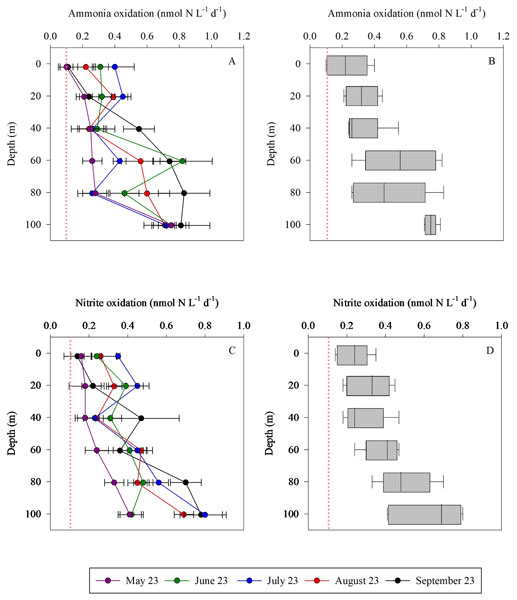
Eyal Rahav, Scott D. Wankel, and Adina Paytan
Biogeosciences, 23, 4171–4185, https://doi.org/10.5194/bg-23-4171-2026, https://doi.org/10.5194/bg-23-4171-2026, 2026
Short summary
Short summary
Microbes in the sunlit waters of the nitrogen-poor northern Red Sea transform ammonia into other forms of nitrogen, a process once thought to be almost absent in surface waters. We found that this activity does occur, but at very low rates. Additionally, these microbes contribute only a small share to carbon production, yet they recycle nitrogen and influence how scientists estimate ocean productivity in a warming world.
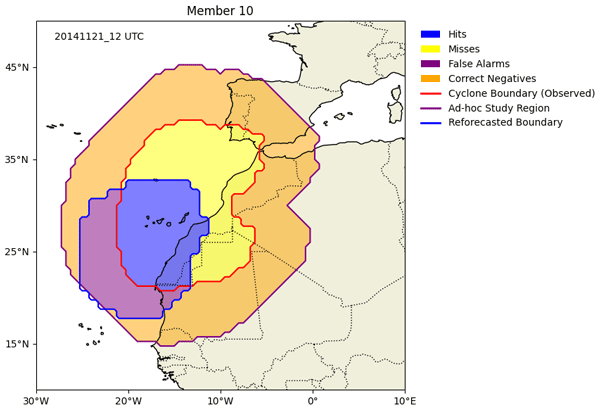
Guorong Ling, Hilla Afargan-Gerstman, and Moshe Armon
Weather Clim. Dynam., 7, 915–935, https://doi.org/10.5194/wcd-7-915-2026, https://doi.org/10.5194/wcd-7-915-2026, 2026
Short summary
Short summary
This research examines how well storms that bring heavy rain to the Sahara can be predicted. Using satellite observations and ensemble weather forecasts, we show that predictability varies by season, location, and circulation pattern, with an upper limit of about ten days. These insights can improve early flood warnings and support better planning for scarce water resources in desert regions.
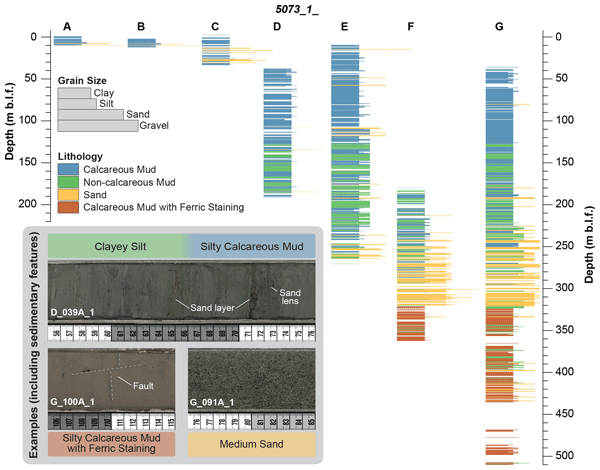
Marie-Luise Adolph, Junbo Wang, Liping Zhu, Leon J. Clarke, Andrew C. G. Henderson, Hendrik Vogel, Gerhard Daut, Peter Frenzel, Jianting Ju, Qiangqiang Kou, Dierk Michaelis, Olga Schmitz, Anja Schwarz, Volkhard Spiess, Arne Ulfers, Cidan Zhaxi, Daniel Ariztegui, Natasha Barbolini, Thorsten Bauersachs, Erwin Braun, Giulia Ceriotti, Brian Grivna, Marlene Hoehle, Rolf Kipfer, Wilhelmine Klamt, Cindy Kunkel, Aliisa Laakkonen, Minghui Li, Qingfeng Ma, Paul Moser Röggla, Kaja Müller, Anders Noren, Ryan O'Grady, Santiago Otero, Maïlys Picard, Anna Pint, Camille Thomas, Jerome Van der Woerd, Mathias Vinnepand, Claudia Wrozyna, Christian Zeeden, Xinghuan Zhu, and Torsten Haberzettl
Sci. Dril., 35, 99–117, https://doi.org/10.5194/sd-35-99-2026, https://doi.org/10.5194/sd-35-99-2026, 2026
Short summary
Short summary
We drilled deep into sediments beneath a large lake on the Tibetan Plateau, Nam Co, to learn how climate and environments have changed over multiple ice age cycles. The recovered sediments show repeated shifts between major changes in lake conditions, water chemistry, and ecosystems. These findings help clarify how wind systems responded to natural climate cycles and improve understanding of how high mountain regions may react to future climate change and environmental stress.
Artur Stachnik, Fernando Gázquez, Antonio Lope Morales-González, Mario Morellón, Antonio González-Ramón, Francisco Moral-Martos, Rosario Jiménez-Espinosa, and Javier Martín-Chivelet
EGUsphere, https://doi.org/10.5194/egusphere-2026-2058, https://doi.org/10.5194/egusphere-2026-2058, 2026
Short summary
Short summary
This study explores how seasonal weather patterns influence the makeup of rain in a western Mediterranean mountain region. Using rain measurements from different elevations and computer-based analysis, we found that broad atmospheric patterns matter most in the wet season, while rainfall amount matters most in the dry season. These findings help explain past climate records and improve understanding of future changes in water availability.
Verena Foerster, Asfawossen Asrat, Christopher Bronk Ramsey, Erik T. Brown, Alan Deino, Asfaw Erbello, Markus L. Fischer, Daniel Gebregiorgis, Annett Junginger, Stefanie Kaboth-Bahr, Christine S. Lane, Stephan Opitz, Anders Noren, Helen M. Roberts, Ralph Tiedemann, Céline-Marie Vidal, Finn Viehberg, Ralf Vogelsang, Charlotte Zachow, Bahru Zinaye, Andrew S. Cohen, Henry F. Lamb, Frank Schaebitz, and Martin H. Trauth
Sci. Dril., 35, 61–81, https://doi.org/10.5194/sd-35-61-2026, https://doi.org/10.5194/sd-35-61-2026, 2026
Short summary
Short summary
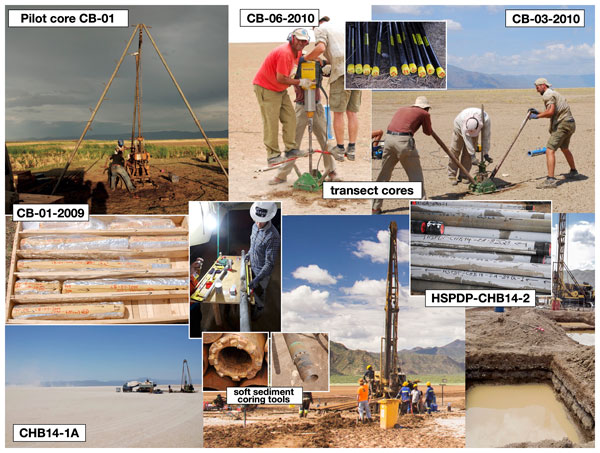
To explore links between human evolution and environmental change, the Chew Bahir basin in southern Ethiopia, a sedimentary climate archive, was investigated through a series of scientific drilling expeditions. We share key lessons from planning, site selection, drilling strategy and core processing, with a focus on the awards and challenges in collecting and merging twin sediment cores into a near-continuous record to provide practical lessons for future projects.
Efraim Bril, Adi Torfstein, Roy Yaniv, and Assaf Hochman
Clim. Past, 22, 339–355, https://doi.org/10.5194/cp-22-339-2026, https://doi.org/10.5194/cp-22-339-2026, 2026
Short summary
Short summary
During a past warm period, we found that the eastern Mediterranean region experienced stronger but shorter rain events, especially in the south. The warming made the air wetter, which helped produce more intense rainfall. Using climate models and recent data, we show how this improves our understanding of future changes in dry regions.
Noy Levy, Adi Torfstein, Ralf Schiebel, Natalie Chernihovsky, Klaus Peter Jochum, Ulrike Weis, Brigitte Stoll, and Gerald H. Haug
Biogeosciences, 23, 1065–1088, https://doi.org/10.5194/bg-23-1065-2026, https://doi.org/10.5194/bg-23-1065-2026, 2026
Short summary
Short summary
We investigated the shell chemistry of planktic organisms called foraminifera to understand how conditions in the Gulf of Aqaba (north of Red Sea), a relative warm and saline sea, are recorded. We analyzed shell parts, called chambers, and we found that shell chemistry varies significantly between both chambers and foraminifera species. These findings help better understand how deposited shells can be used to reconstruct past ocean temperatures and other conditions.
Ahmed H. Moghazi, Hailong Zhao, Chengjun Zhang, Birgit Schröder, and Steffen Mischke
EGUsphere, https://doi.org/10.5194/egusphere-2025-5999, https://doi.org/10.5194/egusphere-2025-5999, 2026
Short summary
Short summary
To understand how early humans survived in northern China between 1.67–0.78 million years ago, we studied the state of the ancient water bodies in the Nihewan Basin, using preserved chemical signals in the sediments. The waters in the basin shifted between mostly standing and flowing settings, matching the region's climate cycles. Early humans were present in the basin during phases of wetter conditions with more standing waters, which likely supported their survival.
Ashley Brereton, Zelalem A. Mekonnen, Bhavna Arora, William J. Riley, Kunxiaojia Yuan, Yi Xu, Yu Zhang, Qing Zhu, Tyler L. Anthony, and Adina Paytan
Geosci. Model Dev., 18, 8157–8173, https://doi.org/10.5194/gmd-18-8157-2025, https://doi.org/10.5194/gmd-18-8157-2025, 2025
Short summary
Short summary
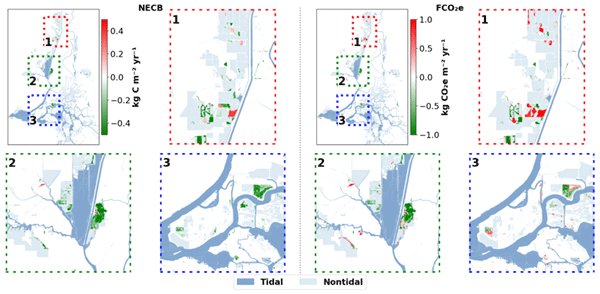
Wetlands absorb carbon dioxide (CO2), helping slow climate change, but they also release methane, a potent warming gas. We developed a collection of AI-based models to estimate magnitudes of CO2 and methane exchanged between the land and the atmosphere, for wetlands on a regional scale. This approach helps to inform land-use planning, restoration, and greenhouse gas accounting, while also creating a foundation for future advancements in prediction accuracy.
Natalie M. Mahowald, Longlei Li, Julius Vira, Marje Prank, Douglas S. Hamilton, Hitoshi Matsui, Ron L. Miller, P. Louis Lu, Ezgi Akyuz, Daphne Meidan, Peter Hess, Heikki Lihavainen, Christine Wiedinmyer, Jenny Hand, Maria Grazia Alaimo, Célia Alves, Andres Alastuey, Paulo Artaxo, Africa Barreto, Francisco Barraza, Silvia Becagli, Giulia Calzolai, Shankararaman Chellam, Ying Chen, Patrick Chuang, David D. Cohen, Cristina Colombi, Evangelia Diapouli, Gaetano Dongarra, Konstantinos Eleftheriadis, Johann Engelbrecht, Corinne Galy-Lacaux, Cassandra Gaston, Dario Gomez, Yenny González Ramos, Roy M. Harrison, Chris Heyes, Barak Herut, Philip Hopke, Christoph Hüglin, Maria Kanakidou, Zsofia Kertesz, Zbigniew Klimont, Katriina Kyllönen, Fabrice Lambert, Xiaohong Liu, Remi Losno, Franco Lucarelli, Willy Maenhaut, Beatrice Marticorena, Randall V. Martin, Nikolaos Mihalopoulos, Yasser Morera-Gómez, Adina Paytan, Joseph Prospero, Sergio Rodríguez, Patricia Smichowski, Daniela Varrica, Brenna Walsh, Crystal L. Weagle, and Xi Zhao
Atmos. Chem. Phys., 25, 4665–4702, https://doi.org/10.5194/acp-25-4665-2025, https://doi.org/10.5194/acp-25-4665-2025, 2025
Short summary
Short summary
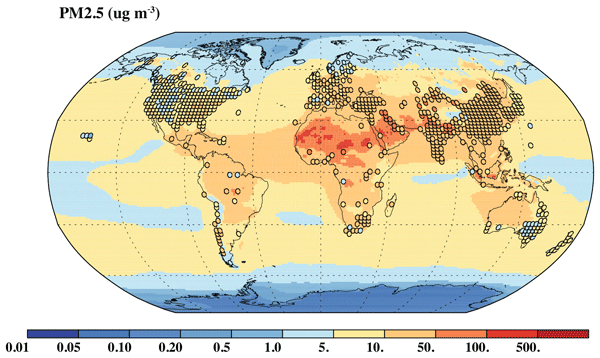
Aerosol particles are an important part of the Earth system, but their concentrations are spatially and temporally heterogeneous, as well as being variable in size and composition. Here, we present a new compilation of PM2.5 and PM10 aerosol observations, focusing on the spatial variability across different observational stations, including composition, and demonstrate a method for comparing the data sets to model output.
Joëlle C. Rieder, Franziska Aemisegger, Elad Dente, and Moshe Armon
Hydrol. Earth Syst. Sci., 29, 1395–1427, https://doi.org/10.5194/hess-29-1395-2025, https://doi.org/10.5194/hess-29-1395-2025, 2025
Short summary
Short summary
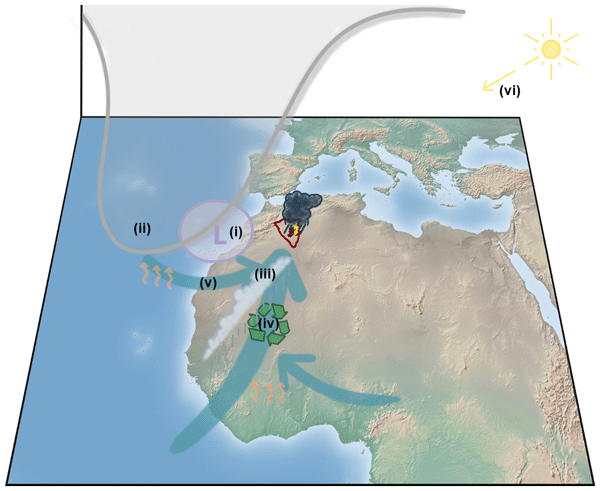
The Sahara was wetter in the past and may become wetter in the future. Lake remnants are evidence of the desert’s wetter past. If the Sahara gets wetter in the future, these lakes may serve as a water resource. However, it is unclear how these lakes get filled and how moisture is carried into the desert and converted into rain in the first place. Therefore, we examine processes currently leading to the filling of a dry lake in the Sahara, which can help assess future water availability.
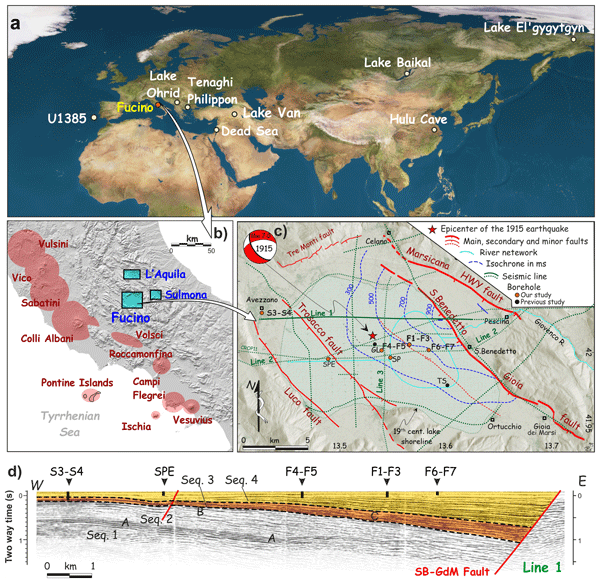
Biagio Giaccio, Bernd Wagner, Giovanni Zanchetta, Adele Bertini, Gian Paolo Cavinato, Roberto de Franco, Fabio Florindo, David A. Hodell, Thomas A. Neubauer, Sebastien Nomade, Alison Pereira, Laura Sadori, Sara Satolli, Polychronis C. Tzedakis, Paul Albert, Paolo Boncio, Cindy De Jonge, Alexander Francke, Christine Heim, Alessia Masi, Marta Marchegiano, Helen M. Roberts, Anders Noren, and the MEME team
Sci. Dril., 33, 249–266, https://doi.org/10.5194/sd-33-249-2024, https://doi.org/10.5194/sd-33-249-2024, 2024
Short summary
Short summary
A total of 42 Earth scientists from 14 countries met in Gioia dei Marsi, central Italy, on 23 to 27 October 2023 to explore the potential for deep drilling of the thick lake sediment sequence of the Fucino Basin. The aim was to reconstruct the history of climate, ecosystem, and biodiversity changes and of the explosive volcanism and tectonics in central Italy over the last 3.5 million years, constrained by a detailed radiometric chronology.

Paola Montone, Simona Pierdominici, M. Teresa Mariucci, Francesco Mirabella, Marco Urbani, Assel Akimbekova, Lauro Chiaraluce, Wade Johnson, and Massimiliano Rinaldo Barchi
Solid Earth, 15, 1385–1406, https://doi.org/10.5194/se-15-1385-2024, https://doi.org/10.5194/se-15-1385-2024, 2024
Short summary
Short summary
The STAR project set out to drill six shallow holes and use geophysical logging to find the best depth for placing seismometers and strainmeters to image the upper crust, in particular the Alto Tiberina fault, Italy. These measurements give us a better idea of what the rocks are like, helping us connect what we know from the literature with what we find underground, giving solid information on rock properties, which helps us understand the first few hundred meters of the Earth's crust.
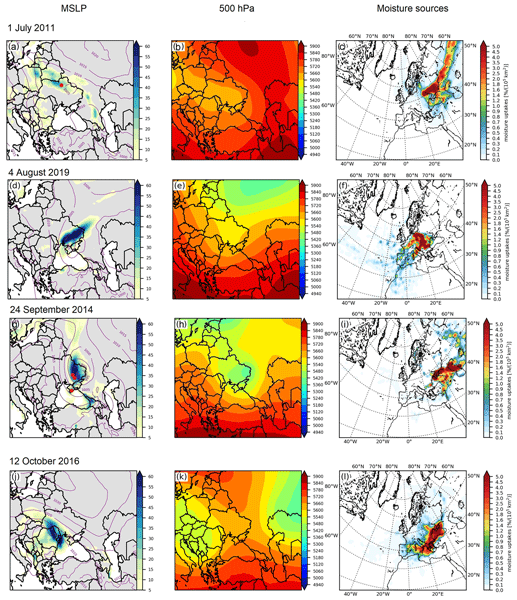
Ellina Agayar, Franziska Aemisegger, Moshe Armon, Alexander Scherrmann, and Heini Wernli
Nat. Hazards Earth Syst. Sci., 24, 2441–2459, https://doi.org/10.5194/nhess-24-2441-2024, https://doi.org/10.5194/nhess-24-2441-2024, 2024
Short summary
Short summary
This study presents the results of a climatological investigation of extreme precipitation events (EPEs) in Ukraine for the period 1979–2019. During all seasons EPEs are associated with pronounced upper-level potential vorticity (PV) anomalies. In addition, we find distinct seasonal and regional differences in moisture sources. Several extreme precipitation cases demonstrate the importance of these processes, complemented by a detailed synoptic analysis.

Lauro Chiaraluce, Richard Bennett, David Mencin, Wade Johnson, Massimiliano Rinaldo Barchi, Marco Bohnhoff, Paola Baccheschi, Antonio Caracausi, Carlo Calamita, Adriano Cavaliere, Adriano Gualandi, Eugenio Mandler, Maria Teresa Mariucci, Leonardo Martelli, Simone Marzorati, Paola Montone, Debora Pantaleo, Stefano Pucci, Enrico Serpelloni, Mariano Supino, Salvatore Stramondo, Catherine Hanagan, Liz Van Boskirk, Mike Gottlieb, Glen Mattioli, Marco Urbani, Francesco Mirabella, Assel Akimbekova, Simona Pierdominici, Thomas Wiersberg, Chris Marone, Luca Palmieri, and Luca Schenato
Sci. Dril., 33, 173–190, https://doi.org/10.5194/sd-33-173-2024, https://doi.org/10.5194/sd-33-173-2024, 2024
Short summary
Short summary
We built six observatory stations in central Italy to monitor a fault potentially capable of generating a strong earthquake. Each site has 80–160 m deep wells equipped with strainmeters and seismometers. At the surface, we placed GNSS antennas and seismic and meteorological sensors. All data, which are open access for the scientific community, will help us to better understand the complex physical and chemical processes that lead to the generation of the full range of slow and fast earthquakes.

Jonathan M. G. Stine, Joshua M. Feinberg, Adam K. Huttenlocker, Randall B. Irmis, Declan Ramirez, Rashida Doctor, John McDaris, Charles M. Henderson, Michael T. Read, Kristina Brady Shannon, Anders Noren, Ryan O'Grady, Ayva Sloo, Patrick Steury, Diego P. Fernandez, Amy C. Henrici, and Neil J. Tabor
Sci. Dril., 33, 109–128, https://doi.org/10.5194/sd-33-109-2024, https://doi.org/10.5194/sd-33-109-2024, 2024
Short summary
Short summary
We present initial results from the upper 450 m of ER-1, a legacy core collected from modern-day Bears Ears National Monument, Utah, USA. This section contains a relatively complete record of Upper Carboniferous to Early Permian sediments, providing a unique window on Earth's last icehouse–hothouse transition. Ongoing research will tie our results to important fossil sites, allowing us to better understand how this climate shift contributed to the evolution of terrestrial life.
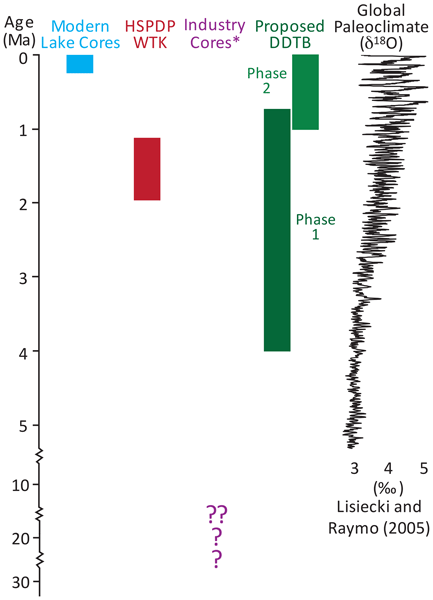
Catherine C. Beck, Melissa Berke, Craig S. Feibel, Verena Foerster, Lydia Olaka, Helen M. Roberts, Christopher A. Scholz, Kat Cantner, Anders Noren, Geoffery Mibei Kiptoo, James Muirhead, and the Deep Drilling in the Turkana Basin (DDTB) project team
Sci. Dril., 33, 93–108, https://doi.org/10.5194/sd-33-93-2024, https://doi.org/10.5194/sd-33-93-2024, 2024
Short summary
Short summary
The Deep Drilling in the Turkana Basin project seeks to determine the relative impacts of tectonics and climate on eastern African ecosystems. To organize goals for coring, we hosted a workshop in Nairobi, Kenya, which focused on how a 4 Myr sedimentary core from Turkana will uniquely address research objectives related to basin evolution, past climates and environments, and modern resources. We concluded that a Pliocene to modern record is best accomplished through a two-phase drilling project.
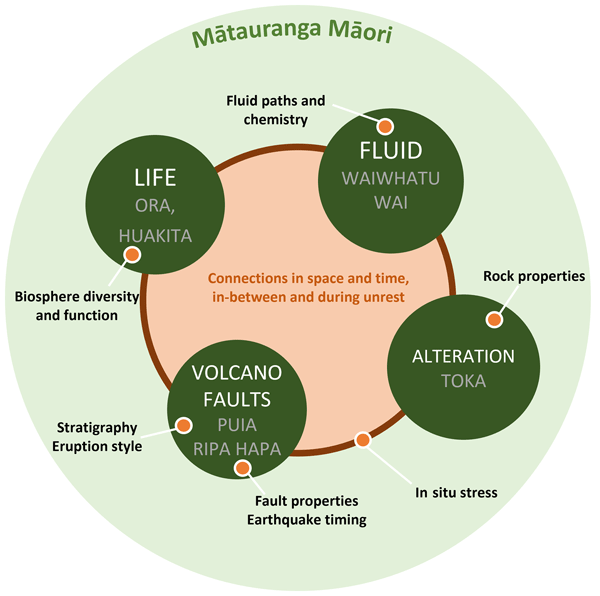
Cécile Massiot, Ludmila Adam, Eric S. Boyd, S. Craig Cary, Daniel R. Colman, Alysia Cox, Ery Hughes, Geoff Kilgour, Matteo Lelli, Domenico Liotta, Karen G. Lloyd, Tiipene Marr, David D. McNamara, Sarah D. Milicich, Craig A. Miller, Santanu Misra, Alexander R. L. Nichols, Simona Pierdominici, Shane M. Rooyakkers, Douglas R. Schmitt, Andri Stefansson, John Stix, Matthew B. Stott, Camille Thomas, Pilar Villamor, Pujun Wang, Sadiq J. Zarrouk, and the CALDERA workshop participants
Sci. Dril., 33, 67–88, https://doi.org/10.5194/sd-33-67-2024, https://doi.org/10.5194/sd-33-67-2024, 2024
Short summary
Short summary
Volcanoes where tectonic plates drift apart pose eruption and earthquake hazards. Underground waters are difficult to track. Underground microbial life is probably plentiful but unexplored. Scientists discussed the idea of drilling two boreholes in the Okataina Volcanic Centre, New Zealand, to unravel the connections between volcano, faults, geotherms, and the biosphere, also integrating mātauranga Māori (Indigenous knowledge) to assess hazards and manage resources and microbial ecosystems.
Natalie M. Mahowald, Longlei Li, Julius Vira, Marje Prank, Douglas S. Hamilton, Hitoshi Matsui, Ron L. Miller, Louis Lu, Ezgi Akyuz, Daphne Meidan, Peter Hess, Heikki Lihavainen, Christine Wiedinmyer, Jenny Hand, Maria Grazia Alaimo, Célia Alves, Andres Alastuey, Paulo Artaxo, Africa Barreto, Francisco Barraza, Silvia Becagli, Giulia Calzolai, Shankarararman Chellam, Ying Chen, Patrick Chuang, David D. Cohen, Cristina Colombi, Evangelia Diapouli, Gaetano Dongarra, Konstantinos Eleftheriadis, Corinne Galy-Lacaux, Cassandra Gaston, Dario Gomez, Yenny González Ramos, Hannele Hakola, Roy M. Harrison, Chris Heyes, Barak Herut, Philip Hopke, Christoph Hüglin, Maria Kanakidou, Zsofia Kertesz, Zbiginiw Klimont, Katriina Kyllönen, Fabrice Lambert, Xiaohong Liu, Remi Losno, Franco Lucarelli, Willy Maenhaut, Beatrice Marticorena, Randall V. Martin, Nikolaos Mihalopoulos, Yasser Morera-Gomez, Adina Paytan, Joseph Prospero, Sergio Rodríguez, Patricia Smichowski, Daniela Varrica, Brenna Walsh, Crystal Weagle, and Xi Zhao
Earth Syst. Sci. Data Discuss., https://doi.org/10.5194/essd-2024-1, https://doi.org/10.5194/essd-2024-1, 2024
Preprint withdrawn
Short summary
Short summary
Aerosol particles can interact with incoming solar radiation and outgoing long wave radiation, change cloud properties, affect photochemistry, impact surface air quality, and when deposited impact surface albedo of snow and ice, and modulate carbon dioxide uptake by the land and ocean. Here we present a new compilation of aerosol observations including composition, a methodology for comparing the datasets to model output, and show the implications of these results using one model.
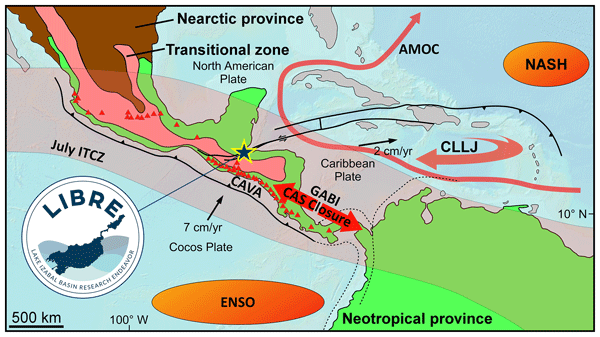
Jonathan Obrist-Farner, Andreas Eckert, Peter M. J. Douglas, Liseth Perez, Alex Correa-Metrio, Bronwen L. Konecky, Thorsten Bauersachs, Susan Zimmerman, Stephanie Scheidt, Mark Brenner, Steffen Kutterolf, Jeremy Maurer, Omar Flores, Caroline M. Burberry, Anders Noren, Amy Myrbo, Matthew Lachniet, Nigel Wattrus, Derek Gibson, and the LIBRE scientific team
Sci. Dril., 32, 85–100, https://doi.org/10.5194/sd-32-85-2023, https://doi.org/10.5194/sd-32-85-2023, 2023
Short summary
Short summary
In August 2022, 65 scientists from 13 countries gathered in Antigua, Guatemala, for a workshop, co-funded by the US National Science Foundation and the International Continental Scientific Drilling Program. This workshop considered the potential of establishing a continental scientific drilling program in the Lake Izabal Basin, eastern Guatemala, with the goals of establishing a borehole observatory and investigating one of the longest continental records from the northern Neotropics.
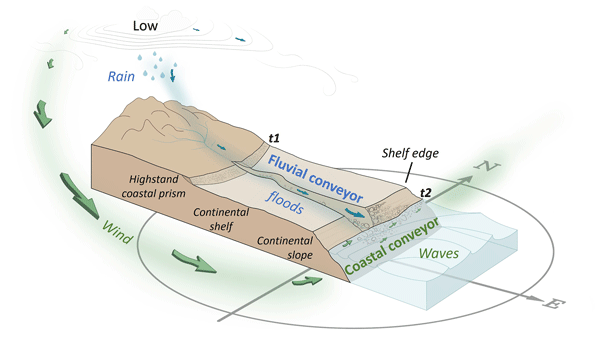
Haggai Eyal, Moshe Armon, Yehouda Enzel, and Nadav G. Lensky
Earth Surf. Dynam., 11, 547–574, https://doi.org/10.5194/esurf-11-547-2023, https://doi.org/10.5194/esurf-11-547-2023, 2023
Short summary
Short summary
Extracting paleoenvironmets from sedimentologic and geomorphic records is a main goal in Earth sciences. We study a chain of processes connecting causative Mediterranean cyclones, coeval floods, storm waves generated by mesoscale funneled wind, and coastal gravel transport. This causes northward dispersion of gravel along the modern Dead Sea coast, which has also persisted since the late Pleistocene, resulting in beach berms and fan deltas always being deposited north of channel mouths.

Daniel François, Adina Paytan, Olga Maria Oliveira de Araújo, Ricardo Tadeu Lopes, and Cátia Fernandes Barbosa
Biogeosciences, 19, 5269–5285, https://doi.org/10.5194/bg-19-5269-2022, https://doi.org/10.5194/bg-19-5269-2022, 2022
Short summary
Short summary
Our analysis revealed that under the two most conservative acidification projections foraminifera assemblages did not display considerable changes. However, a significant decrease in species richness was observed when pH decreases to 7.7 pH units, indicating adverse effects under high-acidification scenarios. A micro-CT analysis revealed that calcified tests of Archaias angulatus were of lower density in low pH, suggesting no acclimation capacity for this species.

Tomáš Fischer, Pavla Hrubcová, Torsten Dahm, Heiko Woith, Tomáš Vylita, Matthias Ohrnberger, Josef Vlček, Josef Horálek, Petr Dědeček, Martin Zimmer, Martin P. Lipus, Simona Pierdominici, Jens Kallmeyer, Frank Krüger, Katrin Hannemann, Michael Korn, Horst Kämpf, Thomas Reinsch, Jakub Klicpera, Daniel Vollmer, and Kyriaki Daskalopoulou
Sci. Dril., 31, 31–49, https://doi.org/10.5194/sd-31-31-2022, https://doi.org/10.5194/sd-31-31-2022, 2022
Short summary
Short summary
The newly established geodynamic laboratory aims to develop modern, comprehensive, multiparameter observations at depth for studying earthquake swarms, crustal fluid flow, mantle-derived fluid degassing and processes of the deep biosphere. It is located in the West Bohemia–Vogtland (western Eger Rift) geodynamic region and comprises a set of five shallow boreholes with high-frequency 3-D seismic arrays as well as continuous real-time fluid monitoring at depth and the study of the deep biosphere.
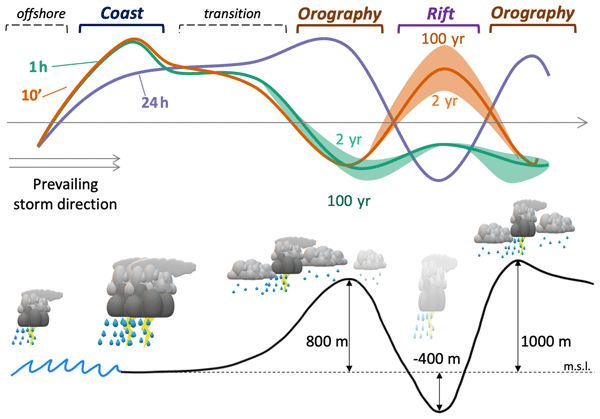
Francesco Marra, Moshe Armon, and Efrat Morin
Hydrol. Earth Syst. Sci., 26, 1439–1458, https://doi.org/10.5194/hess-26-1439-2022, https://doi.org/10.5194/hess-26-1439-2022, 2022
Short summary
Short summary
We present a new method for quantifying the probability of occurrence of extreme rainfall using radar data, and we use it to examine coastal and orographic effects on extremes. We identify three regimes, directly related to precipitation physical processes, which respond differently to these forcings. The methods and results are of interest for researchers and practitioners using radar for the analysis of extremes, risk managers, water resources managers, and climate change impact studies.
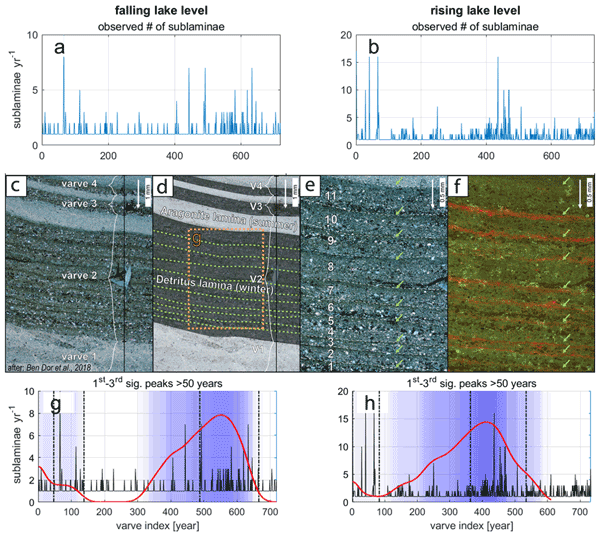
Yoav Ben Dor, Francesco Marra, Moshe Armon, Yehouda Enzel, Achim Brauer, Markus Julius Schwab, and Efrat Morin
Clim. Past, 17, 2653–2677, https://doi.org/10.5194/cp-17-2653-2021, https://doi.org/10.5194/cp-17-2653-2021, 2021
Short summary
Short summary
Laminated sediments from the deepest part of the Dead Sea unravel the hydrological response of the eastern Mediterranean to past climate changes. This study demonstrates the importance of geological archives in complementing modern hydrological measurements that do not fully capture natural hydroclimatic variability, which is crucial to configure for understanding the impact of climate change on the hydrological cycle in subtropical regions.
Cited articles
Aizenshtat Soffer, E., Ben Dor, G., Kurzon, I., Agnon, A., Koulakov, I., Polozov, A., and Wetzler, N.: The transition from a symmetric to an asymmetric basin structure, an example from the Dead Sea fault system, in review, Tectonics, 2026.
Almogi-Labin, A., Hemleben, C., Meischner, D., and Erlenkeuser, H.: Response of Red Sea deep-water agglutinated foraminifera to water-mass changes during the Late Quaternary, Mar. Micropaleontol., 28, 283–297, https://doi.org/10.1016/0377-8398(96)00005-9, 1996.
Ambraseys, N.: Earthquakes in the Mediterranean and Middle East: a multidisciplinary study of seismicity up to 1900, Cambridge University Press, ISBN 978-0-521-87292-8, 2009.
Armon, M., Morin, E., and Enzel, Y.: Overview of modern atmospheric patterns controlling rainfall and floods into the Dead Sea: Implications for the lake's sedimentology and paleohydrology, Quat. Sci. Rev., 216, 58–73, https://doi.org/10.1016/j.quascirev.2019.06.005, 2019.
Ayalon, A., Bar-Matthews, M., Frumkin, A., and Matthews, A.: Last Glacial warm events on Mount Hermon: the southern extension of the Alpine karst range of the east Mediterranean, Quat. Sci. Rev., 59, 43–56, https://doi.org/10.1016/j.quascirev.2012.10.047, 2013.
Barash, A., Belmaker, M., Bastir, M., Soudack, M., O'Brien, H. D., Woodward, H., Prendergast, A., Barzilai, O., and Been, E.: The earliest Pleistocene record of a large-bodied hominin from the Levant supports two out-of-Africa dispersal events, Sci. Rep., 12, 1721, https://doi.org/10.1038/s41598-022-05712-y, 2022.
Barker, S., Knorr, G., Edwards, R. L., Parrenin, F., Putnam, A. E., Skinner, L. C., Wolff, E., and Ziegler, M.: 800 000 Years of Abrupt Climate Variability, Science, 334, 347–351, https://doi.org/10.1126/science.1203580, 2011.
Bar-Matthews, M.: History of Water in the Middle East and North Africa, in: Treatise on Geochemistry, Elsevier, vol. 14, 109–128, https://doi.org/10.1016/B978-0-08-095975-7.01210-9, 2014.
Bar-Matthews, M., Ayalon, A., Gilmour, M., Matthews, A., and Hawksworth, C. J.: Sea–land oxygen isotopic relationships from planktonic foraminifera and speleothems in the Eastern Mediterranean region and their implication for paleorainfall during, Geochim. Cosmochim. Acta, 67, 3181–3199, 2003.
Barnea Cohen, O., Cesca, S., Dahm, T., Hofstetter, A., Hamiel, Y., and Agnon, A.: Seismicity induced at the northern Dead Sea Transform Fault, Kinneret (Sea of Galilee) Basin, by shallow creep involving a salt body, Tectonics, 41, e2022TC007247, https://doi.org/10.1029/2022TC007247, 2022.
Bar-Yosef, O. and Belfer-Cohen, A.: From Africa to Eurasia – Early dispersals, Quat. Int., 75, 19–28, https://doi.org/10.1016/S1040-6182(00)00074-4, 2001.
Bar-Yosef, O. and Tchernov, E.: On the Palaeo-ecological history of the site of 'Ubeidiya, Isr. Acad. Sci. Humanit., 1–35, 1972.
Bar-Yosef, O., Goren-Inbar, N., and Gilead, I.: The lithic assemblages of 'Ubeidiya: a Lower Palaeolithic site in the Jordan Valley, Inst. Archaeol. Hebr. Univ. Jerusalem, Jerusalem, 1993.
Behrensmeyer, A. K.: Climate change and human evolution, Science, 311, 476–478, 2006.
Belfer-Cohen, A.: The Natufian in the Levant, Annu. Rev. Anthropol., 20, 167–186, 1991.
Ben-Avraham, Z., Amit, G., Golan, A., and Begin, Z. B.: The bathymetry of Lake Kinneret and its structural significance, Isr. J. Earth Sci., 39, 77–83, 1990.
Ben-Avraham, Z., Ten Brink, U., Bell, R., and Reznikov, M.: Gravity field over the Sea of Galilee: evidence for a composite basin along a transform fault, J. Geophys. Res.-Sol. Ea., 101, 533–544, 1996.
Ben-Gai, Y.: Subsurface geology of the southern Lake Kinneret (Sea of Galilee), Dead Sea Transform-Evidence from seismic reflection data, Isr. J. Earth Sci., 58, 163–175, 2009.
Ben-Gai, Y. and Reznikov, M.: Multi-channel seismic survey in the Sea of Galilee, Geophys. Inst. Isr. Holon, 1997.
Blome, M. W., Cohen, A. S., Tryon, C. A., Brooks, A. S., and Russell, J.: The environmental context for the origins of modern human diversity: A synthesis of regional variability in African climate 150 000–30 000 years ago, J. Hum. Evol., 62, 563–592, https://doi.org/10.1016/j.jhevol.2012.01.011, 2012.
Burke, K. D., Williams, J. W., Chandler, M. A., Haywood, A. M., Lunt, D. J., and Otto-Bliesner, B. L.: Pliocene and Eocene provide best analogs for near-future climates, P. Natl. Acad. Sci. USA, 115, 13288–13293, 2018.
Channell, J. E. T., Singer, B. S., and Jicha, B. R.: Timing of Quaternary geomagnetic reversals and excursions in volcanic and sedimentary archives, Quat. Sci. Rev., 228, 106114, https://doi.org/10.1016/j.quascirev.2019.106114, 2020.
Cheng, H., Sinha, A., Verheyden, S., Nader, F. H., Li, X. L., Zhang, P. Z., Yin, J. J., Yi, L., Peng, Y. B., Rao, Z. G., Ning, Y. F., and Edwards, R. L.: The climate variability in northern Levant over the past 20 000 years, Geophys. Res. Lett., 42, 8641–8650, https://doi.org/10.1002/2015GL065397, 2015.
Clark, P. U., Shakun, J. D., Rosenthal, Y., Köhler, P., and Bartlein, P. J.: Global and regional temperature change over the past 4.5 million years, Science, 383, 884–890, https://doi.org/10.1126/science.adi1908, 2024.
Cohen, A., Campisano, C., Arrowsmith, R., Asrat, A., Behrensmeyer, A. K., Deino, A., Feibel, C., Hill, A., Johnson, R., Kingston, J., Lamb, H., Lowenstein, T., Noren, A., Olago, D., Owen, R. B., Potts, R., Reed, K., Renaut, R., Schäbitz, F., Tiercelin, J.-J., Trauth, M. H., Wynn, J., Ivory, S., Brady, K., O'Grady, R., Rodysill, J., Githiri, J., Russell, J., Foerster, V., Dommain, R., Rucina, S., Deocampo, D., Russell, J., Billingsley, A., Beck, C., Dorenbeck, G., Dullo, L., Feary, D., Garello, D., Gromig, R., Johnson, T., Junginger, A., Karanja, M., Kimburi, E., Mbuthia, A., McCartney, T., McNulty, E., Muiruri, V., Nambiro, E., Negash, E. W., Njagi, D., Wilson, J. N., Rabideaux, N., Raub, T., Sier, M. J., Smith, P., Urban, J., Warren, M., Yadeta, M., Yost, C., and Zinaye, B.: The Hominin Sites and Paleolakes Drilling Project: inferring the environmental context of human evolution from eastern African rift lake deposits, Sci. Dril., 21, 1–16, https://doi.org/10.5194/sd-21-1-2016, 2016.
Cohen, A. S., Du, A., Rowan, J., Yost, C. L., Billingsley, A. L., Campisano, C. J., Brown, E. T., Deino, A. L., Feibel, C. S., Grant, K., Kingston, J. D., Lupien, R. L., Muiruri, V., Owen, R. B., Reed, K. E., Russell, J., and Stockhecke, M.: Plio-Pleistocene environmental variability in Africa and its implications for mammalian evolution, P. Natl. Acad. Sci. USA, 119, e2107393119, https://doi.org/10.1073/pnas.2107393119, 2022a.
Cohen, A. S., Campisano, C. J., Arrowsmith, J. R., Asrat, A., Beck, C. C., Behrensmeyer, A. K., Deino, A. L., Feibel, C. S., Foerster, V., Kingston, J. D., Lamb, H. F., Lowenstein, T. K., Lupien, R. L., Muiruri, V., Olago, D. O., Owen, R. B., Potts, R., Russell, J. M., Schäbitz, F., Stone, J. R., Trauth, M. H., and Yost, C. L.: Reconstructing the environmental context of human origins in Eastern Africa through Scientific Drilling, Annu. Rev. Earth Planet. Sci., 50, 451–476, 2022b.
Cook, B. I., Anchukaitis, K. J., Touchan, R., Meko, D. M., and Cook, E. R.: Spatiotemporal drought variability in the Mediterranean over the last 900 years, J. Geophys. Res.-Atmos., 121, 2060–2074, 2016.
Cordova, C. E., Nowell, A., Bisson, M., Ames, C. J. H., Pokines, J., Chang, M., and Al-Nahar, M.: Interglacial and glacial desert refugia and the Middle Paleolithic of the Azraq Oasis, Jordan, Quat. Int., 300, 94–110, https://doi.org/10.1016/j.quaint.2012.09.019, 2013.
Cos, J., Doblas-Reyes, F., Jury, M., Marcos, R., Bretonnière, P.-A., and Samsó, M.: The Mediterranean climate change hotspot in the CMIP5 and CMIP6 projections, Earth Syst. Dynam., 13, 321–340, https://doi.org/10.5194/esd-13-321-2022, 2022.
Crombie, M. K., Arvidson, R. E., Sturchio, N. C., El Alfy, Z., and Zeid, K. A.: Age and isotopic constraints on Pleistocene pluvial episodes in the Western Desert, Egypt, Palaeogeogr. Palaeoclimatol. Palaeoecol., 130, 337–355, https://doi.org/10.1016/S0031-0182(96)00134-4, 1997.
De La Vega, E., Chalk, T. B., Wilson, P. A., Bysani, R. P., and Foster, G. L.: Atmospheric CO2 during the Mid-Piacenzian Warm Period and the M2 glaciation, Sci. Rep., 10, 1–8, 2020.
Delworth, T. L., Cooke, W. F., Naik, V., Paynter, D., and Zhang, L.: A weakened AMOC may prolong greenhouse gas–induced Mediterranean drying even with significant and rapid climate change mitigation, P. Natl. Acad. Sci. USA, 119, e2116655119, https://doi.org/10.1073/pnas.2116655119, 2022.
deMenocal, P. B.: Plio-Pleistocene African Climate, Science, 270, 53–59, https://doi.org/10.1126/science.270.5233.53, 1995.
deMenocal, P. B.: African climate change and faunal evolution during the Pliocene–Pleistocene, Earth Planet. Sci. Lett., 220, 3–24, https://doi.org/10.1016/S0012-821X(04)00003-2, 2004.
Ellenblum, R., Marco, S., Kool, R., Davidovitch, U., Porat, R., and Agnon, A.: Archaeological record of earthquake ruptures in Tell Ateret, the Dead Sea Fault, Tectonics, 34, 2105–2117, 2015.
Emeis, K.-C., Robertson, A. H. F., and Richter, C.: Ocean Drilling Program, Leg 160, Preliminary Report, Mediterranean I, 1996.
Enzel, Y., Amit, R., Dayan, U., Crouvi, O., Kahana, R., Ziv, B., and Sharon, D.: The climatic and physiographic controls of the eastern Mediterranean over the late Pleistocene climates in the southern Levant and its neighboring deserts, Glob. Planet. Change, 60, 165–192, https://doi.org/10.1016/j.gloplacha.2007.02.003, 2008.
Filippelli, G. M. and Flores, J.-A.: From the warm Pliocene to the cold Pleistocene: A tale of two oceans, Geology, 37, 959–960, 2009.
Fleitmann, D., Burns, S. J., Neff, U., Mangini, A., and Matter, A.: Changing moisture sources over the last 330 000 years in Northern Oman from fluid-inclusion evidence in speleothems, Quat. Res., 60, 223–232, https://doi.org/10.1016/S0033-5894(03)00086-3, 2003.
Fleitmann, D., Cheng, H., Badertscher, S., Edwards, R. L., Mudelsee, M., Göktürk, O. M., Fankhauser, A., Pickering, R., Raible, C. C., Matter, A., Kramers, J., and Tüysüz, O.: Timing and climatic impact of Greenland interstadials recorded in stalagmites from northern Turkey, Geophys. Res. Lett., 36, L19707, https://doi.org/10.1029/2009GL040050, 2009.
Fleitmann, D., Burns, S. J., Pekala, M., Mangini, A., Al-Subbary, A., Al-Aowah, M., Kramers, J., and Matter, A.: Holocene and Pleistocene pluvial periods in Yemen, southern Arabia, Quat. Sci. Rev., 30, 783–787, https://doi.org/10.1016/j.quascirev.2011.01.004, 2011.
Freund, A. R., Garfunkel, Z., Zak, I., Goldberg, M., Weissbrod, T., Derin, B., Bender, F., Wellings, E., and Girdler, R. W.: The shear along the Dead Sea rift, Philos. Trans. R. Soc. London A Math. Phys. Eng. Sci., 267, 107–130, 1970.
Frumkin, A., Stein, M., and Goldstein, S. L.: High resolution environmental conditions of the last interglacial (MIS5e) in the Levant from Sr, C and O isotopes from a Jerusalem stalagmite, Palaeogeogr. Palaeoclimatol. Palaeoecol., 586, 110761, https://doi.org/10.1016/j.palaeo.2021.110761, 2022.
Garfinkel, C. I., Adam, O., Morin, E., Enzel, Y., Elbaum, E., Bartov, M., Rostkier-Edelstein, D., and Dayan, U.: The Role of Zonally Averaged Climate Change in Contributing to Intermodel Spread in CMIP5 Predicted Local Precipitation Changes, J. Clim., 33, 1141–1154, https://doi.org/10.1175/JCLI-D-19-0232.1, 2020.
Garfunkel, Z.: Internal structure of the Dead Sea leaky transform (rift) in relation to plate kinematics, Tectonophysics, 80, 81–108, https://doi.org/10.1016/0040-1951(81)90143-8, 1981.
Gasperini, L., Lazar, M., Mazzini, A., Lupi, M., Haddad, A., Hensen, C., Schmidt, M., Caracausi, A., Ligi, M., and Polonia, A.: Neotectonics of the Sea of Galilee (northeast Israel): implication for geodynamics and seismicity along the Dead Sea Fault system, Sci. Rep., 10, 11932, https://doi.org/10.1038/s41598-020-67930-6, 2020.
Gasse, F.: Hydrological changes in the African tropics since the Last Glacial Maximum, Quat. Sci. Rev., 19, 189–211, https://doi.org/10.1016/S0277-3791(99)00061-X, 2000.
Gasse, F., Vidal, L., Develle, A.-L., and Van Campo, E.: Hydrological variability in the Northern Levant: a 250 ka multi-proxy record from the Yammoûneh (Lebanon) sedimentary sequence, Clim. Past, 7, 1261–1284, https://doi.org/10.5194/cp-7-1261-2011, 2011.
Gasse, F., Vidal, L., Van Campo, E., Demory, F., Develle, A. L., Tachikawa, K., Elias, A., Bard, E., Garcia, M., Sonzogni, C., and Thouveny, N.: Hydroclimatic changes in northern Levant over the past 400 000 years, Quat. Sci. Rev., 111, 1–8, https://doi.org/10.1016/j.quascirev.2014.12.019, 2015.
Giorgi, F. and Lionello, P.: Climate change projections for the Mediterranean region, Glob. Planet. Change, 63, 90–104, 2008.
Goldreich, Y.: The Climate of Israel, Springer US, Boston, MA, https://doi.org/10.1007/978-1-4615-0697-3, 2003.
Goldstein, S. L., Kiro, Y., Torfstein, A., Kitagawa, H., Tierney, J., and Stein, M.: Revised chronology of the ICDP Dead Sea deep drill core relates drier-wetter-drier climate cycles to insolation over the past 220 kyr, Quat. Sci. Rev., 244, 106460, https://doi.org/10.1016/j.quascirev.2020.106460, 2020.
Goren-Inbar, N., Alperson, N., Kislev, M. E., Simchoni, O., Melamed, Y., Ben-Nun, A., and Werker, E.: Evidence of Hominin Control of Fire at Gesher Benot Ya'aqov, Israel, Science, 304, 725–727, https://doi.org/10.1126/science.1095443, 2004.
Grant, K. M., Rohling, E. J., Bar-Matthews, M., Ayalon, A., Medina-Elizalde, M., Ramsey, C. B., Satow, C., and Roberts, A. P.: Rapid coupling between ice volume and polar temperature over the past 150 000 years, Nature, 491, 744–747, https://doi.org/10.1038/nature11593, 2012.
Grant, K. M., Rohling, E. J., Westerhold, T., Zabel, M., Heslop, D., Konijnendijk, T., and Lourens, L.: A 3 million year index for North African humidity/aridity and the implication of potential pan-African Humid periods, Quat. Sci. Rev., 171, 100–118, https://doi.org/10.1016/j.quascirev.2017.07.005, 2017.
Guillermic, M., Misra, S., Eagle, R., and Tripati, A.: Atmospheric CO2 estimates for the Miocene to Pleistocene based on foraminiferal δ11B at Ocean Drilling Program Sites 806 and 807 in the Western Equatorial Pacific, Clim. Past, 18, 183–207, https://doi.org/10.5194/cp-18-183-2022, 2022.
Hartman, A., Torfstein, A., and Almogi-Labin, A.: Climate swings in the northern Red Sea over the last 150 000 years from ϵNd and Mg
Hartung, H., Litt, T., and Stone, J.: Holocene lake-level reconstruction of Lake Kinneret (Israel) based on a quantitative diatom-inferred depth model, Nov. Hedwigia, 120, 527–553, 2025.
Haywood, A. M., Chandler, M. A., Valdes, P. J., Salzmann, U., Lunt, D. J., and Dowsett, H. J.: Comparison of mid-Pliocene climate predictions produced by the HadAM3 and GCMAM3 General Circulation Models, Glob. Planet. Change, 66, 208–224, 2009.
Haywood, A. M., Dowsett, H. J., Dolan, A. M., Rowley, D., Abe-Ouchi, A., Otto-Bliesner, B., Chandler, M. A., Hunter, S. J., Lunt, D. J., Pound, M., and Salzmann, U.: The Pliocene Model Intercomparison Project (PlioMIP) Phase 2: scientific objectives and experimental design, Clim. Past, 12, 663–675, https://doi.org/10.5194/cp-12-663-2016, 2016.
Haywood, A. M., Tindall, J. C., Dowsett, H. J., Dolan, A. M., Foley, K. M., Hunter, S. J., Hill, D. J., Chan, W.-L., Abe-Ouchi, A., Stepanek, C., Lohmann, G., Chandan, D., Peltier, W. R., Tan, N., Contoux, C., Ramstein, G., Li, X., Zhang, Z., Guo, C., Nisancioglu, K. H., Zhang, Q., Li, Q., Kamae, Y., Chandler, M. A., Sohl, L. E., Otto-Bliesner, B. L., Feng, R., Brady, E. C., von der Heydt, A. S., Baatsen, M. L. J., and Lunt, D. J.: The Pliocene Model Intercomparison Project Phase 2: large-scale climate features and climate sensitivity, Clim. Past, 16, 2095–2123, https://doi.org/10.5194/cp-16-2095-2020, 2020.
Hazan, N., Stein, M., Agnon, A., Marco, S., Nadel, D., Negendank, J. F. W., Schwab, M. J., and Neev, D.: The late Quaternary limnological history of Lake Kinneret (Sea of Galilee), Israel, Quat. Res., 63, 60–77, https://doi.org/10.1016/j.yqres.2004.09.004, 2005.
Head, M. J. and Gibbard, P. L.: Formal subdivision of the Quaternary System/Period: Past, present, and future, Quat. Int., 383, 4–35, 2015.
Hovers, E., Rak, Y., Lavi, R., and Kimbel, W. H.: Hominid remains from Amud Cave in the context of the Levantine Middle Paleolithic, Paléorient, 47–61, ISBN 978-94-007-0491-6, 1995.
Hurwitz, S., Garfunkel, Z., Ben-Gai, Y., Reznikov, M., Rotstein, Y., and Gvirtzman, H.: The tectonic framework of a complex pull-apart basin: seismic reflection observations in the Sea of Galilee, Dead Sea transform, Tectonophysics, 359, 289–306, 2002.
Jöris, O., Street, M., Terberger, T., and Weninger, B.: Radiocarbon dating the Middle to Upper Palaeolithic transition: the demise of the last Neanderthals and the first appearance of anatomically modern humans in Europe, in: Continuity and Discontinuity in the Peopling of Europe: One Hundred Fifty Years of Neanderthal Study, Springer, 239–298, https://doi.org/10.3406/paleo.1995.4617, 2011.
Jouzel, J., Masson-Delmotte, V., Cattani, O., Dreyfus, G., Falourd, S., Hoffmann, G., Minster, B., Nouet, J., Barnola, J. M., Chappellaz, J., Fischer, H., Gallet, J. C., Johnsen, S., Leuenberger, M., Loulergue, L., Luethi, D., Oerter, H., Parrenin, F., Raisbeck, G., Raynaud, D., Schilt, A., Schwander, J., Selmo, E., Souchez, R., Spahni, R., Stauffer, B., Steffensen, J. P., Stenni, B., Stocker, T. F., Tison, J. L., Werner, M., and Wolff, E. W.: Orbital and millennial Antarctic climate variability over the past 800 000 years, Science, 317, 793–796, https://doi.org/10.1126/science.1141038, 2007.
Kalbe, J., Mischke, S., Dulski, P., and Sharon, G.: The Middle Palaeolithic Nahal Mahanayeem Outlet site, Israel: reconstructing the environment of Late Pleistocene wetlands in the eastern Mediterranean from ostracods, J. Archaeol. Sci., 54, 385–395, 2015.
Keinan, J., Bar-Matthews, M., Ayalon, A., Zilberman, T., Agnon, A., and Frumkin, A.: Paleoclimatology of the Levant from Zalmon Cave speleothems, the northern Jordan Valley, Israel, Quat. Sci. Rev., 220, 142–153, https://doi.org/10.1016/j.quascirev.2019.07.018, 2019.
Kelley, C., Ting, M., Seager, R., and Kushnir, Y.: The relative contributions of radiative forcing and internal climate variability to the late 20th century winter drying of the Mediterranean region, Clim. Dyn., 38, 2001–2015, 2012.
Kelley, C. P., Mohtadi, S., Cane, M. A., Seager, R., and Kushnir, Y.: Climate change in the Fertile Crescent and implications of the recent Syrian drought, P. Natl. Acad. Sci. USA, 112, 3241–3246, https://doi.org/10.1073/pnas.1421533112, 2015.
Langgut, D., Finkelstein, I., Litt, T., Neumann, F. H., and Stein, M.: Vegetation and climate changes during the Bronze and Iron Ages (∼ 3600–600 BCE) in the southern Levant based on palynological records, Radiocarbon, 57, 217–235, 2015.
Langgut, D., Adams, M. J., and Finkelstein, I.: Climate, settlement patterns and olive horticulture in the southern Levant during the Early Bronze and Intermediate Bronze Ages (c. 3600–1950 BC), Levant, 48, 117–134, 2016.
Langgut, D., Cheddadi, R., and Sharon, G.: Climate and environmental reconstruction of the Epipaleolithic Mediterranean Levant (22.0–11.9 ka cal. BP), Quat. Sci. Rev., 270, 107170, https://doi.org/10.1016/j.quascirev.2021.107170, 2021.
Lazar, B. and Stein, M.: Freshwater on the route of hominids out of Africa revealed by U-Th in Red Sea corals, Geology, 39, 1067–1070, https://doi.org/10.1130/G32257.1, 2011.
Lee, H., Calvin, K., Dasgupta, D., Krinner, G., Mukherji, A., Thorne, P., Trisos, C., Romero, J., Aldunce, P., Barrett, K., Blanco, G., Cheung, W. W. L., Connors, S. L., Denton, F., Diongue-Niang, A., Dodman, D., Garschagen, M., Geden, O., Hayward, B., Jones, C., Jotzo, F., Krug, T., Lasco, R., Lee, J.-Y., Masson-Delmotte, V., Meinshausen, M., Mintenbeck, K., Mokssit, A., Otto, F. E. L., Pathak, M., Pirani, A., Poloczanska, E., Pörtner, H.-O., Revi, A., Roberts, D. C., Roy, J., Ruane, A. C., Skea, J., Shukla, P. R., Slade, R., Slangen, A., Sokona, Y., Sörensson, A. A., Tignor, M., van Vuuren, D., Wei, Y.-M., Winkler, H., Zhai, P., and Zommers, Z.: IPCC, 2023: Climate Change 2023: Synthesis Report, Summary for Policymakers. Contribution of Working Groups I, II and III to the Sixth Assessment Report of the Intergovernmental Panel on Climate Change, edited by: Core Writing Team, Lee, H., and Romero, J., IPC, https://doi.org/10.59327/IPCC/AR6-9789291691647, 2023.
Lev, L., Stein, M., Ito, E., Fruchter, N., Ben-Avraham, Z., and Almogi-Labin, A.: Sedimentary, geochemical and hydrological history of Lake Kinneret during the past 28 000 years, Quat. Sci. Rev., 209, 114–128, 2019.
Lisiecki, L. E. and Raymo, M. E.: Plio–Pleistocene climate evolution: trends and transitions in glacial cycle dynamics, Quat. Sci. Rev., 26, 56–69, 2007.
Litt, T. and Anselmetti, F. S.: Lake Van deep drilling project PALEOVAN, Quat. Sci. Rev., 104, 1–7, 2014.
Litt, T., Pickarski, N., Heumann, G., Stockhecke, M., and Tzedakis, P. C.: A 600 000 year long continental pollen record from Lake Van, eastern Anatolia (Turkey), Quat. Sci. Rev., 104, 30–41, 2014.
Litt, T., Richter, J., and Schäbitz, F. (Eds.): The Journey of Modern Humans from Africa to Europe: Culture-Environmental Interaction and Mobility, Schweizerbart Science Publishers, Stuttgart, Germany, 372 pp., ISBN 978-3-510-65534-2, 2021.
Livnat, A. and Kronfeld, J.: Paleoclimatic implications of U-series dates for lake sediments and travertines in the Arava Rift Valley, Israel, Quat. Res., 24, 164–172, https://doi.org/10.1016/0033-5894(85)90003-1, 1985.
Lorch, A.: A Pleistocene florule from the Jordan Valley, Isr. J. Bot., 15, 31–34, 1966.
Lu, Y., Wetzler, N., Waldmann, N., Agnon, A., Biasi, G. P., and Marco, S.: A 220 000-year-long continuous large earthquake record on a slow-slipping plate boundary, Sci. Adv., 6, eaba4170, https://doi.org/10.1126/sciadv.aba4170, 2020.
Mahgoub, A. N., Korte, M., and Panovska, S.: Global geomagnetic field evolution from 900 to 700 ka including the Matuyama-Brunhes reversal, J. Geophys. Res.-Sol. Ea., 128, e2023JB026593, https://doi.org/10.1029/2023JB026593, 2023.
Marcus, E. and Slager, J.: The sedimentary-magmatic sequence of the Zemah 1 well (Jordan-Dead Sea Rift, Israel) and its emplacement in time and space, Isr. J. Earth Sci., 34, 1–10, 1985.
Martínez-Navarro, B., Belmaker, M., and Bar-Yosef, O.: The Bovid assemblage (Bovidae, Mammalia) from the Early Pleistocene site of 'Ubeidiya, Israel: Biochronological and paleoecological implications for the fossil and lithic bearing strata, Quat. Int., 267, 78–97, 2012.
Matmon, A., Kuzmenko, A., Shaar, R., Nuriel, P., Hidy, A., Guillong, M., Blevis, R., Wieler, N., Vainer, S., Asscher, Y., Belmaker, M., and Barzilai, O.: Complex exposure-burial history and Pleistocene sediment recycling in the dead sea rift with implications for the age of the Acheulean site of 'Ubeidiya, Quat. Sci. Rev., 378, 109871, https://doi.org/10.1016/j.quascirev.2026.109871, 2026.
McClymont, E. L., Ho, S.-L., Ford, H. L., Bailey, I., Berke, M. A., Bolton, C. T., De Schepper, S., Grant, G. R., Groeneveld, J., Inglis, G. N., Karas, C., Paterson, M., Swann, G. E. A., Thirumalai, K., White, S., Garcia-Alonso, M., Anand, P., Hoogakker, B. A. A., Littler, K., Petrick, B., Risebrobakken, B., Abell, J., Crocker, A., de Graaf, F., Feakins, S., Hargreaves, J., Jones, C. L., Markowska, M., Ratnayake, A. S., Stepanek, C., and Tangunan, D.: Climate evolution through the onset and intensification of Northern Hemisphere glaciation, Rev. Geophys., 61, e2022RG000793, https://doi.org/10.1029/2022RG000793, 2023.
McManus, J. F., Oppo, D. W., and Cullen, J. L.: A 0.5-million-year record of millennial-scale climate variability in the North Atlantic, Science, 283, 971–975, 1999.
Milankovitch, M. K.: Kanon der Erdbestrahlung und seine Anwendung auf das Eiszeitenproblem, R. Serbian Acad. Spec. Publ., 133, 1–633, 1941.
Miller, K. G., Browning, J. V., John Schmelz, W., Kopp, R. E., Mountain, G. S., and Wright, J. D.: Cenozoic sea-level and cryospheric evolution from deep-sea geochemical and continental margin records, Sci. Adv., 6, https://doi.org/10.1126/sciadv.aaz1346, 2020.
Naafs, B. D. A., Hefter, J., and Stein, R.: Millennial-scale ice rafting events and Hudson Strait Heinrich(-like) Events during the late Pliocene and Pleistocene: a review, Quat. Sci. Rev., 80, 1–28, https://doi.org/10.1016/j.quascirev.2013.08.014, 2013.
Nadel, D., Piperno, D. R., Holst, I., Snir, A., and Weiss, E.: New evidence for the processing of wild cereal grains at Ohalo II, a 23 000-year-old campsite on the shore of the Sea of Galilee, Israel, Antiquity, 86, 990–1003, 2012.
Neugebauer, I., Brauer, A., Schwab, M. J., Waldmann, N., Enzel, Y., Kitagawa, H., Torfstein, A., Frank, U., Dulski, P., Agnon, A., Ariztegui, D., Ben-Avraham, Z., Goldstein, S. L., and Stein, M.: Lithology of the long sediment record recovered by the ICDP Dead Sea Deep Drilling Project (DSDDP), Quat. Sci. Rev., 102, 149–165, https://doi.org/10.1016/j.quascirev.2014.08.013, 2014.
Otto-Bliesner, B. L., Rosenbloom, N., Stone, E. J., McKay, N. P., Lunt, D. J., Brady, E. C., and Overpeck, J. T.: How warm was the last interglacial? New model–data comparisons, Philos. Trans. R. Soc. A Math. Phys. Eng. Sci., 371, 20130097, https://doi.org/10.1098/rsta.2013.0097, 2013.
Palchan, D., Stein, M., Almogi-Labin, A., Erel, Y., and Goldstein, S. L.: Dust transport and synoptic conditions over the Sahara–Arabia deserts during the MIS6/5 and 2/1 transitions from grain-size, chemical and isotopic properties of Red Sea cores, Earth Planet. Sci. Lett., 382, 125–139, https://doi.org/10.1016/j.epsl.2013.09.013, 2013.
Petit-Maire, N., Carbonel, P., Reyss, J. L., Sanlaville, P., Abed, A., Bourrouilh, R., Fontugne, M., and Yasin, S.: A vast Eemian palaeolake in Southern Jordan (29° N), Glob. Planet. Change, 72, 368–373, https://doi.org/10.1016/j.gloplacha.2010.01.012, 2010.
Picard, L. and Baida, U.: Geological Report on the Lower Pleistocene Deposits of the'Ubeidiya Excavations, 1966.
Quennell, A.: The structural and geomorphic evolution of the Dead Sea Rift, Q. J. Geol. Soc., 114, 1–24, https://doi.org/10.1144/gsjgs.114.1.0001, 1958.
Raab, M., Friedman, G. M., Spiro, B., Starinsky, A., and Zak, I.: The Geological History Of Messinian (Upper Miocene) Evaporites In the Central Jordan Valley (Israel) and How Strontium and Sulfur Isotopes Relate to Their Origin, Carbonate. Evaporite., 12, 296–324, 1997.
Ravelo, A. C., Andreasen, D. H., Lyle, M., Olivarez Lyle, A., and Wara, M. W.: Regional climate shifts caused by gradual global cooling in the Pliocene epoch, Nature, 429, 263–267, 2004.
Raymo, M. E., Ruddiman, W. F., Backman, J., Clement, B. M., and Martinson, D. G.: Late Pliocene variation in Northern Hemisphere ice sheets and North Atlantic deep water circulation, Paleoceanography, 4, 413–446, 1989.
Reznikov, M., Ben-Avraham, Z., Garfunkel, Z., Gvirtzman, H., and Rotstein, Y.: Structural and stratigraphic framework of Lake Kinneret, Isr. J. Earth Sci., 53, 131–149, 2004.
Roberts, A. P., Rohling, E. J., Grant, K. M., Larrasoaña, J. C., and Liu, Q.: Atmospheric dust variability from Arabia and China over the last 500 000 years, Quat. Sci. Rev., 30, 3537–3541, https://doi.org/10.1016/j.quascirev.2011.09.007, 2011.
Rohling, E. J., Grant, K. M., Roberts, A. P., and Larrasoaña, J.-C.: Paleoclimate Variability in the Mediterranean and Red Sea Regions during the Last 500 000 Years, Curr. Anthropol., 54, S183–S201, https://doi.org/10.1086/673882, 2013.
Rosenberg, T. M., Preusser, F., Risberg, J., Plikk, A., Kadi, K. A., Matter, A., and Fleitmann, D.: Middle and Late Pleistocene humid periods recorded in palaeolake deposits of the Nafud desert, Saudi Arabia, Quat. Sci. Rev., 70, 109–123, https://doi.org/10.1016/j.quascirev.2013.03.017, 2013.
Rosenthal, M., Ben-Avraham, Z., and Schattner, U.: Almost a sharp cut – A case study of the cross point between a continental transform and a rift, based on 3D gravity modeling, Tectonophysics, 761, 46–64, 2019.
Rossignol-Strick, M.: Mediterranean Quaternary sapropels, an immediate response of the African monsoon to variation of insolation, Palaeogeogr. Palaeoclimatol. Palaeoecol., 49, 237–263, https://doi.org/10.1016/0031-0182(85)90056-2, 1985.
Rozenbaum, A. G., Sandler, A., Zilberman, E., Stein, M., Jicha, B. R., and Singer, B. S.: 40Ar/39Ar chronostratigraphy of late Miocene–early Pliocene continental aquatic basins in SE Galilee, Israel, Bulletin, 128, 1383–1402, 2016.
Rozenbaum, A. G., Sandler, A., Stein, M., and Zilberman, E.: The sedimentary and environmental history of Tortonian-Messinian lakes at the east Mediterranean margins (northern Israel), Sediment. Geol., 383, 268–292, 2019.
Rozenbaum, A. G., Stein, M., Zilberman, E., Gelband, D. S., Starinsky, A., and Sandler, A.: Sr isotopes in the Tortonian-Messinian Lake Bira and Gesher marshes, Northern Valleys of Israel: Implications for hydroclimate changes in East Mediterranean–Levant margins, GSA Bull., 134, 762–775, 2022.
Sadeh, M., Hamiel, Y., Ziv, A., Bock, Y., Fang, P., and Wdowinski, S.: Crustal deformation along the Dead Sea Transform and the Carmel Fault inferred from 12 years of GPS measurements, J. Geophys. Res.-Sol. Ea., 117, https://doi.org/10.1029/2012JB009241, 2012.
Schiebel, V. and Litt, T.: Holocene vegetation history of the southern Levant based on a pollen record from Lake Kinneret (Sea of Galilee), Israel, Veg. Hist. Archaeobot., 27, 577–590, 2018.
Seager, R., Osborn, T. J., Kushnir, Y., Simpson, I. R., Nakamura, J., and Liu, H.: Climate variability and change of Mediterranean-type climates, J. Clim., 32, 2887–2915, 2019.
Segev, A.: Zemah-1, a unique deep oil well on the Dead Sea fault zone, northern Israel: A new stratigraphic amendment, Geol. Surv. Isr. Rep. GSI/21/2017, 2017.
Shaliv, G.: Stages in the tectonic and volcanic history of the Neogene basin in the Lower Galilee and the valleys, Rep. GSI/11, 91, 101, 1991.
Shea, J. J.: The Middle Paleolithic of the East Mediterranean Levant, J. World Prehist., 17, 313–394, https://doi.org/10.1023/B:JOWO.0000020194.01496.fe, 2003.
Smith, J. R., Hawkins, A. L., Asmerom, Y., Polyak, V., and Giegengack, R.: New age constraints on the Middle Stone Age occupations of Kharga Oasis, Western Desert, Egypt., J. Hum. Evol., 52, 690–701, https://doi.org/10.1016/j.jhevol.2007.01.004, 2007.
Stap, L. B., de Boer, B., Ziegler, M., Bintanja, R., Lourens, L. J., and van de Wal, R. S. W.: CO2 over the past 5 million years: Continuous simulation and new δ11B-based proxy data, Earth Planet. Sci. Lett., 439, 1–10, 2016.
Stein, M.: Late quaternary limnological history, Lake Kinneret Ecol. Manag., 39–58, https://doi.org/10.1007/978-94-017-8944-8_3, 2014a.
Stein, M.: The Evolution of Neogene-Quaternary Water- Bodies in the Dead Sea Rift Valley, in: Dead Sea Transform Fault System: Reviews, vol. 6, edited by: Garfunkel, Z., Ben-Avraham, Z., and Kagan, E., Springer Netherlands, Dordrecht, 279–316, https://doi.org/10.1007/978-94-017-8872-4, 2014b.
Stein, M., Almogi-Labin, A., Goldstein, S. L., Hemleben, C., and Starinsky, A.: Late Quaternary changes in desert dust inputs to the Red Sea and Gulf of Aden from 87Sr/86Sr ratios in deep-sea cores, Earth Planet. Sci. Lett., 261, 104–119, https://doi.org/10.1016/j.epsl.2007.06.008, 2007.
Stewart, J. R. and Stringer, C. B.: Human Evolution Out of Africa: The Role of Refugia and Climate Change, Science, 335, 1317–1322, 2012.
Stockhecke, M., Timmermann, A., Kipfer, R., Haug, G. H., Kwiecien, O., Friedrich, T., Menviel, L., Litt, T., Pickarski, N., and Anselmetti, F. S.: Millennial to orbital-scale variations of drought intensity in the Eastern Mediterranean, Quat. Sci. Rev., 133, 77–95, https://doi.org/10.1016/j.quascirev.2015.12.016, 2016.
Szabo, B. J., Haynes, C. V, and Maxwell, T. A.: Ages of Quaternary pluvial episodes determined by uranium-series and radiocarbon dating of lacustrine deposits of Eastern Sahara, Palaeogeogr. Palaeoclimatol. Palaeoecol., 113, 227–242, https://doi.org/10.1016/0031-0182(95)00052-N, 1995.
Tchernov, E.: The Age of 'Ubeidiya Formation (Jordan Valley, Israel) and the Earliest Hominids in the Levant, Paléorient, 14, 63–65, 1988.
ten Brink, U. S., Levi, E., Flores, C. H., Koulakov, I., Bronshtein, N., and Ben-Avraham, Z.: Crustal Structure Across the Central Dead Sea Transform and Surrounding Areas: Insights Into Tectonic Processes in Continental Transforms, Tectonics, 42, 1–19, https://doi.org/10.1029/2023TC007799, 2023.
Tibor, G., Sade, R., Hall, J. K., Ben-Avraham, Z., and Nishri, A.: Lake bathymetry and bottom morphology, Aquat. Ecol., 6, 59–68, https://doi.org/10.1007/978-94-017-8944-8_4, 2014.
Tierney, J. E., DeMenocal, P. B., and Zander, P. D.: A climatic context for the out-of-Africa migration, Geology, 45, 1023–1026, https://doi.org/10.1130/G39457.1, 2017.
Timmermann, A., Raia, P., Mondanaro, A., Zollikofer, C. P. E., Ponce de León, M., Zeller, E., and Yun, K.-S.: Past climate change effects on human evolution, Nat. Rev. Earth Environ., 5, 701–716, https://doi.org/10.1038/s43017-024-00584-4, 2024.
Torfstein, A., Haase-Schramm, A., Waldmann, N., Kolodny, Y., and Stein, M.: U-series and oxygen isotope chronology of the mid-Pleistocene Lake Amora (Dead Sea basin), Geochim. Cosmochim. Acta, 73, 2603–2630, https://doi.org/10.1016/j.gca.2009.02.010, 2009.
Torfstein, A., Goldstein, S. L., Kushnir, Y., Enzel, Y., Haug, G., and Stein, M.: Dead Sea drawdown and monsoonal impacts in the Levant during the last interglacial, Earth Planet. Sci. Lett., 412, 235–244, https://doi.org/10.1016/j.epsl.2014.12.013, 2015.
Trauth, M. H., Larrasoaña, J. C., and Mudelsee, M.: Trends, rhythms and events in Plio-Pleistocene African climate, Quat. Sci. Rev., 28, 399–411, https://doi.org/10.1016/j.quascirev.2008.11.003, 2009.
Trauth, M. H., Asrat, A., Berner, N., Bibi, F., Foerster, V., Grove, M., Kaboth-Bahr, S., Maslin, M. A., Mudelsee, M., and Schäbitz, F.: Northern Hemisphere Glaciation, African climate and human evolution, Quat. Sci. Rev., 268, 107095, https://doi.org/10.1016/j.quascirev.2021.107095, 2021.
Vaks, A., Bar-Matthews, M., Ayalon, A., Schilman, B., Gilmour, M., Hawkesworth, C. J., Frumkin, A., Kaufman, A., and Matthews, A.: Paleoclimate reconstruction based on the timing of speleothem growth and oxygen and carbon isotope composition in a cave located in the rain shadow in Israel, Quat. Res., 59, 182–193, https://doi.org/10.1016/S0033-5894(03)00013-9, 2003.
Vaks, A., Bar-Matthews, M., Ayalon, A., Matthews, A., Frumkin, A., Dayan, U., Halicz, L., Almogi-Labin, A., and Schilman, B.: Paleoclimate and location of the border between Mediterranean climate region and the Saharo–Arabian Desert as revealed by speleothems from the northern Negev Desert, Israel, Earth Planet. Sci. Lett., 249, 384–399, https://doi.org/10.1016/j.epsl.2006.07.009, 2006.
Vaks, A., Bar-Matthews, M., Ayalon, A., Matthews, A., Halicz, L., and Frumkin, A.: Desert speleothems reveal climatic window for African exodus of early modern humans, Geology, 35, 831–834, https://doi.org/10.1130/G23794A.1, 2007.
Valet, J.-P. and Fournier, A.: Deciphering records of geomagnetic reversals, Rev. Geophys., 54, 410–446, 2016.
Vandermeersch, B. and Bar-Yosef, O.: Qafzeh cave and terrace, in: Quaternary of the Levant, Cambridge University Press Cambridge, 251–253, https://doi.org/10.1017/9781316106754.028, 2017.
Vossel, H., Roeser, P., Litt, T., and Reed, J. M.: Lake Kinneret (Israel): New insights into Holocene regional palaeoclimate variability based on high-resolution multi-proxy analysis, Holocene, 28, 1395–1410, 2018.
Waldmann, N., Torfstein, A., and Stein, M.: Northward intrusions of low- and mid-latitude storms across the Saharo-Arabian belt during past interglacials, Geology, 38, 567–570, https://doi.org/10.1130/G30654.1, 2010.
Weber, M., Abu-Ayyash, K., Abueladas, A., Agnon, A., Alasonati-Tašárová, Z., Al-Zubi, H., Babeyko, A., Bartov, Y., Bauer, K., Becken, M., Bedrosian, P. A., Ben-Avraham, Z., Bock, G., Bohnhoff, M., Bribach, J., Dulski, P., Ebbing, J., El-Kelani, R., Förster, A., Förster, H. J., Frieslander, U., Garfunkel, Z., Goetze, H. J., Haak, V., Haberland, C., Hassouneh, M., Helwig, S., Hofstetter, A., Hoffmann-Rotrie, A., Jäckel, K. H., Janssen, C., Jaser, D., Kesten, D., Khatib, M., Kind, R., Koch, O., Koulakov, I., Laske, G., Maercklin, N., Masarweh, R., Masri, A., Matar, A., Mechie, J., Meqbel, N., Plessen, B., Möller, P., Mohsen, A., Oberhänsli, R., Oreshin, S., Petrunin, A., Qabbani, I., Rabba, I., Ritter, O., Romer, R. L., Rümpker, G., Rybakov, M., Ryberg, T., Saul, J., Scherbaum, F., Schmidt, S., Schulze, A., Sobolev, S. V., Stiller, M., Stromeyer, D., Tarawneh, K., Trela, C., Weckmann, U., Wetzel, U., and Wylegalla, K.: Anatomy of the dead sea transform from lithospheric to microscopic scale, Rev. Geophys., 47, 1–44, https://doi.org/10.1029/2008RG000264, 2009.
Wechsler, N., Rockwell, T. K., Klinger, Y., Štěpančíková, P., Kanari, M., Marco, S., and Agnon, A.: A paleoseismic record of earthquakes for the Dead Sea transform fault between the first and seventh centuries CE: Nonperiodic behavior of a plate boundary fault, Bull. Seismol. Soc. Am., 104, 1329–1347, 2014.
Westerhold, T., Marwan, N., Drury, A. J., Liebrand, D., Agnini, C., Anagnostou, E., Barnet, J. S. K., Bohaty, S. M., De Vleeschouwer, D., Florindo, F., Frederichs, T., Hodell, D. A., Holbourn, A. E., Kroon, D., Lauretano, V., Littler, K., Lourens, L. J., Lyle, M., Pälike, H., Röhl, U., Tian, J., Wilkens, R. H., Wilson, P. A., and Zachos, J. C.: An astronomically dated record of Earth's climate and its predictability over the last 66 million years, Science, 369, 1383–1387, https://doi.org/10.1126/science.aba6853, 2020.
Wetzler, N., Shalev, E., Göbel, T., Amelung, F., Kurzon, I., Lyakhovsky, V., and Brodsky, E. E.: Earthquake swarms triggered by groundwater extraction near the Dead Sea Fault, Geophys. Res. Lett., 46, 8056–8063, 2019.
Yehudai, M., Lazar, B., Bar, N., Kiro, Y., Agnon, A., Shaked, Y., and Stein, M.: U–Th dating of calcite corals from the Gulf of Aqaba, Geochim. Cosmochim. Acta, 198, 285–298, https://doi.org/10.1016/j.gca.2016.11.005, 2017.
Zachos, J., Pagani, M., Sloan, L., Thomas, E., and Billups, K.: Trends, rhythms, and aberrations in global climate 65 Ma to present, Science, 292, 686–693, https://doi.org/10.1126/science.1059412, 2001.
Zak, I.: The Geology of Mount Sedom, PhD dissertation, The Hebrew University of Jerusalem, 208 pp., 1967.
Zak, I. and Freund, R.: Asymetry and basin migration in the Dead Sea Rift, Tectonophysics, 80, 27–38, 1981.
Zhang, Z., Ramstein, G., Schuster, M., Li, C., Contoux, C., and Yan, Q.: Aridification of the Sahara desert caused by Tethys Sea shrinkage during the Late Miocene, Nature, 513, 401–404, https://doi.org/10.1038/nature13705, 2014.
Ziv, B., Dayan, U., Kushnir, Y., Roth, C., and Enzel, Y.: Regional and global atmospheric patterns governing rainfall in the southern Levant, Int. J. Climatol., 26, 55–73, https://doi.org/10.1002/joc.1238, 2006.
Short summary
The Lake KINneret Drilling project investigates the environmental history of the Levant, with plans to extract a continuous, high-resolution deep sediment core from beneath Lake Kinneret (Sea of Galilee) spanning the Pliocene–Quaternary. The aim is to understand how past global climate cycles influenced the regional hydroclimate, environment, and early human migrations out of Africa and to reconstruct the earthquake history of the region
The Lake KINneret Drilling project investigates the environmental history of the Levant, with...


