

Articles | Volume 35, issue 1
https://doi.org/10.5194/sd-35-99-2026
© Author(s) 2026. This work is distributed under
the Creative Commons Attribution 4.0 License.
the Creative Commons Attribution 4.0 License.
https://doi.org/10.5194/sd-35-99-2026
© Author(s) 2026. This work is distributed under
the Creative Commons Attribution 4.0 License.
the Creative Commons Attribution 4.0 License.
Science report
| 
05 Jun 2026
Science report |
| 05 Jun 2026
| 05 Jun 2026
The ICDP Nam Co Drilling Project (NamCore), Tibet: a 510.2 m sedimentary record from the Third Pole
Marie-Luise Adolph
CORRESPONDING AUTHOR

Physical Geography, Institute for Geography and Geology, University of Greifswald, Greifswald, Germany
Institute of Tibetan Plateau Research, Chinese Academy of Sciences, China, Beijing, China
Institute of Tibetan Plateau Research, Chinese Academy of Sciences, China, Beijing, China
Leon J. Clarke
Department of Natural Sciences, Faculty of Science and Engineering, Manchester Metropolitan University, Manchester, UK
Andrew C. G. Henderson
School of Geography, Politics & Sociology, Newcastle University, Newcastle upon Tyne, UK
Hendrik Vogel
Institute of Geological Sciences & Oeschger Centre for Climate Change Research, University of Bern, Bern, Switzerland
Gerhard Daut
Physical Geography, Institute of Geography, Friedrich Schiller University Jena, Jena, Germany
Peter Frenzel
General and Historical Geology, Institute of Geosciences, Friedrich Schiller University Jena, Jena, Germany
Jianting Ju
Institute of Tibetan Plateau Research, Chinese Academy of Sciences, China, Beijing, China
Qiangqiang Kou
Institute of Tibetan Plateau Research, Chinese Academy of Sciences, China, Beijing, China
Dierk Michaelis
Institute of Botany and Landscape Ecology, University of Greifswald, Greifswald, Germany
Olga Schmitz
General and Historical Geology, Institute of Geosciences, Friedrich Schiller University Jena, Jena, Germany
Anja Schwarz
Institute of Geosystems and Bioindication, Technische Universität Braunschweig, Braunschweig, Germany
Volkhard Spiess
Department of Geosciences, University of Bremen, Bremen, Germany
Arne Ulfers
Petrophysical Characterization, LIAG-Institute for Applied Geophysics, Hannover, Germany
Cidan Zhaxi
Institute of Tibetan Plateau Research, Chinese Academy of Sciences, China, Beijing, China
Daniel Ariztegui
Department of Earth Sciences, University of Geneva, Geneva, Switzerland
Natasha Barbolini
Department of Ecology, Environment and Plant Sciences and Bolin Centre for Climate Research, Stockholm University, Stockholm, Sweden
Thorsten Bauersachs
Institute of Organic Biogeochemistry in Geo-Systems, RWTH Aachen University, Aachen, Germany
Erwin Braun
Physical Geography, Institute for Geography and Geology, University of Greifswald, Greifswald, Germany
Giulia Ceriotti
Institute of Earth Surface Dynamics, University of Lausanne, Lausanne, Switzerland
Brian Grivna
Continental Scientific Drilling Facility, University of Minnesota, Minneapolis, USA
Marlene Hoehle
Paleontology, Institute for Geography and Geology, University of Greifswald, Greifswald, Germany
Rolf Kipfer
Department of Water Resources and Drinking Water, Eawag, Swiss Federal Institute of Aquatic Science and Technology, Duebendorf, Switzerland
Wilhelmine Klamt
Physical Geography, Institute for Geography and Geology, University of Greifswald, Greifswald, Germany
Cindy Kunkel
Geomechanics and Scientific Drilling, GFZ Helmholtz Centre for Geosciences, Potsdam, Germany
Aliisa Laakkonen
Institute of Geological Sciences & Oeschger Centre for Climate Change Research, University of Bern, Bern, Switzerland
Minghui Li
Institute of Tibetan Plateau Research, Chinese Academy of Sciences, China, Beijing, China
Qingfeng Ma
Institute of Tibetan Plateau Research, Chinese Academy of Sciences, China, Beijing, China
Paul Moser Röggla
Department of Water Resources and Drinking Water, Eawag, Swiss Federal Institute of Aquatic Science and Technology, Duebendorf, Switzerland
Kaja Müller
Physical Geography, Institute for Geography and Geology, University of Greifswald, Greifswald, Germany
Anders Noren
Continental Scientific Drilling Facility, University of Minnesota, Minneapolis, USA
Ryan O'Grady
Continental Scientific Drilling Facility, University of Minnesota, Minneapolis, USA
Santiago Otero
Physical Geography, Institute for Geography and Geology, University of Greifswald, Greifswald, Germany
Maïlys Picard
Institute of Geological Sciences & Oeschger Centre for Climate Change Research, University of Bern, Bern, Switzerland
Anna Pint
General and Historical Geology, Institute of Geosciences, Friedrich Schiller University Jena, Jena, Germany
Camille Thomas
Institute of Geological Sciences & Oeschger Centre for Climate Change Research, University of Bern, Bern, Switzerland
Jerome Van der Woerd
Institut Terre et Environnement de Strasbourg, CNRS, University of Strasbourg, Strasbourg, France
Mathias Vinnepand
Petrophysical Characterization, LIAG-Institute for Applied Geophysics, Hannover, Germany
Claudia Wrozyna
Paleontology, Institute for Geography and Geology, University of Greifswald, Greifswald, Germany
Christian Zeeden
Petrophysical Characterization, LIAG-Institute for Applied Geophysics, Hannover, Germany
Xinghuan Zhu
Institute of Tibetan Plateau Research, Chinese Academy of Sciences, China, Beijing, China
Torsten Haberzettl
CORRESPONDING AUTHOR
Physical Geography, Institute for Geography and Geology, University of Greifswald, Greifswald, Germany
Related authors
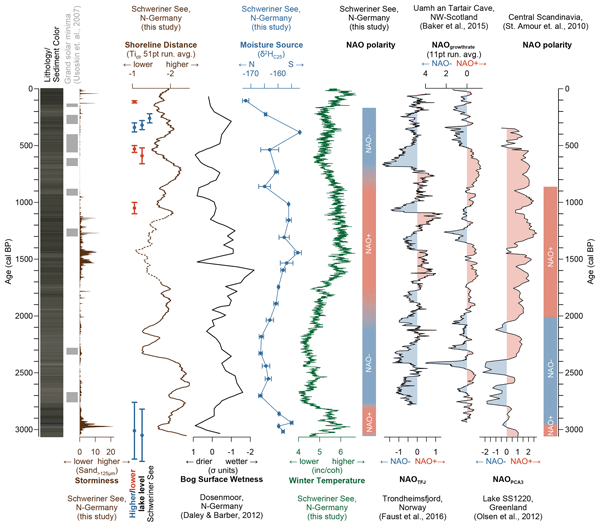
Marie-Luise Adolph, Sambor Czerwiński, Mirko Dreßler, Paul Strobel, Marcel Bliedtner, Sebastian Lorenz, Maxime Debret, and Torsten Haberzettl
Clim. Past, 20, 2143–2165, https://doi.org/10.5194/cp-20-2143-2024, https://doi.org/10.5194/cp-20-2143-2024, 2024
Short summary
Short summary
We reconstruct environmental changes derived from sediments of Schweriner See, a large lake in NE Germany, for the past 3000 years. We infer variations in North Atlantic large-scale atmospheric circulation systems, namely the North Atlantic Oscillation (NAO), by combining sedimentological, geochemical, and biological parameters. Our results suggest distinct shifts between positive and negative NAO phases affecting winter temperatures, precipitation, and westerly wind strength at our study site.
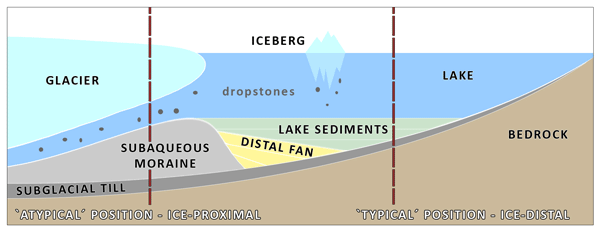
Johannes E. Pomper, Christian Zeeden, Frank Preusser, Ulrike Wielandt-Schuster, and Lukas Gegg
Sci. Dril., 35, 193–209, https://doi.org/10.5194/sd-35-193-2026, https://doi.org/10.5194/sd-35-193-2026, 2026
Short summary
Short summary
The research focuses on overdeepenings in the former Rhine glacier domain north from Lake Constance in southwestern Germany. We expand the current knowledge of the Quaternary stratigraphy of the Lake Constance Amphitheatre by revealing two new drill cores, both reaching the quaternary base of two different overdeepened basins. As a result, we show that our investigated sediment successions are quite atypical for alpine foreland overdeepenings.
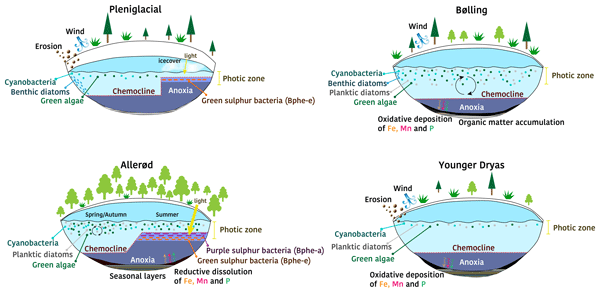
Petra Zahajská, María Luján García, Stella Birlo, Andrea Lami, Martina Stebich, Stan J. Schouten, Noé R. M. M. Schmidhauser, Bernd Zolitschka, Hendrik Vogel, and Martin Grosjean
Biogeosciences, 23, 5281–5312, https://doi.org/10.5194/bg-23-5281-2026, https://doi.org/10.5194/bg-23-5281-2026, 2026
Short summary
Short summary
We analyzed sediments from Holzmaar using hyperspectral imaging and geochemistry to track ecosystem responses to rapid warming. We found that while rising temperatures enabled stratification, forest expansion was the decisive trigger for deep-water anoxia by shielding the lake from wind. Holzmaar’s iron-rich geology prevented internal nutrient recycling, allowing immediate recovery once the climate cooled. This proves catchment traits and lithology can override direct climate impacts.
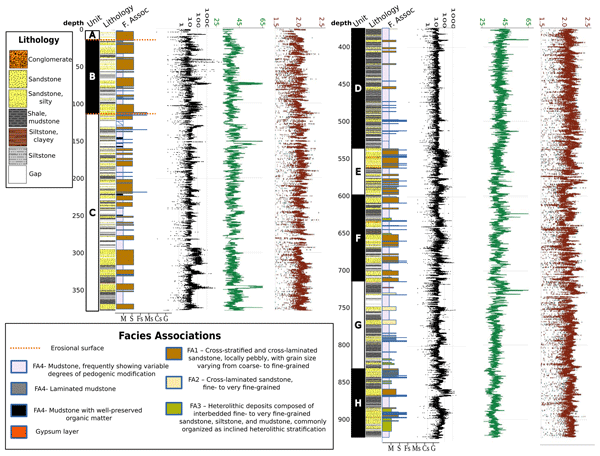
Sherilyn C. Fritz, André O. Sawakuchi, Anders Noren, Paul A. Baker, Cleverson Silva, Carlos Jaramillo, Renato Paes de Almeida, Liliane Janikian, Isaac Salém Bezerra, Marcos Barbosa, Dailson Bertassoli, Rain Blankenship, Cristiano M. Chiessi, Sarah J. Feakins, Maria da Glória Garcia, Cécile Gautheron, Brian Grivna, Gelvam Hartmann, Cindy Kunkel, André Marconato, Angela Martinez, Sebastian G. Marulanda, Carlos Eduardo M. Mazoca, Francisco R. Negri, Mauricio Parra, Werner E. Piller, Fabiano N. Pupim, Victor Salgado, Rachel T. So, Priscila Emerich Souza, Elena Stiles, Caroline A. E. Strömberg, Siu Mui Tsai, Ingo Wahnfried, Josh West, Marc-Élie Adaimé, Jhon Afonso, Thomas Kenji Akabane, Camila Eliza Althaus, Carlos D'Apolito, Kleiton R. Araújo, Roney da Silva de Azevedo Júnior, Jessica Barcellos, Tacio Bicudo, Giovanni Bogota, Bodo Bookhagen, Caio Breda, Alderlene Pimentel de Brito, Francy Carvajal, Daniel Antunes Coppi, Carolina Barbosa Leite da Cruz, Felipe Torres Figueiredo, Kate Freeman, Pedro Victor Oliveira Gomes, Martin Gross, Emma Hartke, Katja Heeschen, William Mozart Henrichs, Leonardo Henrique, Carina Hoorn, Brian K. Horton, Andrés Díaz-Jamamillo, Said Kamrani-Mehni, Fatima Leite, Lin Li, Rodrigo Ferreira de Lucena, Alastair Milne, Thomás Miranda, Marcelo Mota, Diana Ochoa, Vinicius de Lima Passos, Rafaela Maciel Lopes de Paula, Elisa Piispa, Angelo Plata Torres, Surangi W. Punyasena, Adriano Domingos dos Reis, Catherine Rigsby, Andrés F. Salazar Rios, Fernanda Costa Gonçalves Rodrigues, Raquel M. M. Romão, Ingrid C. Romero, Henrique O. Sawakuchi, Doug Schnurrenberger, Kristina Brady Shannon, Silane A. F. da Silva-Caminha, Clauses Sousa, Larissa Natsumi Tamura, Thomas Wiersberg, Helanlin Xiang, and Belén Zamudio
Sci. Dril., 35, 127–157, https://doi.org/10.5194/sd-35-127-2026, https://doi.org/10.5194/sd-35-127-2026, 2026
Short summary
Short summary
The Trans-Amazon Drilling Project seeks to reconstruct the origins of biodiversity in the world's largest and most diverse rain forest, and the roles of landscape changes driven by Andean uplift and global climate change in diversification. We provide a project overview and preliminary results from a drill core from the Acre Basin of western Brazil, which recovered an 860 m sequence that was deposited in a large river system and which will yield critical insights on evolutionary history.
Floriane Guillevic, Renaldo Gastineau, Olivier Evrard, Pierre Sabatier, Amaury Bardelle, Pierre-Alexis Chaboche, Anthony Foucher, Romina Achaga, Ana Carolina Ruiz-Fernández, Joan-Albert Sanchez-Cabeza, Marcos Tassano, Mirel Cabrera, Juan A. Quicke, Guillermo Chalar, Maarten Van Daele, Valentina Moreno-Allende, Jasper Moernaut, Torsten Haberzettl, José A. Corcho Alvarado, Stefan Röllin, Hans Sahli, Judith Kobler, Gerald Dicen, and Christine Alewell
EGUsphere, https://doi.org/10.5194/egusphere-2026-3019, https://doi.org/10.5194/egusphere-2026-3019, 2026
Short summary
Short summary
Long-lived isotopes (239Pu and 240Pu), primarily produced during past nuclear weapon testing (1945-1974), are present globally in trace amounts on terrestrial surfaces. By analysing South American lake sediments, we identified three testing periods using the 240Pu/239Pu ratio analysis and observed discrepancies in the distribution of 137Cs and 239+240Pu activity concentration. This will improve the temporal precision of environmental reconstructions from the last century.
Mauricio Bonilla-Flores, Liseth Pérez, Peter Frenzel, Paula Echeverría-Galindo, Junbo Wang, and Antje Schwalb
J. Micropalaeontol., 45, 429–453, https://doi.org/10.5194/jm-45-429-2026, https://doi.org/10.5194/jm-45-429-2026, 2026
Short summary
Short summary
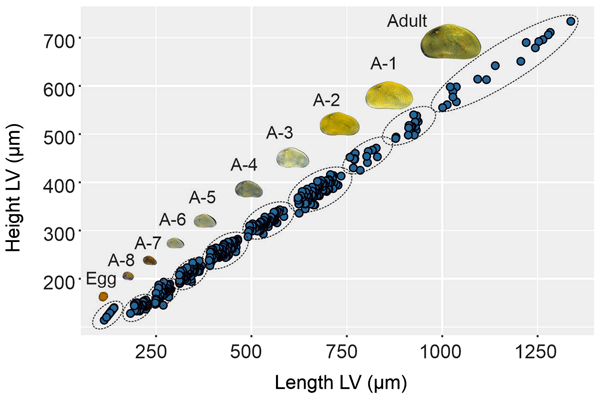
We grew three species of freshwater ostracods in the laboratory to document their development from eggs to adults. By comparing each stage of growth, we found significant differences in body shape, egg size, and growth patterns that help distinguish closely related species. Since their shells are often preserved in lake and pond sediments, our results provide useful reference data for studies of modern aquatic ecosystems and past environmental changes.
Marlene Hoehle, Torsten Haberzettl, Peter Frenzel, Antje Schwalb, Junbo Wang, Liping Zhu, and Claudia Wrozyna
J. Micropalaeontol., 45, 359–375, https://doi.org/10.5194/jm-45-359-2026, https://doi.org/10.5194/jm-45-359-2026, 2026
Short summary
Short summary
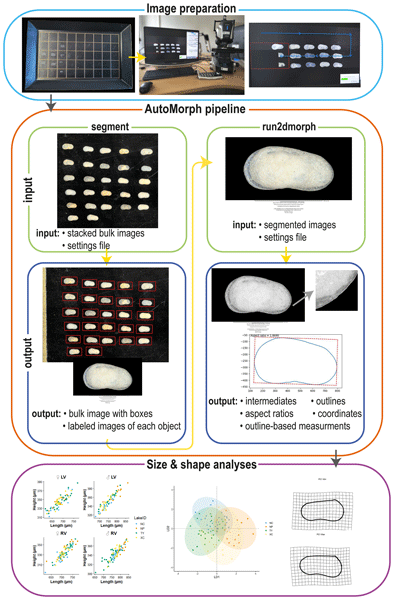
Evolutionary developmental biology aims to uncover mechanisms behind how species change over time, with shape analysis being a key tool. To address slow, manual data collection, we tested AutoMorph, a high-throughput imaging pipeline, on two ostracod species from six Tibetan Plateau lakes. The pipeline successfully extracted size and shape data automatically, reducing processing time and minimizing bias, enabling large-scale datasets for investigating evolutionary and ecological processes.
Guilherme Krahl, Andrea Concheyro, Marlone H. H. Bom, Rodrigo M. Guerra, Karlos G. D. Kochhann, Thorsten Bauersachs, Lorenz Schwark, Daiane Ceolin, Telma Musso, and Gerson Fauth
J. Micropalaeontol., 45, 297–308, https://doi.org/10.5194/jm-45-297-2026, https://doi.org/10.5194/jm-45-297-2026, 2026
Short summary
Short summary
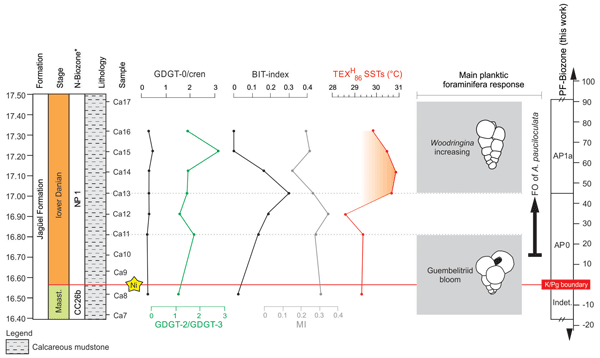
The Maastrichtian–Danian record at Cerro Azul (Argentina) shows shifts in planktic foraminiferal assemblages and sea surface temperatures (SSTs) (TEXH86) tied to the K–Pg (Cretaceous–Paleogene) extinction. Guembelitriid dominance and high-latitude affinity define the early Danian, with Antarcticella pauciloculata present. At 45 cm above the boundary, tropical species appear with a ~1.5 °C SST rise, signalling initial post-extinction climatic recovery.
Verena Foerster, Asfawossen Asrat, Christopher Bronk Ramsey, Erik T. Brown, Alan Deino, Asfaw Erbello, Markus L. Fischer, Daniel Gebregiorgis, Annett Junginger, Stefanie Kaboth-Bahr, Christine S. Lane, Stephan Opitz, Anders Noren, Helen M. Roberts, Ralph Tiedemann, Céline-Marie Vidal, Finn Viehberg, Ralf Vogelsang, Charlotte Zachow, Bahru Zinaye, Andrew S. Cohen, Henry F. Lamb, Frank Schaebitz, and Martin H. Trauth
Sci. Dril., 35, 61–81, https://doi.org/10.5194/sd-35-61-2026, https://doi.org/10.5194/sd-35-61-2026, 2026
Short summary
Short summary
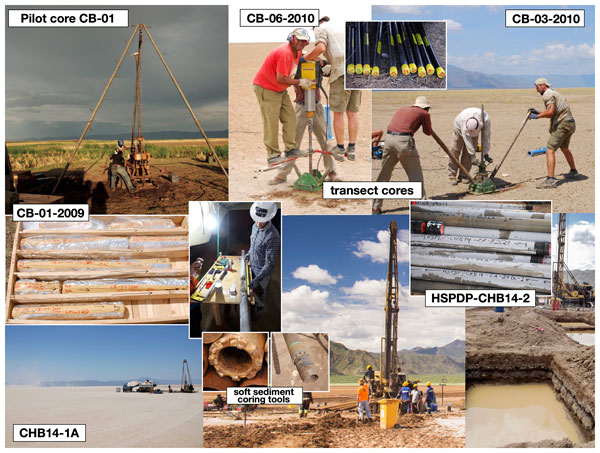
To explore links between human evolution and environmental change, the Chew Bahir basin in southern Ethiopia, a sedimentary climate archive, was investigated through a series of scientific drilling expeditions. We share key lessons from planning, site selection, drilling strategy and core processing, with a focus on the awards and challenges in collecting and merging twin sediment cores into a near-continuous record to provide practical lessons for future projects.
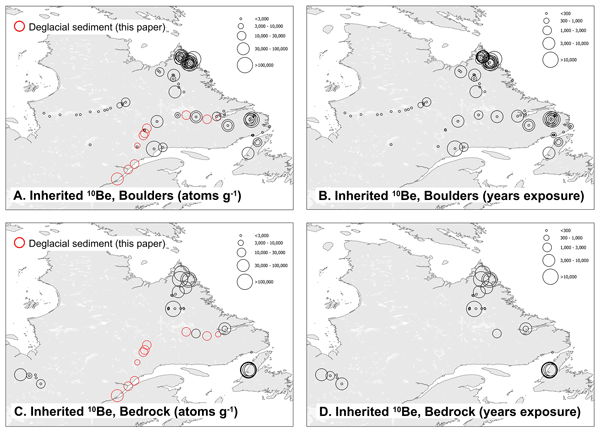
Peyton M. Cavnar, Paul R. Bierman, Jeremy D. Shakun, Lee B. Corbett, Danielle LeBlanc, Gillian L. Galford, Pierre-Olivier Couette, Jean-Francois Ghienne, Patrick Lajeunesse, Jérôme van der Woerd, and Marc Caffee
Geochronology, 8, 119–141, https://doi.org/10.5194/gchron-8-119-2026, https://doi.org/10.5194/gchron-8-119-2026, 2026
Short summary
Short summary
To investigate the Laurentide Ice Sheet’s erosivity before and during the Last Glacial Maximum, we sampled sand deposited by ice in eastern Canada before final deglaciation. We also sampled modern river sand. The 26Al and 10Be measured in glacial deposited sediments suggests that ice remained during some Pleistocene warm periods and was an inefficient eroder. Similar concentrations of 26Al and 10Be in modern sand suggests that most modern river sediment is sourced from glacial deposits.
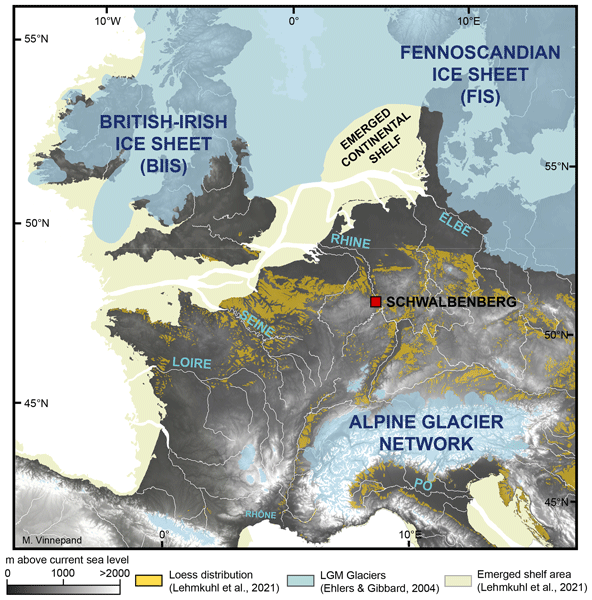
Mathias Vinnepand
E&G Quaternary Sci. J., 75, 69–72, https://doi.org/10.5194/egqsj-75-69-2026, https://doi.org/10.5194/egqsj-75-69-2026, 2026
Short summary
Short summary
This thesis abstract deals with strategies that have been developed to disentangle interfering geochemical signals in dust-based loess deposits, tested at the Schwalbenberg, Germany. Information on dust particle origin and that which has been obtained during their transport and post-depositional process make up the geochemical element composition. If this information can be decoded, loess deposits can be compared across continents, and the timing and nature of terrestrial system responses can be comprehended.
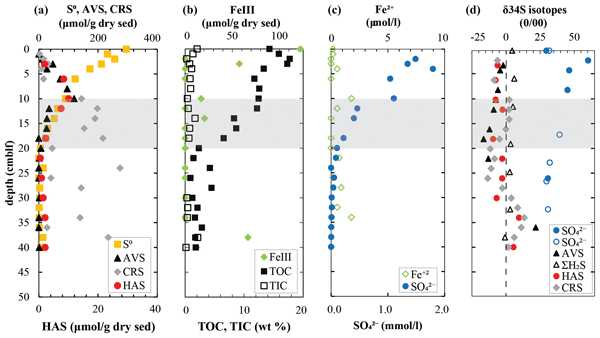
Jasmine S. Berg, Paula C. Rodriguez, Cara Magnabosco, Longhui Deng, Stefano M. Bernasconi, Hendrik Vogel, Marina Morlock, and Mark A. Lever
Biogeosciences, 22, 5483–5496, https://doi.org/10.5194/bg-22-5483-2025, https://doi.org/10.5194/bg-22-5483-2025, 2025
Short summary
Short summary
Our research explores microbial sulfur cycling in the 13 500-year-old sediment record of a sulfate-rich alpine lake. We present evidence for active sulfur cycling across sediment layers, even in sulfate-depleted zones, driven by uncultivated microorganisms. In addition, rapid organic matter sulfurization could contribute to its preservation. These findings enhance our understanding of the role of sulfur in organic matter preservation and deep biosphere processes.
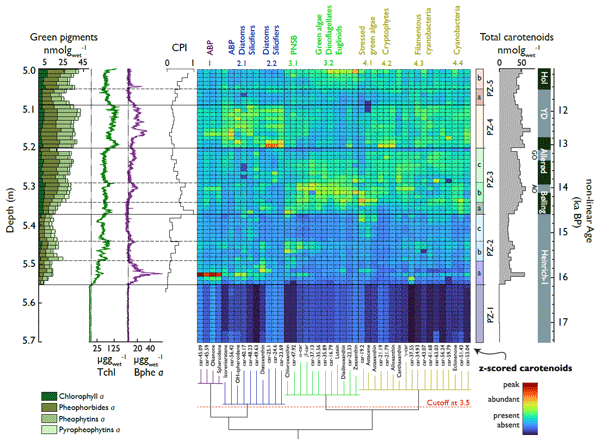
Stan J. Schouten, Noé R. M. M. Schmidhauser, Martin Grosjean, Andrea Lami, Petra Boltshauser-Kaltenrieder, Jacqueline F. N. van Leeuwen, Hendrik Vogel, and Petra Zahajská
Biogeosciences, 22, 3821–3842, https://doi.org/10.5194/bg-22-3821-2025, https://doi.org/10.5194/bg-22-3821-2025, 2025
Short summary
Short summary
Climate warming speeds up lake eutrophication, creating “dead zones” where aquatic life suffocates due to oxygen depletion. The sediments of Amsoldingersee, a Swiss lake, revealed how climate shifts impacted the lake around 10 000–18 000 years ago. (1) Algal composition differed between both cold and warm periods. (2) Nutrient additions from dust controlled algal growth more than temperature. (3) Cold periods with ice cover led to oxygen depletion. (4) Algal communities recovered after anoxic phases.
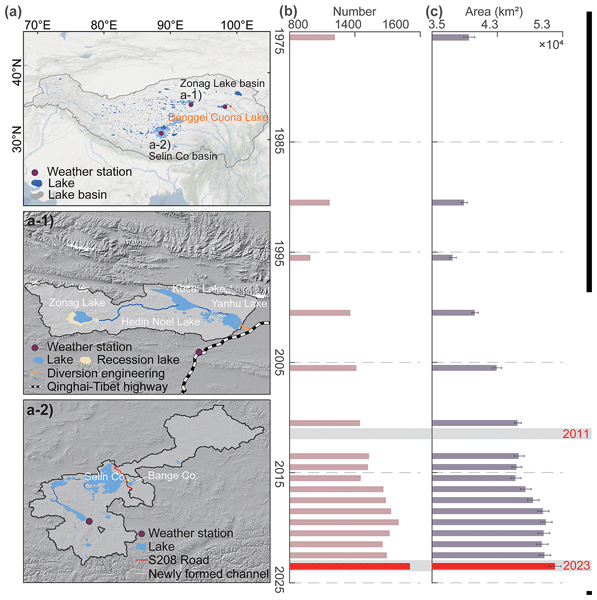
Fenglin Xu, Yong Liu, Guoqing Zhang, Ping Zhao, R. Iestyn Woolway, Yani Zhu, Jianting Ju, Tao Zhou, Xue Wang, and Wenfeng Chen
Nat. Hazards Earth Syst. Sci., 25, 1187–1206, https://doi.org/10.5194/nhess-25-1187-2025, https://doi.org/10.5194/nhess-25-1187-2025, 2025
Short summary
Short summary
Glacial lake outbursts have been widely studied, but large-inland-lake outbursts have received less attention. Recently, with the rapid expansion of inland lakes, signs of potential outbursts have increased. However, their processes, causes, and mechanisms are still not well understood. Here, the outburst processes of two inland lakes were investigated using a combination of field surveys, remote sensing mapping, and hydrodynamic modeling. Their causes and mechanisms were also investigated.
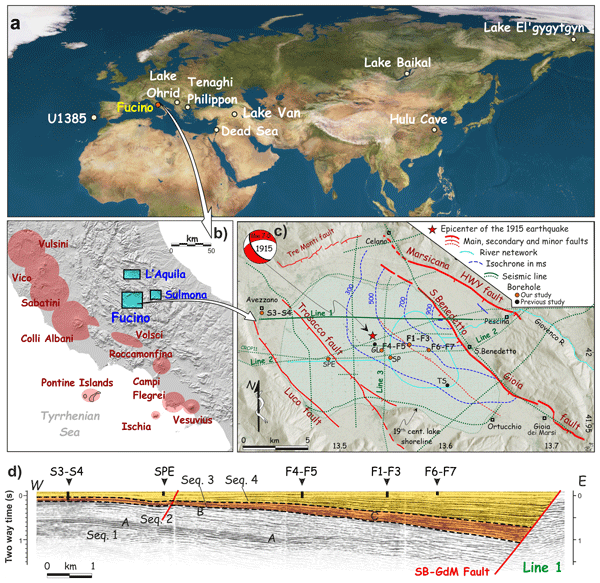
Biagio Giaccio, Bernd Wagner, Giovanni Zanchetta, Adele Bertini, Gian Paolo Cavinato, Roberto de Franco, Fabio Florindo, David A. Hodell, Thomas A. Neubauer, Sebastien Nomade, Alison Pereira, Laura Sadori, Sara Satolli, Polychronis C. Tzedakis, Paul Albert, Paolo Boncio, Cindy De Jonge, Alexander Francke, Christine Heim, Alessia Masi, Marta Marchegiano, Helen M. Roberts, Anders Noren, and the MEME team
Sci. Dril., 33, 249–266, https://doi.org/10.5194/sd-33-249-2024, https://doi.org/10.5194/sd-33-249-2024, 2024
Short summary
Short summary
A total of 42 Earth scientists from 14 countries met in Gioia dei Marsi, central Italy, on 23 to 27 October 2023 to explore the potential for deep drilling of the thick lake sediment sequence of the Fucino Basin. The aim was to reconstruct the history of climate, ecosystem, and biodiversity changes and of the explosive volcanism and tectonics in central Italy over the last 3.5 million years, constrained by a detailed radiometric chronology.
Marie-Luise Adolph, Sambor Czerwiński, Mirko Dreßler, Paul Strobel, Marcel Bliedtner, Sebastian Lorenz, Maxime Debret, and Torsten Haberzettl
Clim. Past, 20, 2143–2165, https://doi.org/10.5194/cp-20-2143-2024, https://doi.org/10.5194/cp-20-2143-2024, 2024
Short summary
Short summary
We reconstruct environmental changes derived from sediments of Schweriner See, a large lake in NE Germany, for the past 3000 years. We infer variations in North Atlantic large-scale atmospheric circulation systems, namely the North Atlantic Oscillation (NAO), by combining sedimentological, geochemical, and biological parameters. Our results suggest distinct shifts between positive and negative NAO phases affecting winter temperatures, precipitation, and westerly wind strength at our study site.
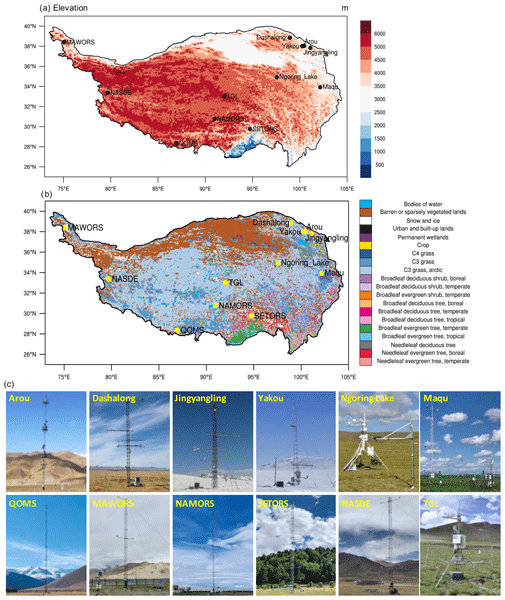
Yaoming Ma, Zhipeng Xie, Yingying Chen, Shaomin Liu, Tao Che, Ziwei Xu, Lunyu Shang, Xiaobo He, Xianhong Meng, Weiqiang Ma, Baiqing Xu, Huabiao Zhao, Junbo Wang, Guangjian Wu, and Xin Li
Earth Syst. Sci. Data, 16, 3017–3043, https://doi.org/10.5194/essd-16-3017-2024, https://doi.org/10.5194/essd-16-3017-2024, 2024
Short summary
Short summary
Current models and satellites struggle to accurately represent the land–atmosphere (L–A) interactions over the Tibetan Plateau. We present the most extensive compilation of in situ observations to date, comprising 17 years of data on L–A interactions across 12 sites. This quality-assured benchmark dataset provides independent validation to improve models and remote sensing for the region, and it enables new investigations of fine-scale L–A processes and their mechanistic drivers.
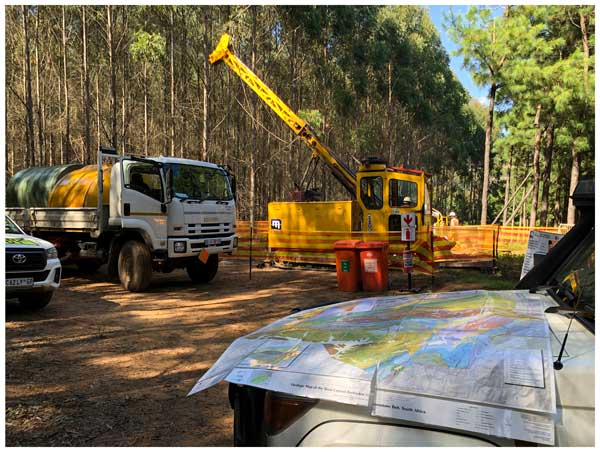
Christoph Heubeck, Nic Beukes, Michiel de Kock, Martin Homann, Emmanuelle J. Javaux, Takeshi Kakegawa, Stefan Lalonde, Paul Mason, Phumelele Mashele, Dora Paprika, Chris Rippon, Mike Tice, Rodney Tucker, Ryan Tucker, Victor Ndazamo, Astrid Christianson, and Cindy Kunkel
Sci. Dril., 33, 129–172, https://doi.org/10.5194/sd-33-129-2024, https://doi.org/10.5194/sd-33-129-2024, 2024
Short summary
Short summary
What was Earth like when young? Under what conditions did bacteria spread? We studied some of the best-preserved, oldest rocks in South Africa. Layers there are about vertical; we drilled sideways. Sedimentary strata from eight boreholes showed that they had been deposited in rivers, sandy shorelines, tidal flats, estuaries, and the ocean. Some have well-preserved remnants of microbes. We will learn how life was established on a planet which would appear very inhospitable to us nowadays.

Jonathan M. G. Stine, Joshua M. Feinberg, Adam K. Huttenlocker, Randall B. Irmis, Declan Ramirez, Rashida Doctor, John McDaris, Charles M. Henderson, Michael T. Read, Kristina Brady Shannon, Anders Noren, Ryan O'Grady, Ayva Sloo, Patrick Steury, Diego P. Fernandez, Amy C. Henrici, and Neil J. Tabor
Sci. Dril., 33, 109–128, https://doi.org/10.5194/sd-33-109-2024, https://doi.org/10.5194/sd-33-109-2024, 2024
Short summary
Short summary
We present initial results from the upper 450 m of ER-1, a legacy core collected from modern-day Bears Ears National Monument, Utah, USA. This section contains a relatively complete record of Upper Carboniferous to Early Permian sediments, providing a unique window on Earth's last icehouse–hothouse transition. Ongoing research will tie our results to important fossil sites, allowing us to better understand how this climate shift contributed to the evolution of terrestrial life.
Catherine C. Beck, Melissa Berke, Craig S. Feibel, Verena Foerster, Lydia Olaka, Helen M. Roberts, Christopher A. Scholz, Kat Cantner, Anders Noren, Geoffery Mibei Kiptoo, James Muirhead, and the Deep Drilling in the Turkana Basin (DDTB) project team
Sci. Dril., 33, 93–108, https://doi.org/10.5194/sd-33-93-2024, https://doi.org/10.5194/sd-33-93-2024, 2024
Short summary
Short summary
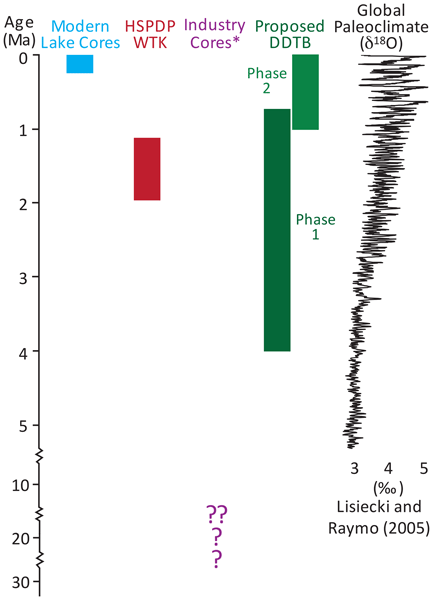
The Deep Drilling in the Turkana Basin project seeks to determine the relative impacts of tectonics and climate on eastern African ecosystems. To organize goals for coring, we hosted a workshop in Nairobi, Kenya, which focused on how a 4 Myr sedimentary core from Turkana will uniquely address research objectives related to basin evolution, past climates and environments, and modern resources. We concluded that a Pliocene to modern record is best accomplished through a two-phase drilling project.
Cécile Massiot, Ludmila Adam, Eric S. Boyd, S. Craig Cary, Daniel R. Colman, Alysia Cox, Ery Hughes, Geoff Kilgour, Matteo Lelli, Domenico Liotta, Karen G. Lloyd, Tiipene Marr, David D. McNamara, Sarah D. Milicich, Craig A. Miller, Santanu Misra, Alexander R. L. Nichols, Simona Pierdominici, Shane M. Rooyakkers, Douglas R. Schmitt, Andri Stefansson, John Stix, Matthew B. Stott, Camille Thomas, Pilar Villamor, Pujun Wang, Sadiq J. Zarrouk, and the CALDERA workshop participants
Sci. Dril., 33, 67–88, https://doi.org/10.5194/sd-33-67-2024, https://doi.org/10.5194/sd-33-67-2024, 2024
Short summary
Short summary
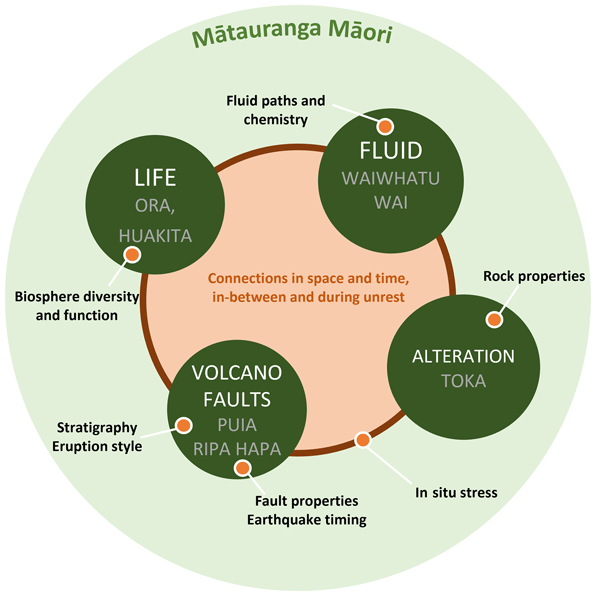
Volcanoes where tectonic plates drift apart pose eruption and earthquake hazards. Underground waters are difficult to track. Underground microbial life is probably plentiful but unexplored. Scientists discussed the idea of drilling two boreholes in the Okataina Volcanic Centre, New Zealand, to unravel the connections between volcano, faults, geotherms, and the biosphere, also integrating mātauranga Māori (Indigenous knowledge) to assess hazards and manage resources and microbial ecosystems.
Matthias S. Brennwald, Antonio P. Rinaldi, Jocelyn Gisiger, Alba Zappone, and Rolf Kipfer
Geosci. Instrum. Method. Data Syst., 13, 1–8, https://doi.org/10.5194/gi-13-1-2024, https://doi.org/10.5194/gi-13-1-2024, 2024
Short summary
Short summary
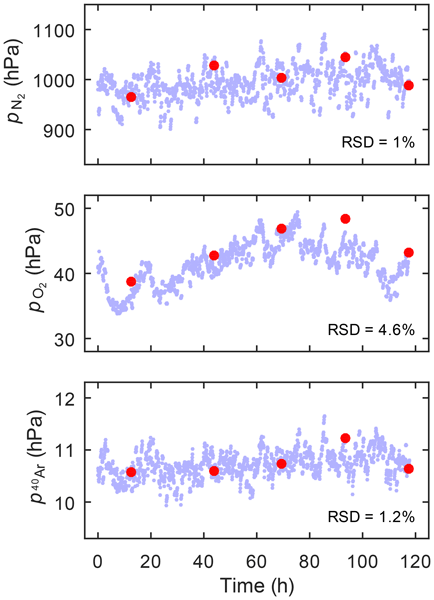
The gas equilibrium membrane inlet mass spectrometry (GE-MIMS) method for dissolved-gas quantification was expanded to work in water at high pressures.
Qingfeng Ma, Liping Zhu, Jianting Ju, Junbo Wang, Yong Wang, Lei Huang, and Torsten Haberzettl
Earth Syst. Sci. Data, 16, 311–320, https://doi.org/10.5194/essd-16-311-2024, https://doi.org/10.5194/essd-16-311-2024, 2024
Short summary
Short summary
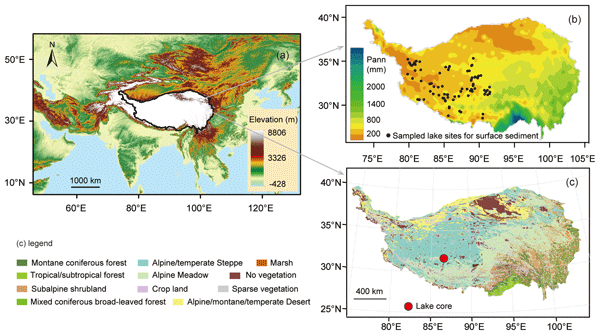
Modern pollen datasets are essential for pollen-based quantitative paleoclimate reconstructions. Here we present a modern pollen dataset from lake surface sediments on the central and western Tibetan Plateau. This dataset can be used not only for quantitative precipitation reconstructions on the central and western Tibetan Plateau, but can also be combined with other pollen datasets to improve the reliability of quantitative climate reconstructions across the entire Tibetan Plateau.
Sudip Acharya, Maximilian Prochnow, Thomas Kasper, Linda Langhans, Peter Frenzel, Paul Strobel, Marcel Bliedtner, Gerhard Daut, Christopher Berndt, Sönke Szidat, Gary Salazar, Antje Schwalb, and Roland Zech
E&G Quaternary Sci. J., 72, 219–234, https://doi.org/10.5194/egqsj-72-219-2023, https://doi.org/10.5194/egqsj-72-219-2023, 2023
Short summary
Short summary
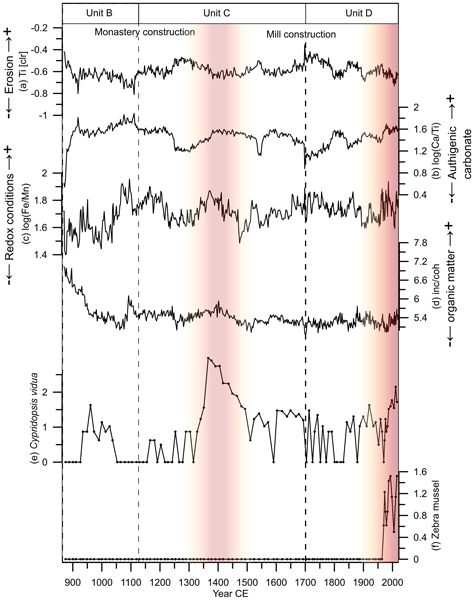
This study presents a palaeoenvironmental record from Lake Höglwörth, Bavaria, Germany. Before 870 CE peat deposits existed. Erosion increased from 1240 to 1380 CE, followed by aquatic productivity and anoxia from 1310 to 1470 CE. Increased allochthonous input and a substantial shift in the aquatic community in 1701 were caused by construction of a mill. Recent anoxia has been observed since the 1960s.
Jonathan Obrist-Farner, Andreas Eckert, Peter M. J. Douglas, Liseth Perez, Alex Correa-Metrio, Bronwen L. Konecky, Thorsten Bauersachs, Susan Zimmerman, Stephanie Scheidt, Mark Brenner, Steffen Kutterolf, Jeremy Maurer, Omar Flores, Caroline M. Burberry, Anders Noren, Amy Myrbo, Matthew Lachniet, Nigel Wattrus, Derek Gibson, and the LIBRE scientific team
Sci. Dril., 32, 85–100, https://doi.org/10.5194/sd-32-85-2023, https://doi.org/10.5194/sd-32-85-2023, 2023
Short summary
Short summary
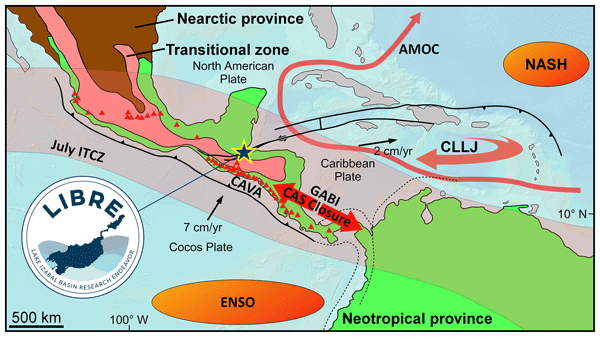
In August 2022, 65 scientists from 13 countries gathered in Antigua, Guatemala, for a workshop, co-funded by the US National Science Foundation and the International Continental Scientific Drilling Program. This workshop considered the potential of establishing a continental scientific drilling program in the Lake Izabal Basin, eastern Guatemala, with the goals of establishing a borehole observatory and investigating one of the longest continental records from the northern Neotropics.
Alison J. Smith, Emi Ito, Natalie Burls, Leon Clarke, Timme Donders, Robert Hatfield, Stephen Kuehn, Andreas Koutsodendris, Tim Lowenstein, David McGee, Peter Molnar, Alexander Prokopenko, Katie Snell, Blas Valero Garcés, Josef Werne, Christian Zeeden, and the PlioWest Working Consortium
Sci. Dril., 32, 61–72, https://doi.org/10.5194/sd-32-61-2023, https://doi.org/10.5194/sd-32-61-2023, 2023
Short summary
Short summary
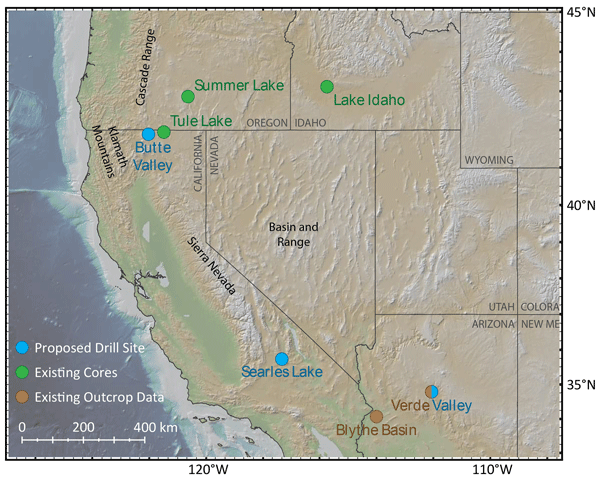
Western North American contains accessible and under-recognized paleolake records that hold the keys to understanding the drivers of wetter conditions in Pliocene Epoch subtropical drylands worldwide. In a 2021 ICDP workshop, we chose five paleolake basins to study that span 7° of latitude in a unique array able to capture a detailed record of hydroclimate during the Early Pliocene warm period and subsequent Pleistocene cooling. We propose new drill cores for three of these basins.
Jasmine S. Berg, Paula C. Rodriguez, Cara Magnabosco, Longhui Deng, Stefano M. Bernasconi, Hendrik Vogel, Marina Morlock, and Mark A. Lever
EGUsphere, https://doi.org/10.5194/egusphere-2023-2102, https://doi.org/10.5194/egusphere-2023-2102, 2023
Preprint archived
Short summary
Short summary
The addition of sulfur to organic matter is generally thought to protect it from microbial degradation. We analyzed buried sulfur compounds in a 10-m sediment core representing the entire ~13,500 year history of an alpine lake. Surprisingly, organic sulfur and pyrite formed very rapidly and were characterized by very light isotope signatures that suggest active microbial sulfur cycling in the deep subsurface.
Mathias Vinnepand, Peter Fischer, Ulrich Hambach, Olaf Jöris, Carol-Ann Craig, Christian Zeeden, Barry Thornton, Thomas Tütken, Charlotte Prud'homme, Philipp Schulte, Olivier Moine, Kathryn E. Fitzsimmons, Christian Laag, Frank Lehmkuhl, Wolfgang Schirmer, and Andreas Vött
E&G Quaternary Sci. J., 72, 163–184, https://doi.org/10.5194/egqsj-72-163-2023, https://doi.org/10.5194/egqsj-72-163-2023, 2023
Short summary
Short summary
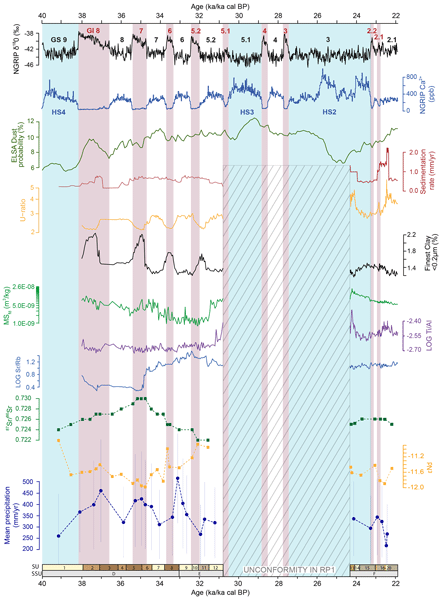
Loess–palaeosol sequences (LPSs) represent continental and non-aquatic archives providing detailed information on Quaternary environmental and climate changes. We present an integrative approach combining sedimentological, rock magnetic, and bulk geochemical data, as well as information on Sr and Nd isotope composition. The approach adds to a comprehensive understanding of LPS formation including changes in dust composition and associated circulation patterns during Quaternary climate changes.
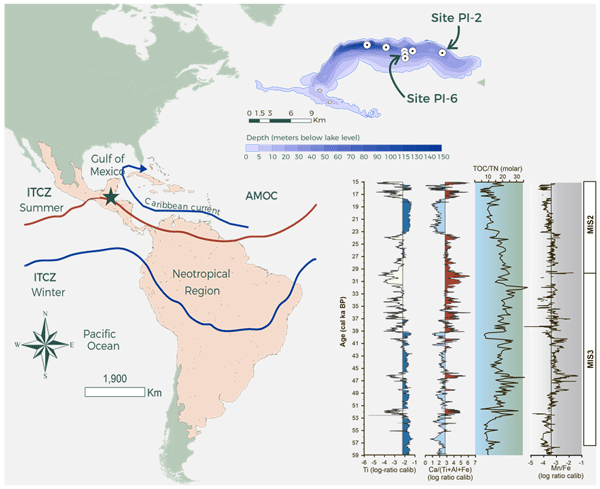
Rodrigo Martínez-Abarca, Michelle Abstein, Frederik Schenk, David Hodell, Philipp Hoelzmann, Mark Brenner, Steffen Kutterolf, Sergio Cohuo, Laura Macario-González, Mona Stockhecke, Jason Curtis, Flavio S. Anselmetti, Daniel Ariztegui, Thomas Guilderson, Alexander Correa-Metrio, Thorsten Bauersachs, Liseth Pérez, and Antje Schwalb
Clim. Past, 19, 1409–1434, https://doi.org/10.5194/cp-19-1409-2023, https://doi.org/10.5194/cp-19-1409-2023, 2023
Short summary
Short summary
Lake Petén Itzá, northern Guatemala, is one of the oldest lakes in the northern Neotropics. In this study, we analyzed geochemical and mineralogical data to decipher the hydrological response of the lake to climate and environmental changes between 59 and 15 cal ka BP. We also compare the response of Petén Itzá with other regional records to discern the possible climate forcings that influenced them. Short-term climate oscillations such as Greenland interstadials and stadials are also detected.
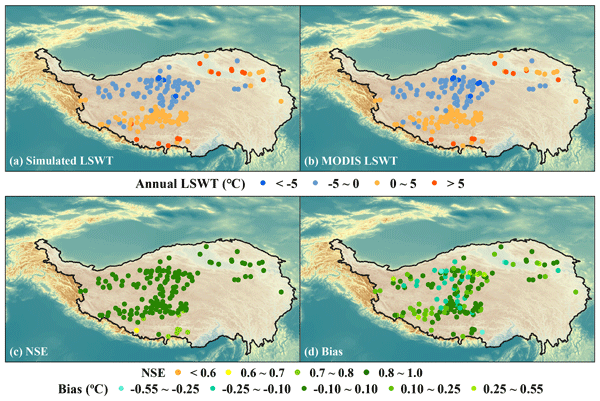
Linan Guo, Hongxing Zheng, Yanhong Wu, Lanxin Fan, Mengxuan Wen, Junsheng Li, Fangfang Zhang, Liping Zhu, and Bing Zhang
Earth Syst. Sci. Data, 14, 3411–3422, https://doi.org/10.5194/essd-14-3411-2022, https://doi.org/10.5194/essd-14-3411-2022, 2022
Short summary
Short summary
Lake surface water temperature (LSWT) is a critical physical property of the aquatic ecosystem and an indicator of climate change. By combining the strengths of satellites and models, we produced an integrated dataset on daily LSWT of 160 large lakes across the Tibetan Plateau (TP) for the period 1978–2017. LSWT increased significantly at a rate of 0.01–0.47° per 10 years. The dataset can contribute to research on water and heat balance changes and their ecological effects in the TP.
Liuming Wang, Junxiao Wang, Mengyao Li, Liping Zhu, and Xingong Li
Earth Syst. Sci. Data Discuss., https://doi.org/10.5194/essd-2021-331, https://doi.org/10.5194/essd-2021-331, 2021
Manuscript not accepted for further review
Short summary
Short summary
This research provides a comprehensive census on water volume change for the lakes greater than or equal to 1 km2 in the EBTP from 1989–2019 using Landsat imagery and digital elevation data. Our annual dataset, compared with satellite altimetry and other existing data, covers more lakes, especially small lakes in 1–10 km2, and longer time period. The dataset is valuable in studying the impacts of climate change and water balance in the region.
Cited articles
Adolph, M.-L., Dressler, M., Troelstra, V., Wrozyna, C., and Haberzettl, T.: Eutrophication and contamination dynamics of Schweriner See, NE-Germany, during the past 670 years – A multi-proxy approach on lacustrine surface sediments and sediment cores, Sci. Total Environ., 877, 162745, https://doi.org/10.1016/j.scitotenv.2023.162745, 2023.
Adolph, M.-L., Czerwiński, S., Dressler, M., Strobel, P., Bliedtner, M., Lorenz, S., Debret, M., and Haberzettl, T.: North Atlantic Oscillation polarity during the past 3000 years derived from sediments of a large lowland lake, Schweriner See, in NE Germany, Clim. Past, 20, 2143–2165, https://doi.org/10.5194/cp-20-2143-2024, 2024.
Adolph, M.-L., Wang, J., Zhu, L., Clarke, L. J., Henderson, A. C. G., Vogel, H., Hofmann, P., Ju, J., Kunkel, C., Noren, A., Schnurrenberger, D., Spiess, V., Thomas, C., Ulfers, A., and Haberzettl, T.: The Nam Co Drilling Project, Tibet (NamCore): A one-million-year sedimentary record from the Third Pole: Operational Report, Potsdam, GFZ Data Services [data set], 41 pp., https://doi.org/10.5880/ICDP.5073.001, 2025.
Ai, K., Shi, G., Zhang, K., Ji, J., Song, B., Shen, T., and Guo, S.: The uppermost Oligocene Kailas flora from southern Tibetan Plateau and its implications for the uplift history of the southern Lhasa terrane, Palaeogeogr. Palaeocl., 515, 143–151, https://doi.org/10.1016/j.palaeo.2018.04.017, 2019.
Aitchison, J. C., Ali, J. R., and Davis, A. M.: When and where did India and Asia collide?, J. Geophys. Res.-Sol. Ea., 112, 1–19, https://doi.org/10.1029/2006jb004706, 2007.
Akita, L. G.: Ostracodes as indicators of Late Quaternary aquatic and monsoon system changes on the southern Tibetan Plateau, PhD Thesis, Friedrich Schiller University, Jena, https://www.db-thueringen.de/receive/dbt_mods_00029216 (last access: 3 June 2026), 2016.
Akita, L. G., Frenzel, P., Haberzettl, T., Kasper, T., Wang, J., and Reicherter, K.: Ostracoda (Crustacea) as indicators of subaqueous mass movements: An example from the large brackish lake Tangra Yumco on the southern Tibetan Plateau, China, Palaeogeogr. Palaeocl., 419, 60–74, https://doi.org/10.1016/j.palaeo.2014.08.003, 2015.
Akita, L. G., Frenzel, P., Wang, J., Börner, N., and Peng, P.: Spatial distribution and ecology of the Recent Ostracoda from Tangra Yumco and adjacent waters on the southern Tibetan Plateau: A key to palaeoenvironmental reconstruction, Limnologica, 59, 21–43, https://doi.org/10.1016/j.limno.2016.03.005, 2016.
Anslan, S., Azizi Rad, M., Buckel, J., Echeverria Galindo, P., Kai, J., Kang, W., Keys, L., Maurischat, P., Nieberding, F., Reinosch, E., Tang, H., Tran, T. V., Wang, Y., and Schwalb, A.: Reviews and syntheses: How do abiotic and biotic processes respond to climatic variations in the Nam Co catchment (Tibetan Plateau)?, Biogeosciences, 17, 1261–1279, https://doi.org/10.5194/bg-17-1261-2020, 2020.
Anslan, S., Kang, W. A., Dulias, K., Wuennemann, B., Echeverria-Galindo, P., Börner, N., Schwarz, A., Liu, Y. Q., Liu, K. S., Kuenzel, S., Kisand, V., Rioual, P., Peng, P., Wang, J. B., Zhu, L. P., Vences, M., and Schwalb, A.: Compatibility of Diatom Valve Records With Sedimentary Ancient DNA Amplicon Data: A Case Study in a Brackish, Alkaline Tibetan Lake, Front. Earth Sci., 10, 1–14, https://doi.org/10.3389/feart.2022.824656, 2022.
Ariztegui, D., Thomas, C., and Vuillemin, A.: Present and future of subsurface biosphere studies in lacustrine sediments through scientific drilling, Int. J. Earth Sci., 104, 1655–1665, https://doi.org/10.1007/s00531-015-1148-4, 2015.
Armijo, R., Tapponnier, P., Mercier, J. L., and Han, T.-L.: Quaternary extension in southern Tibet: Field observations and tectonic implications, J. Geophys. Res.-Sol. Ea., 91, 13803–13872, https://doi.org/10.1029/JB091iB14p13803, 1986.
Armijo, R., Tapponnier, P., and Han, T.: Late Cenozoic right-lateral strike-slip faulting in southern Tibet, J. Geophys. Res.-Sol. Ea., 94, 2787–2838, https://doi.org/10.1029/JB094iB03p02787, 1989.
Balsam, W., Damuth, J. E., and Deaton, B.: Marine sediment components: identification and dispersal assessed by diffuse reflectance spectrophotometry, International Journal of Environment and Health, 1, 403–426, https://doi.org/10.1504/ijenvh.2007.017869, 2007.
Blott, S. J. and Pye, K.: GRADISTAT: A grain size distribution and statistics package for the analysis of unconsolidated sediments, Earth Surf. Proc. Land., 26, 1237–1248, https://doi.org/10.1002/esp.261, 2001.
Bourbonniere, R. A. and Meyers, P. A.: Anthropogenic influences on hydrocarbon contents of sediments deposited in eastern Lake Ontario since 1800, Environ. Geol., 28, 22–28, https://doi.org/10.1007/s002540050074, 1996.
Ceriotti, G., Borisov, S. M., Berg, J. S., and de Anna, P.: Morphology and Size of Bacterial Colonies Control Anoxic Microenvironment Formation in Porous Media, Environ. Sci. Technol., 56, 17471–17480, https://doi.org/10.1021/acs.est.2c05842, 2022.
Chen, J., Zhang, Q., Huang, W., Lu, Z., Zhang, Z., and Chen, F.: Northwestward shift of the northern boundary of the East Asian summer monsoon during the mid-Holocene caused by orbital forcing and vegetation feedbacks, Quaternary Sci. Rev., 268, https://doi.org/10.1016/j.quascirev.2021.107136, 2021.
Chevalier, M. L., Tapponnier, P., van der Woerd, J., Leloup, P. H., Wang, S., Pan, J., Bai, M., Kali, E., Liu, X., and Li, H.: Late Quaternary Extension Rates Across the Northern Half of the Yadong-Gulu Rift: Implication for East-West Extension in Southern Tibet, J. Geophys. Res.-Sol. Ea., 125, https://doi.org/10.1029/2019jb019106, 2020.
Clemens, S. C., Kuhnt, W., LeVay, L. J., and the Expedition 353 Scientists, 2016: Indian Monsoon Rainfall, Proceedings of the International Ocean Discovery Program, 353: College Station, TX (International Ocean Discovery Program), https://doi.org/10.14379/iodp.proc.353.2016, 2016.
Curry, B. B. and Filippelli, G. M.: Episodes of low dissolved oxygen indicated by ostracodes and sediment geochemistry at Crystal Lake, Illinois, USA, Limnol. Oceanogr., 55, 2403–2423, https://doi.org/10.4319/lo.2010.55.6.2403, 2010.
Daut, G., Mäusbacher, R., Baade, J., Gleixner, G., Kroemer, E., Mügler, I., Wallner, J., Wang, J., and Zhu, L.: Late Quaternary hydrological changes inferred from lake level fluctuations of Nam Co (Tibetan Plateau, China), Quatern. Int., 218, 86–93, https://doi.org/10.1016/j.quaint.2010.01.001, 2010.
Dearing, J. A.: Environmental Magnetic Susceptibility. Using the Bartington MS2 System, 43 pp., ISBN 0952340909, 1999.
Dearing, J. A., Dann, R. J. L., Hay, K., Lees, J. A., Loveland, P. J., Maher, B. A., and OGrady, K.: Frequency-dependent susceptibility measurements of environmental materials, Geophys. J. Int., 124, 228–240, https://doi.org/10.1111/j.1365-246X.1996.tb06366.x, 1996.
Debret, M., Sebag, D., Desmet, M., Balsam, W., Copard, Y., Mourier, B., Susperrigui, A. S., Arnaud, F., Bentaleb, I., Chapron, E., Lallier-Vergès, E., and Winiarski, T.: Spectrocolorimetric interpretation of sedimentary dynamics: The new “Q7/4 diagram”, Earth-Sci. Rev., 109, 1–19, https://doi.org/10.1016/j.earscirev.2011.07.002, 2011.
Deegan, B., Harrington, T. J., and Dundon, P.: Effects of salinity and inundation regime on growth and distribution of Schoenoplectus triqueter, Aquat. Bot., 81, 199–211, https://doi.org/10.1016/j.aquabot.2004.11.006, 2005.
Dietze, E., Maussion, F., Ahlborn, M., Diekmann, B., Hartmann, K., Henkel, K., Kasper, T., Lockot, G., Opitz, S., and Haberzettl, T.: Sediment transport processes across the Tibetan Plateau inferred from robust grain-size end members in lake sediments, Clim. Past, 10, 91–106, https://doi.org/10.5194/cp-10-91-2014, 2014.
Ding, L., Xu, Q., Yue, Y., Wang, H., Cai, F., and Li, S.: The Andean-type Gangdese Mountains: Paleoelevation record from the Paleocene–Eocene Linzhou Basin, Earth Planet. Sc. Lett., 392, 250–264, https://doi.org/10.1016/j.epsl.2014.01.045, 2014.
Ding, L., Kapp, P., Cai, F., Garzione, C. N., Xiong, Z., Wang, H., and Wang, C.: Timing and mechanisms of Tibetan Plateau uplift, Nat. Rev. Earth. Environ., 3, 652–667, https://doi.org/10.1038/s43017-022-00318-4, 2022.
Doberschütz, S., Frenzel, P., Haberzettl, T., Kasper, T., Wang, J., Zhu, L., Daut, G., Schwalb, A., and Mäusbacher, R.: Monsoonal forcing of Holocene paleoenvironmental change on the central Tibetan Plateau inferred using a sediment record from Lake Nam Co (Xizang, China), J. Paleolimnol., 51, 253–266, https://doi.org/10.1007/s10933-013-9702-1, 2013.
Echeverría-Galindo, P., Anslan, S., Frenzel, P., Künzel, S., Vences, M., Pérez, L., Börner, N., Kang, W., Schwarz, A., Wang, J., Peng, P., Zhu, L., and Schwalb, A.: High-throughput identification of non-marine Ostracoda from the Tibetan Plateau: Evaluating the success of various primers on sedimentary DNA samples, Environmental DNA, 3, 982–996, https://doi.org/10.1002/edn3.222, 2021.
Eley, Y. L. and Hren, M. T.: Reconstructing vapor pressure deficit from leaf wax lipid molecular distributions, Sci. Rep., 8, 3967, https://doi.org/10.1038/s41598-018-21959-w, 2018.
Ficken, K. J., Li, B., Swain, D. L., and Eglinton, G.: An n-alkane proxy for the sedimentary input of submerged/floating freshwater aquatic macrophytes, Org. Geochem., 31, 745–749, https://doi.org/10.1016/S0146-6380(00)00081-4, 2000.
Gibbons, A. D., Zahirovic, S., Müller, R. D., Whittaker, J. M., and Yatheesh, V.: A tectonic model reconciling evidence for the collisions between India, Eurasia and intra-oceanic arcs of the central-eastern Tethys, Gondwana Res., 28, 451–492, https://doi.org/10.1016/j.gr.2015.01.001, 2015.
Günther, F., Thiele, A., Biskop, S., Mäusbacher, R., Haberzettl, T., Yao, T., and Gleixner, G.: Late quaternary hydrological changes at Tangra Yumco, Tibetan Plateau: a compound-specific isotope-based quantification of lake level changes, J. Paleolimnol., 55, 369–382, https://doi.org/10.1007/s10933-016-9887-1, 2016.
Guo, B., Nie, J., Stevens, T., Buylaert, J.-P., Peng, T., Xiao, W., Pan, B., and Fang, X.: Dominant precessional forcing of the East Asian summer monsoon since 260 ka, Geology, 50, 1372–1376, https://doi.org/10.1130/g50206.1, 2022.
Haberzettl, T., Daut, G., Schulze, N., Spiess, V., Wang, J., Zhu, L., and the 2018 Nam Co workshop party: ICDP workshop on scientific drilling of Nam Co on the Tibetan Plateau: 1 million years of paleoenvironmental history, geomicrobiology, tectonics and paleomagnetism derived from sediments of a high-altitude lake, Sci. Dril., 25, 63–70, https://doi.org/10.5194/sd-25-63-2019, 2019.
He, Y., Zheng, Y., Pan, A., Zhao, C., Sun, Y., Song, M., Zheng, Z., and Liu, Z.: Biomarker-based reconstructions of Holocene lake-level changes at Lake Gahai on the northeastern Tibetan Plateau, Holocene, 24, 405–412, https://doi.org/10.1177/0959683613519689, 2014.
Henderson, A. C. G., Wang, J., Zhu, L. P., Haberzettl, T., Ju, J., Vogel, H., and Clarke, L.: The Nam Co Drilling Project, Tibet Plateau (NamCore): A one-million-year sedimentary record from the Third Pole, Past Global Changes Magazine, 32, 76–77, https://doi.org/10.22498/pages.32.2.76, 2024.
Kang, W., Anslan, S., Börner, N., Schwarz, A., Schmidt, R., Künzel, S., Rioual, P., Echeverría-Galindo, P., Vences, M., Wang, J., and Schwalb, A.: Diatom metabarcoding and microscopic analyses from sediment samples at Lake Nam Co, Tibet: The effect of sample-size and bioinformatics on the identified communities, Ecol. Indic., 121, https://doi.org/10.1016/j.ecolind.2020.107070, 2021.
Kapp, J. L. D. A., Harrison, T. M., Kapp, P., Grove, M., Lovera, O. M., and Lin, D.: Nyainqentanglha Shan: A window into the tectonic, thermal, and geochemical evolution of the Lhasa block, southern Tibet, J. Geophys. Res.-Sol. Ea., 110, https://doi.org/10.1029/2004jb003330, 2005.
Kasper, T., Haberzettl, T., Doberschütz, S., Daut, G., Wang, J., Zhu, L., Nowaczyk, N., and Mäusbacher, R.: Indian Ocean Summer Monsoon (IOSM)-dynamics within the past 4 ka recorded in the sediments of Lake Nam Co, central Tibetan Plateau (China), Quaternary Sci. Rev., 39, 7-3-85, https://doi.org/10.1016/j.quascirev.2012.02.011, 2012.
Kasper, T., Haberzettl, T., Wang, J. B., Daut, G., Doberschütz, S., Zhu, L. P., and Mäusbacher, R.: Hydrological variations on the Central Tibetan Plateau since the Last Glacial Maximum and their teleconnection to inter-regional and hemispheric climate variations, J. Quaternary Sci., 30, 70–78, https://doi.org/10.1002/jqs.2759, 2015.
Kasper, T., Wang, J., Schwalb, A., Daut, G., Plessen, B., Zhu, L., Mäusbacher, R., and Haberzettl, T.: Precipitation dynamics on the Tibetan Plateau during the Late Quaternary – Hydroclimatic sedimentary proxies versus lake level variability, Global Planet. Change, 205, https://doi.org/10.1016/j.gloplacha.2021.103594, 2021.
Kou, Q., Lin, X., Wang, J., Yu, S., Kai, J., Laug, A., and Zhu, L.: Spatial distribution of n-alkanes in surface sediments of Selin Co Lake, central Tibetan Plateau, China, J. Paleolimnol., 65, 53–67, https://doi.org/10.1007/s10933-020-00148-8, 2020.
Kou, Q., Zhu, L., Wang, J., Ma, Q., and Ju, J.: Reconstruction of temperature and hydroclimate in Serling Co (Central Tibet) since the last deglaciation, Palaeogeogr. Palaeocl., 655, https://doi.org/10.1016/j.palaeo.2024.112557, 2024.
Krahn, K. J., Schwarz, A., Wetzel, C. E., Cohuo-Durán, S., Daut, G., Macario-González, L., Pérez, L., Wang, J., and Schwalb, A.: Three new needle-shaped Fragilaria species from Central America and the Tibetan Plateau, Phytotaxa, 479, 1–22, https://doi.org/10.11646/phytotaxa.479.1.1, 2021.
Li, K., Tapponnier, P., Xu, X., Ren, J., Wang, S., and Zhao, J.: Holocene Slip Rate Along the Beng Co Fault and Dextral Strike-Slip Extrusion of Central Eastern Tibet, Tectonics, 41, https://doi.org/10.1029/2022tc007230, 2022.
Maussion, F., Scherer, D., Mölg, T., Collier, E., Curio, J., and Finkelnburg, R.: Precipitation Seasonality and Variability over the Tibetan Plateau as Resolved by the High Asia Reanalysis, J. Climate, 27, 1910–1927, https://doi.org/10.1175/jcli-d-13-00282.1, 2014.
Meyers, P. A. and Ishiwatari, R.: Lacustrine Organic Geochemistry – an Overview of Indicators of Organic-Matter Sources and Diagenesis in Lake-Sediments, Org. Geochem., 20, 867–900, https://doi.org/10.1016/0146-6380(93)90100-P, 1993.
Mosbrugger, V., Favre, A., Muellner-Riehl, A. N., Päckert, M., and Mulch, A.: Cenozoic evolution of geobiodiversity in the Tibeto-Himalayan region, in: Mountains, climate and biodiversity, edited by: Hoorn, C., Perrigo, A., and Antonelli, A., John Wiley & Sons Ltd, 429–448, ISBN 9781119159896, 2018.
Mügler, I., Sachse, D., Werner, M., Xu, B., Wu, G., Yao, T., and Gleixner, G.: Effect of lake evaporation on δD values of lacustrine n-alkanes: A comparison of Nam Co (Tibetan Plateau) and Holzmaar (Germany), Org. Geochem., 39, 711–729, https://doi.org/10.1016/j.orggeochem.2008.02.008, 2008.
Peng, P., Zhai, D., Smith, R. J., Wang, Q., Guo, Y., and Zhu, L.: On some modern Ostracoda (Crustacea) from the Tibetan Plateau in SW China, with descriptions of three new species, Zootaxa, 4942, 501–542, https://doi.org/10.11646/zootaxa.4942.4.2, 2021.
Poynter, J. G. and Eglinton, G.: Molecular composition of three sediments from Hole 717C: The Bengal Fan, Proceedings of the Ocean Drilling Program, Scientific Results, 116, https://www-odp.tamu.edu/publications/116_SR/VOLUME/CHAPTERS/sr116_14.pdf (last access: 3 June 2026), 1990.
Pullen, A., Kapp, P., Gehrels, G. E., DeCelles, P. G., Brown, E. H., Fabijanic, J. M., and Ding, L.: Gangdese retroarc thrust belt and foreland basin deposits in the Damxung area, southern Tibet, J. Asian Earth Sci., 33, 323–336, https://doi.org/10.1016/j.jseaes.2008.01.005, 2008.
Riederer, M. and Markstaedter, C.: Cuticular waxes – a critical assessment of current knowledge, in: Plant Cuticles – an integrated functional approach, edited by: Kerstiens, G., BIOS Scientific Publishers, Oxford, ISBN 1859961304, 1996.
Rooney, N. and Kalff, J.: Inter-annual variation in submerged macrophyte community biomass and distribution: the influence of temperature and lake morphometry, Aquat. Bot., 68, 321–335, https://doi.org/10.1016/S0304-3770(00)00126-1, 2000.
Sachse, D., Billault, I., Bowen, G. J., Chikaraishi, Y., Dawson, T. E., Feakins, S. J., Freeman, K. H., Magill, C. R., McInerney, F. A., van der Meer, M. T. J., Polissar, P., Robins, R. J., Sachs, J. P., Schmidt, H. L., Sessions, A. L., White, J. W. C., West, J. B., and Kahmen, A.: Molecular Paleohydrology: Interpreting the Hydrogen-Isotopic Composition of Lipid Biomarkers from Photosynthesizing Organisms, Annu. Rev. Earth Pl. Sc., 40, 221–249, https://doi.org/10.1146/annurev-earth-042711-105535, 2012.
Schulze, N.: The Sedimentary and Tectonic Evolution of the Nam Co Basin, Tibetan Plateau, since the Middle Pleistocene – A Seismoacoustic Study on Lake Sediments, Geosciences, PhD Thesis, University of Bremen, Bremen, 154 pp., https://doi.org/10.26092/elib/567, 2020.
Seki, O., Meyers, P. A., Kawamura, K., Zheng, Y., and Zhou, W.: Hydrogen isotopic ratios of plant wax n-alkanes in a peat bog deposited in northeast China during the last 16 kyr, Org. Geochem., 40, 671–677, https://doi.org/10.1016/j.orggeochem.2009.03.007, 2009.
Stevens, T., Buylaert, J. P., Thiel, C., Ujvari, G., Yi, S., Murray, A. S., Frechen, M., and Lu, H.: Ice-volume-forced erosion of the Chinese Loess Plateau global Quaternary stratotype site, Nat. Commun., 9, 983, https://doi.org/10.1038/s41467-018-03329-2, 2018.
Strobel, P., Struck, J., Zech, R., and Bliedtner, M.: The spatial distribution of sedimentary compounds and their environmental implications in surface sediments of Lake Khar Nuur (Mongolian Altai), Earth Surf. Proc. Land., 46, 611–625, https://doi.org/10.1002/esp.5049, 2021.
Strobel, P., Bliedtner, M., Carr, A. S., Struck, J., du Plessis, N., Glaser, B., Meadows, M. E., Quick, L. J., Zech, M., Zech, R., and Haberzettl, T.: Reconstructing Late Quaternary precipitation and its source on the southern Cape coast of South Africa: A multi-proxy paleoenvironmental record from Vankervelsvlei, Quaternary Sci. Rev., 284, https://doi.org/10.1016/j.quascirev.2022.107467, 2022.
Strobel, P., Henning, T., Bliedtner, M., Mosher, S. G., Rahimova, H., Haberzettl, T., Kirsten, K. L., Lehndorff, E., Power, M. J., Zech, M., and Zech, R.: Holocene fire dynamics and their climatic controls on the southern Cape coast of South Africa – A 7.2 ka multi-proxy record from the peatland Vankervelsvlei, Quaternary Sci. Rev., 325, https://doi.org/10.1016/j.quascirev.2023.108464, 2024.
Taylor, M. and Yin, A.: Active structures of the Himalayan-Tibetan orogen and their relationships to earthquake distribution, contemporary strain field, and Cenozoic volcanism, Geosphere, 5, 199–214, https://doi.org/10.1130/ges00217.1, 2009.
Thomas, C., Wang, J., Berg, J., Haberzettl, T., Kipfer, R., Vogel, H., DIGESTED Science Team, and NamCore Drilling Team: Living in the deep at the top of the world, Past Global Changes Magazine, 32, 124–125, https://doi.org/10.22498/pages.32.2.124, 2024.
United Nations Environment Programme: A Scientific Assessment of the Third Pole Environment, Nairobi, 52, , https://wedocs.unep.org/handle/20.500.11822/39757 (last access: 3 June 2026), 2022.
von Oheimb, P. V., Albrecht, C., Riedel, F., Du, L., Yang, J., Aldridge, D. C., Bossneck, U., Zhang, H., and Wilke, T.: Freshwater biogeography and limnological evolution of the Tibetan Plateau – insights from a plateau-wide distributed gastropod taxon (Radix spp.), PLoS One, 6, 1–9, https://doi.org/10.1371/journal.pone.0026307, 2011.
Wang, J., Zhu, L., Daut, G., Ju, J., Lin, X., Wang, Y., and Zhen, X.: Investigation of bathymetry and water quality of Lake Nam Co, the largest lake on the central Tibetan Plateau, China, Limnology, 10, 149–158, https://doi.org/10.1007/s10201-009-0266-8, 2009.
Wang, J., Huang, L., Ju, J., Daut, G., Wang, Y., Ma, Q., Zhu, L., Haberzettl, T., Baade, J., and Mäusbacher, R.: Spatial and temporal variations in water temperature in a high-altitude deep dimictic mountain lake (Nam Co), central Tibetan Plateau, J. Great Lakes Res., 45, 212–223, https://doi.org/10.1016/j.jglr.2018.12.005, 2019.
Wang, J., Huang, L., Ju, J., Daut, G., Ma, Q., Zhu, L., Haberzettl, T., Baade, J., Mäusbacher, R., Hamilton, A., Graves, K., Olsthoorn, J., and Laval, B. E.: Seasonal stratification of a deep, high-altitude, dimictic lake: Nam Co, Tibetan Plateau, J. Hydrol., 584, https://doi.org/10.1016/j.jhydrol.2020.124668, 2020.
Wang, J., Wang, L., Li, M., Zhu, L., and Li, X.: Lake volume variation in the endorheic basin of the Tibetan Plateau from 1989 to 2019, Sci. Data, 9, 611, https://doi.org/10.1038/s41597-022-01711-w, 2022.
Wang, Y., Zhu, L., Wang, J., Ju, J., and Lin, X.: The spatial distribution and sedimentary processes of organic matter in surface sediments of Nam Co, Central Tibetan Plateau, Chinese Sci. Bull., 57, 4753–4764, https://doi.org/10.1007/s11434-012-5500-9, 2012.
Wrozyna, C., Frenzel, P., Xie, M., Zhu, L., and Schwalb, A.: A taxonomical and ecological overview of Recent and Holocene ostracodes of the Nam Co region, southern Tibet, Quaternary Sciences, 29, 665–677, 2009.
Wrozyna, C., Frenzel, P., Daut, G., Mäusbacher, R., Zhu, L., and Schwalb, A.: Chapter 16 – Holocene Lake-Level Changes of Lake Nam Co, Tibetan Plateau, Deduced from Ostracod Assemblages and δ18O and δ13C Signatures of Their Valves, in: Ostracoda as Proxies for Quaternary Climate Change, edited by: David, J. H., Jonathan, A. H., Julio, R.-L., and Finn, A. V., Developments in Quaternary Sciences, Elsevier, 281–295, https://doi.org/10.1016/B978-0-444-53636-5.00016-0, 2012.
Wu, Z., Ye, P., Barosh, P. J., and Wu, Z.: The October 6, 2008 Mw 6.3 magnitude Damxung earthquake, Yadong-Gulu rift, Tibet, and implications for present-day crustal deformation within Tibet, J. Asian Earth Sci., 40, 943–957, https://doi.org/10.1016/j.jseaes.2010.05.003, 2011.
Xu, Q., Ding, L., Spicer, R. A., Liu, X., Li, S., and Wang, H.: Stable isotopes reveal southward growth of the Himalayan-Tibetan Plateau since the Paleocene, Gondwana Res., 54, 50–61, https://doi.org/10.1016/j.gr.2017.10.005, 2018.
Yao, T., Masson-Delmotte, V., Gao, J., Yu, W., Yang, X., Risi, C., Sturm, C., Werner, M., Zhao, H., He, Y., Ren, W., Tian, L., Shi, C., and Hou, S.: A review of climatic controls on δ18O in precipitation over the Tibetan Plateau: Observations and simulations, Rev. Geophys., 51, 525–548, https://doi.org/10.1002/rog.20023, 2013.
Yao, T., Bolch, T., Chen, D., Gao, J., Immerzeel, W., Piao, S., Su, F., Thompson, L., Wada, Y., Wang, L., Wang, T., Wu, G., Xu, B., Yang, W., Zhang, G., and Zhao, P.: The imbalance of the Asian water tower, Nat. Rev. Earth. Environ., 3, 618–632, https://doi.org/10.1038/s43017-022-00299-4, 2022.
Zhou, S., Kang, S., Chen, F., and Joswiak, D. R.: Water balance observations reveal significant subsurface water seepage from Lake Nam Co, south-central Tibetan Plateau, J. Hydrol., 491, 89–99, https://doi.org/10.1016/j.jhydrol.2013.03.030, 2013.
Zhu, L., Ju, J., Qiao, B., Liu, C., Wang, J., Yang, R., Ma, Q., Guo, L., and Pang, S.: Physical and biogeochemical responses of Tibetan Plateau lakes to climate change, Nat. Rev. Earth. Environ., 6, 284–298, https://doi.org/10.1038/s43017-025-00650-5, 2025.
Short summary
We drilled deep into sediments beneath a large lake on the Tibetan Plateau, Nam Co, to learn how climate and environments have changed over multiple ice age cycles. The recovered sediments show repeated shifts between major changes in lake conditions, water chemistry, and ecosystems. These findings help clarify how wind systems responded to natural climate cycles and improve understanding of how high mountain regions may react to future climate change and environmental stress.
We drilled deep into sediments beneath a large lake on the Tibetan Plateau, Nam Co, to learn how...


